


 English
 中文简体
中文简体 Español
 русский
 عربى
عربى
Content
- 1 The Verdict: Is Polyamide 6 Truly Recyclable?
- 2 Mechanical Recycling of Polyamide 6
- 3 Chemical Recycling: The Gold Standard for Nylon 6
- 4 Comparison of Recycling Methods for Polyamide 6
- 5 Challenges in the Recycling Loop
- 6 Practical Tips for Better Recyclability
- 7 Environmental Impact of Recycled Polyamide 6
The Verdict: Is Polyamide 6 Truly Recyclable?
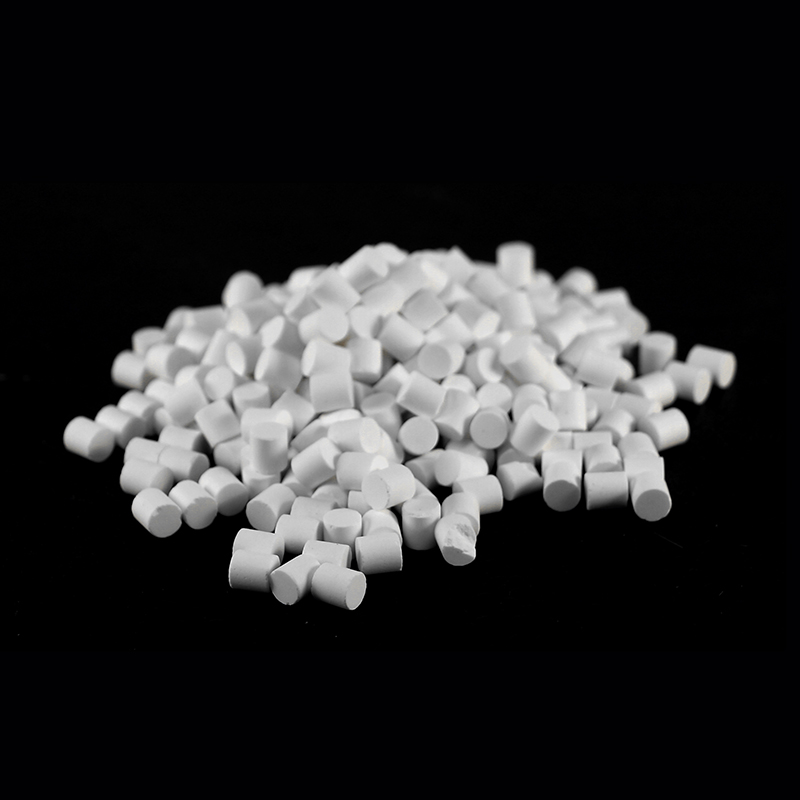
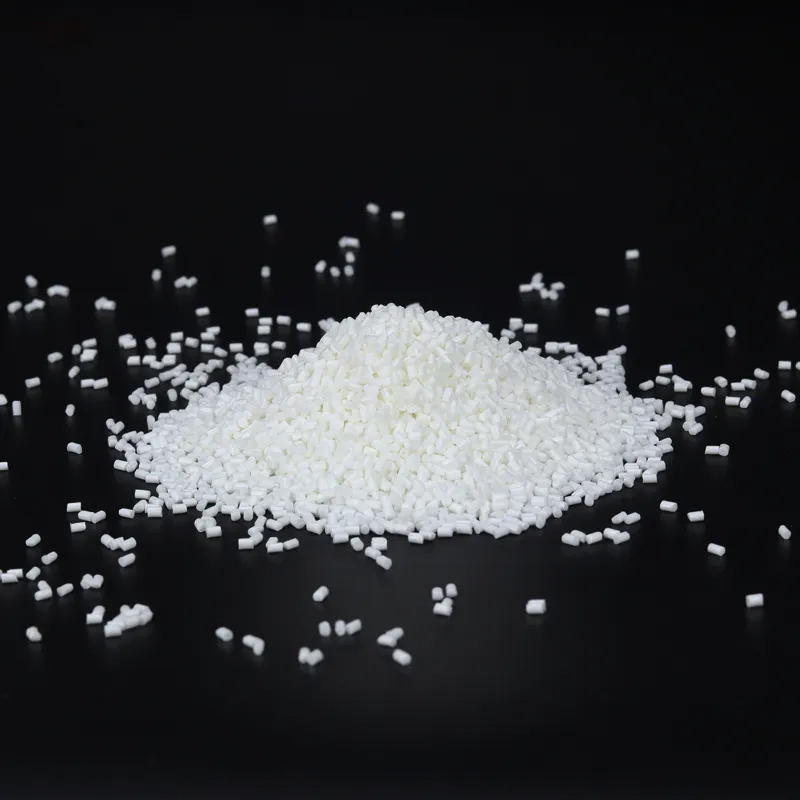
The short answer is a definitive yes, Polyamide 6 (PA6) is 100% recyclable. Unlike many other plastics that degrade significantly after a single use, Polyamide 6 possesses a unique chemical "memory" that allows it to be broken down and reconstructed without losing its essential performance characteristics. In fact, Nylon 6 is one of the few technical polymers capable of a closed-loop recycling process, where old fishing nets or carpets can be turned back into high-quality raw material indistinguishable from virgin plastic.
Mechanical Recycling of Polyamide 6
Mechanical recycling is the most common industrial path for post-industrial scrap. This process involves collecting, sorting, shredding, and re-melting the plastic to create new pellets.
The Regrind Process
During injection molding, manufacturers often produce "sprues" and "runners." These pieces of Polyamide 6 can be ground into small flakes and mixed with virgin resin. Standard industry practice allows for a regrind ratio of 10% to 25% without compromising the structural integrity of the final part. This significantly reduces waste in the automotive and consumer electronics sectors.
Limitations of Heat Cycles
Every time Polyamide 6 is melted, the polymer chains undergo slight thermal degradation. After repeated cycles, the material may become brittle or lose its impact resistance. For high-performance applications, mechanically recycled Nylon 6 is often "downcycled" into items with lower technical requirements, such as flower pots, traffic cones, or drainage pipes.
Chemical Recycling: The Gold Standard for Nylon 6
What makes Polyamide 6 stand out in the sustainability world is its susceptibility to depolymerization. This is a chemical process that essentially "undoes" the polymer chain.
Turning Plastic Back into Monomers
Through a process called "monomer recovery," waste Polyamide 6—such as discarded fishing nets (ghost nets) and old textile fibers—is exposed to heat and catalysts. This breaks the material down into its original building block: Caprolactam.
Endless Recyclability
Once the Caprolactam is purified, it can be repolymerized into "new" Nylon 6. Because the impurities are stripped away during the monomer phase, the resulting recycled Polyamide 6 has the exact same properties as virgin material. Brands like Econyl have successfully used this method to create high-end fashion and luxury carpets from ocean waste, demonstrating that quality does not have to be sacrificed for sustainability.
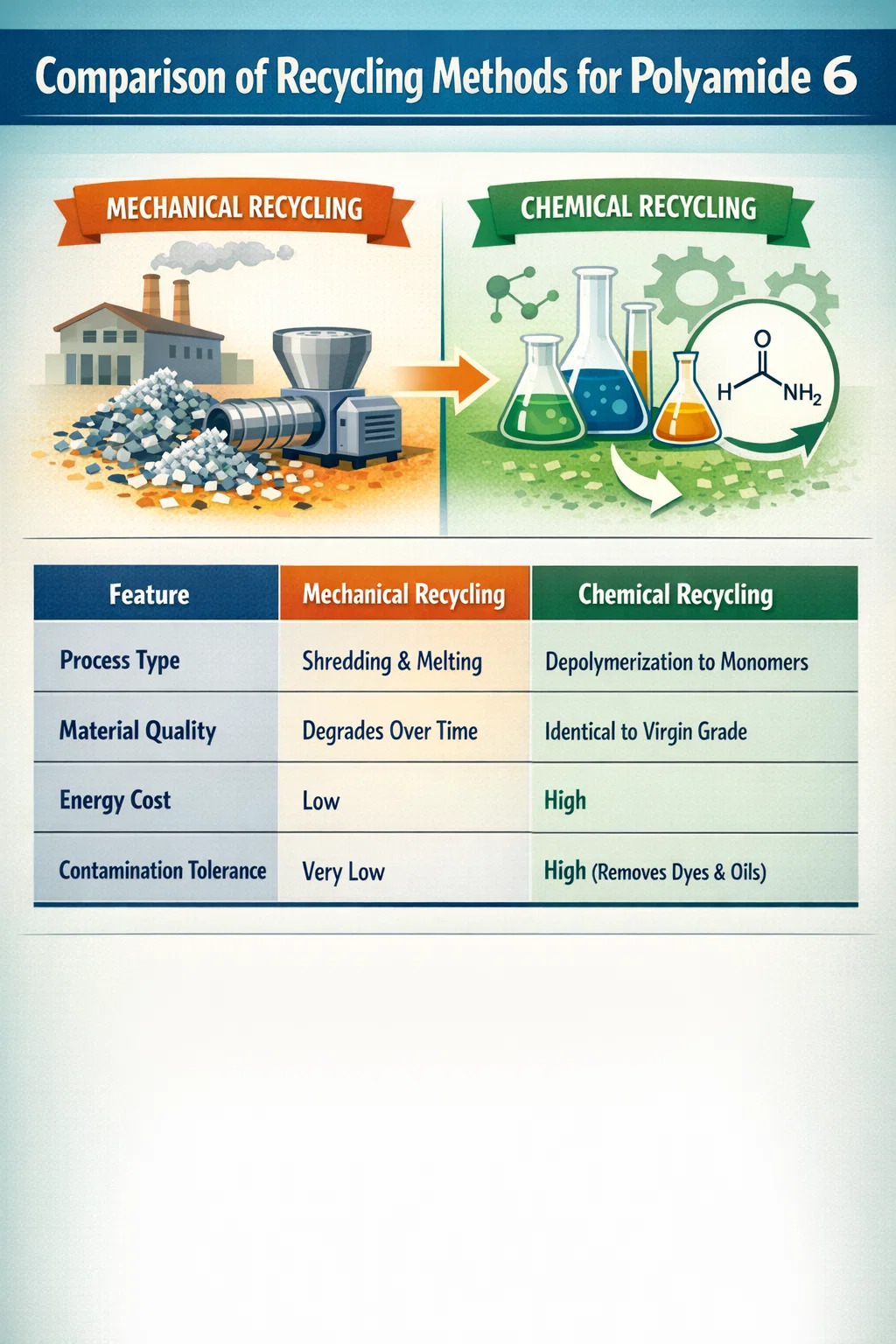
Comparison of Recycling Methods for Polyamide 6
The following table outlines the differences between the two primary ways we handle Nylon 6 waste today.
| Feature | Mechanical Recycling | Chemical Recycling |
|---|---|---|
| Process Type | Shredding and Melting | Depolymerization to Monomers |
| Material Quality | Degrades slightly over time | Identical to virgin grade |
| Energy Cost | Low | High |
| Contamination Tolerance | Very Low | High (removes dyes and oils) |
Challenges in the Recycling Loop
While the technology exists, the journey of Polyamide 6 from a waste product back to a raw material faces several practical hurdles.
- Collection Logistics: Nylon is often used in complex assemblies (like car manifolds or multi-layer food packaging) mixed with other plastics or metals, making separation difficult.
- Sorting Complexity: To the naked eye, Polyamide 6 and Polyamide 66 look identical. However, mixing them in a recycling batch ruins the resulting material's properties because they have different melting points.
- Economic Viability: Chemical recycling plants are expensive to build. When oil prices are low, virgin Polyamide 6 can sometimes be cheaper than the recycled version, slowing down adoption.
Practical Tips for Better Recyclability
For engineers and product designers, maximizing the "circularity" of Polyamide 6 starts at the drawing board. Below are some constructive ways to ensure your Nylon 6 parts don't end up in a landfill:
- Design for Disassembly: Use mechanical fasteners instead of glues when attaching Nylon to other materials.
- Avoid Multi-Material Layers: In packaging, using 100% Polyamide 6 is far easier to recycle than a laminate of Nylon and Polyethylene.
- Label Your Parts: Clearly emboss the "PA6" recycling symbol on large plastic parts to help sorting facilities identify the material quickly.
Environmental Impact of Recycled Polyamide 6
Switching to recycled sources has a massive ripple effect on the planet. Producing recycled Polyamide 6 can reduce the carbon footprint of the material by up to 80% to 90% compared to traditional petroleum-based production. It also prevents hundreds of thousands of tons of "ghost gear" (fishing nets) from trapping marine life in our oceans every year.
 Mob: +86-15867822829
 Tel: +86-0574-62538663
 Fax: +86-0574-62530664
 E-mail:
 Follow Us
 Home
Home
