


 English
 中文简体
中文简体 Español
 русский
 عربى
عربى
Content
- 1 What Makes HDPE So Special? The Core Properties
- 2 HDPE in Packaging: The Dominant User of This Plastic
- 3 Piping Systems: Where HDPE Outperforms Metal and Concrete
- 4 HDPE in Automotive, Construction, and Beyond
- 5 HDPE vs. Other Thermoplastics: A Practical Comparison
- 6 Recycling and Circular Economy: The Future of HDPE
- 7 How to Choose the Right HDPE Grade for Your Product
- 8 Frequently Asked Questions About HDPE Uses
- 9 The Bottom Line
Every time you pick up a milk jug, a detergent bottle, or a length of plastic piping, you are holding high density polyethylene (HDPE). This thermoplastic is the invisible workhorse of modern manufacturing, and its versatility explains why it appears in so many everyday products. If you need a direct answer: HDPE is primarily used for packaging containers, plastic piping, automotive fuel systems, construction membranes, cable sheathing, industrial tanks, pallets, toys, and agricultural irrigation. Recent industry data from IHS Markit places global HDPE demand above 57 million metric tons per year, confirming that this material is one of the most consumed plastics on earth. This guide goes deeper into each application, explains the material properties that drive those uses, and shows how HDPE compares with rival thermoplastics.
What Makes HDPE So Special? The Core Properties
HDPE owes its popularity to a unique combination of physical and chemical characteristics. Polyethylene is composed of long chains of ethylene monomers, and the high density version has far fewer branches than low density polyethylene (LDPE). This linear molecular structure packs chains tightly, resulting in higher crystallinity, greater strength, and better chemical resistance. The table below summarizes the most important HDPE specifications that engineers and buyers typically evaluate.
- Density: 0.941–0.965 g/cm³, the defining range for HDPE (source: ASTM D1505 test standard).
- Melting temperature: 130–155°C, allowing continuous service up to about 105°C.
- Tensile yield strength: 22–38 MPa, depending on grade and processing method.
- Elongation at break: 100–1000%, giving good impact resistance even at sub-zero temperatures.
- Water absorption: less than 0.01% after 24 hours at 23°C, making it ideal for humid or wet environments.
- Chemical resistance: excellent against acids, alkalis, saline solutions, and alcohols; not suitable for strong oxidizing agents.
These properties explain why HDPE is chosen over LDPE when structural integrity matters, and over polypropylene (PP) when cold-temperature impact resistance is critical. In practical terms, HDPE retains its toughness down to -50°C, which makes it a reliable choice for outdoor infrastructure in cold climates.
HDPE in Packaging: The Dominant User of This Plastic
If we look at global demand, packaging is by far the largest end-use market for HDPE. The reason is straightforward: HDPE is inert to most food contents, offers excellent stress-crack resistance, and can be blow-moulded into thin but sturdy containers. According to data from the PlasticsEurope association, packaging accounts for approximately 43% of total HDPE consumption in Europe.
| Application | Why HDPE is chosen |
|---|---|
| Milk jugs & juice bottles | Food-safe, lightweight, recyclable, and crack-resistant |
| Shampoo & detergent bottles | Chemical resistance to surfactants, good stiffness |
| Plastic pails, drums, and jerry cans | High impact strength, stackability, reuse potential |
| Flexible films for bags & liners | Tear resistance, moisture barrier, easy sealing |
A key distinction is that HDPE is not the same material used for soft drink bottles — those are made from PET. HDPE is heavier but far more rigid, which it slides into detergent containers and cosmetics packaging. The U.S. Federal Trade Commission reports that over 90% of retail plastic bottles in the HDPE category are commercially recyclable through municipal programs, making it the preferred choice for manufacturers seeking closed-loop packaging.
Piping Systems: Where HDPE Outperforms Metal and Concrete
High density polyethylene pipes are now standard in water distribution, sewage, gas pipelines, and agricultural irrigation. The HDPE pipe industry has grown rapidly because the material provides a combination of flexibility, corrosion resistance, and long service life that traditional metals and concrete cannot match. A widely quoted figure from the Plastics Pipe Institute is that HDPE pipes can be designed for a 50-year service life at standard operating temperatures.
Why HDPE pipes replace older materials
- No corrosion from soil, water, or chemicals — unlike steel and ductile iron.
- Flexibility allows pipes to be fused into continuous lengths without mechanical joints that leak.
- Butt-fusion welding produces a joint that is as strong as the pipe itself.
- Resistant to root intrusion and moderate ground movement; useful in earthquake-prone areas.
- Smooth interior surface offers a friction factor roughly 40% lower than cast iron, reducing pumping energy costs.
In gas distribution, yellow HDPE pipe is the de facto standard in many countries because its resistance to stress cracking, coupled with the ability to withstand ground deformation without rupturing, makes it safe for pressurised gas transport. For municipal water lines in cold regions, HDPE's -50°C ductility prevents brittle failure when temperatures disrupt the water cycle — a property neither PVC nor concrete can offer.
HDPE in Automotive, Construction, and Beyond
Many people are surprised to learn that the same material used for milk jugs also plays a structural role in vehicles and buildings. HDPE's toughness, dimensional stability, and cost-effectiveness make it a natural fit across a wide range of industrial segments.
Automotive fuel systems and interior parts
In the automotive sector, HDPE is used for fuel tanks, fuel filler pipes, and washer fluid reservoirs. One of the most demanding requirements for fuel tanks is permeation resistance — the ability to keep fuel vapours from escaping. Modern HDPE fuel tanks are typically co-extruded with an EVOH barrier layer to meet emission standards, and they are formed by blow-moulding to achieve complex shapes while reducing weight. A standard steel tank of 50 litres may weigh around 25 kg; an equivalent HDPE tank can weigh as little as 10–12 kg. This mass reduction directly lowers fuel consumption, demonstrating why the automotive industry values HDPE.
Interior components such as door maps pockets, seat side panels, and trim retainers also benefit from HDPE because it resists the aggressive environmental stress cracking caused by lubricants and cleaners.
Construction membranes and protective sheeting
In construction, HDPE is laid as geomembranes for landfill liners, pond liners, and building damp-proof barriers. HDPE geomembrane is produced in sheets of 1.5 mm to 3 mm thickness that can be welded in the field to form continuous barriers. This application makes use of HDPE's outstanding weathering resistance and chemical inertness, which protects groundwater from leachates and prevents soil contamination. The worldwide market for geomembranes was valued at over $3 billion in 2024, and HDPE accounts for about 65% of that segment, according to the Geosynthetics Industry Association.
Toys, sports equipment, and industrial goods
Children's outdoor slides, plastic play equipment, and playground structures use HDPE because it is impact-resistant, UV-stabilised, and has a smooth, easily cleaned surface. In sports, HDPE is used for stadium seats, skate park ramps, and water polo buoy markers. Industrial buyers rely on HDPE for rotationally moulded tanks, chemical storage drums, and reusable pallets, where chemical swelling must be kept to a minimum.
HDPE vs. Other Thermoplastics: A Practical Comparison
Engineers in the plastics industry constantly weigh HDPE against LDPE, polypropylene (PP), and PVC. The choice depends on factors like density, rigidity, temperature resistance, chemical exposure, and cost. The table below gives a side-by-side view of the most consequential characteristics.
| Property | HDPE | LDPE | PP | PVC (rigid) |
|---|---|---|---|---|
| Density (g/cm³) | 0.941–0.965 | 0.910–0.940 | 0.900–0.910 | 1.38–1.45 |
| Melting temperature (°C) | 130–155 | 105–115 | 150–170 | not crystalline |
| Cold impact resistance | Outstanding down to -50°C | Good | Poor below 0°C | Poor |
| Tensile strength (MPa) | 22–38 | 8–17 | 25–35 | 45–60 |
| Typical applications | Bottles, pipes, tanks, pallets | Bags, films, squeeze bottles | Food containers, car bumpers | Window frames, pipes, fittings |
HDPE delivers the best balance of toughness and cost among these four. It sits between LDPE and PVC in rigidity, and its low glass transition temperature (around -125°C, measured by DMA) makes it far more impact-resistant than PP in cold weather. In fields like construction or agriculture, where materials must withstand brutal environments for decades, HDPE is often the default resin.
Recycling and Circular Economy: The Future of HDPE
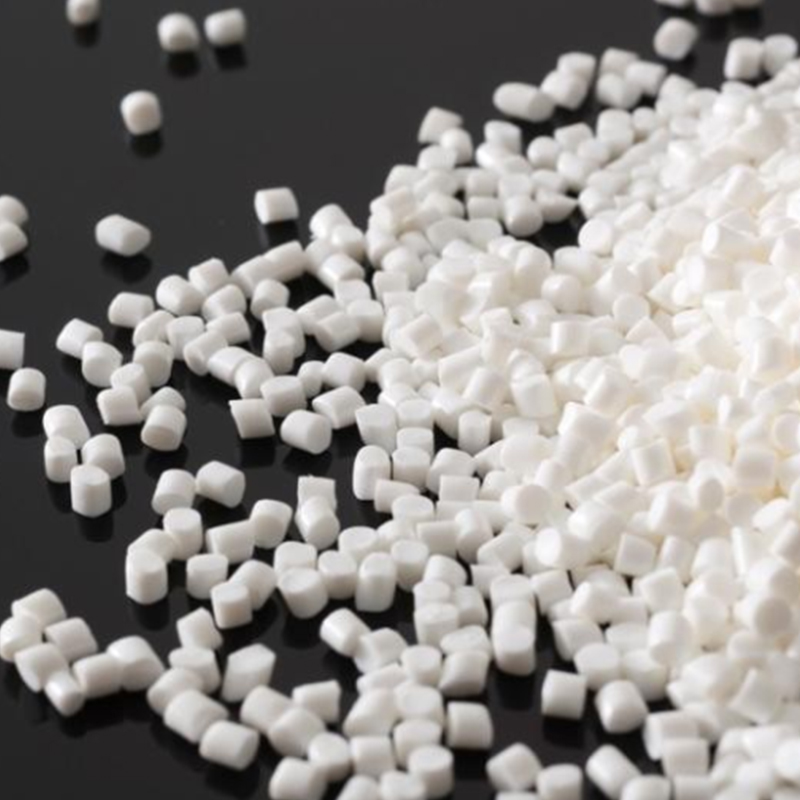
Recyclability is one of the strongest selling points for HDPE in the modern era. HDPE is a thermoplastic, meaning it can be melted and reshaped repeatedly without significant degradation of the polymer backbone. Post-consumer HDPE milk bottles and detergent containers are among the most commonly recycled plastics in the world. According to the U.S. Environmental Protection Agency (EPA) 2020 data, approximately 31% of HDPE containers and packaging were recycled in the United States, and in the European Union, the average recycling rate for HDPE solid plastics reached 38% in 2022 according to PlasticsEurope.
Recycled HDPE (rHDPE) has a significant and growing market. In 2024, post-consumer recycled HDPE in the food contact sector gained broader acceptance, and the rHDPE market is projected to grow at a compound annual growth rate of 6.2% through 2030, as reported by Future Market Insights. The resin is used in pallets, drainage pipes, and even new consumer goods, showing that HDPE performs well in close-loop systems.
It is also interesting to look at how other polymer sectors are advancing their recycling efforts. For example, our manufacturing partners have developed recycled polyamide granules for the engineering plastics industry, illustrating how the plastics industry as a whole is moving towards circularity. If you are interested in how another class of thermoplastics approaches sustainability, you can read our guide to recycled polyamide granules in the circular economy.
How to Choose the Right HDPE Grade for Your Product
Not all HDPE is the same. Manufacturers must choose the right grade based on processing method, final product requirements, and cost constraints. The following factors matter most:
- Density: Higher density improves stiffness and barrier properties but slightly reduces stress-crack resistance. Bottles usually use 0.955–0.960 g/cm³ grades; pipes use 0.945–0.950 g/cm³.
- Melt flow index (MFI): Blow-moulding uses MFI around 0.3–1.0 g/10min; injection moulding uses MFI 2–8 g/10min; film extrusion uses high MFI 10–20.
- Environmental stress crack resistance (ESCR): Critical for any part exposed to detergents or continuous loads. ESCR above 500 hours (per ASTM D1693, Condition A) is a common industrial requirement.
- UV stabilisation: Outdoor applications need additives like carbon black or hindered amine light stabilisers (HALS).
- Food contact compliance: Only selected HDPE grades that meet food safety specifications should be used for direct product contact.
It is worth remembering that in the wider engineering plastics family, materials like nylon and polyamide often compete with HDPE for structural applications, although they offer higher temperature performance. If you need a primer on what distinguishes nylon from HDPE, our explanation of nylon material provides useful context.
Frequently Asked Questions About HDPE Uses
Can HDPE be recycled?
Yes, HDPE is one of the most recyclable thermoplastics. Most recycling programmes accept HDPE bottles and containers, which can be ground into pellets and reused for new products such as pipes, pallets, and other industrial goods.
What is the difference between HDPE and LDPE?
HDPE is denser, more rigid, and has higher tensile strength, while LDPE is more flexible and has lower crystallinity. HDPE is used in bottles, pipes, and tanks; LDPE is used for plastic bags, films, and squeeze bottles.
Can HDPE handle hot water?
HDPE is not recommended for continuous hot water service above about 60–70°C because mechanical strength drops as temperature rises. Alternative polypropylenes or cross-linked polyethylene (PEX) are better for hot water lines.
How long do HDPE pipes last?
According to the Plastics Pipe Institute, HDPE pipes are designed for a 50-year service life at 20°C, and many installed pipelines are expected to perform well beyond that window due to the material's resistance to corrosion and slow crack growth.
Is HDPE food safe?
HDPE grades intended for food contact must satisfy food safety specifications. When selected correctly, HDPE is inert to most food substances and is safe for containers such as milk jugs, yogurt cups, and cutting boards. Always verify that the supplier delivers a food-compliant grade.
Why is HDPE more expensive than LDPE?
Because HDPE is more difficult to process and its production involves more stringent reaction conditions, its market price is usually slightly higher than LDPE. The higher density means more polymer mass per unit volume, which can also affect cost per item.
The Bottom Line
High density polyethylene is not a single-purpose plastic. It is used for packaging, piping, automotive tanks, construction membranes, industrial storage, toys, agriculture, and many other applications that were once dominated by metals or conventional plastics. Its key advantages—density, toughness, chemical resistance, and recyclability—make it the material of choice for engineers who need reliable, cost-effective performance over decades. When you are evaluating resin options, always test against the specific operating conditions: temperature extremes, chemical exposure, UV load, and mechanical stress. That approach will guide you to the right HDPE grade for your application.
 Mob: +86-15867822829
 Tel: +86-0574-62538663
 Fax: +86-0574-62530664
 E-mail:
 Follow Us
 Home
Home
