


 English
 中文简体
中文简体 Español
 русский
 عربى
عربى
Content
- 1 What Is PA6 Used For? The Short Answer
- 2 Core Properties That Make PA6 So Versatile
- 3 PA6 GF Materials: How Glass Fiber Changes Everything
- 4 Automotive: The Largest Single Market for PA6
- 5 Electrical and Electronics Applications
- 6 Industrial Machinery and Engineering Components
- 7 Consumer Products and Sporting Goods
- 8 Textile and Fiber Applications
- 9 Medical and Food Contact Applications
- 10 How to Select the Right PA6 Grade
- 11 PA6 vs. PA66: Understanding the Practical Difference
- 12 Processing PA6 and PA6 GF Materials: Key Considerations
- 13 Sustainability and Recycling of PA6
- 14 Where PA6 Is Not the Right Choice
What Is PA6 Used For? The Short Answer
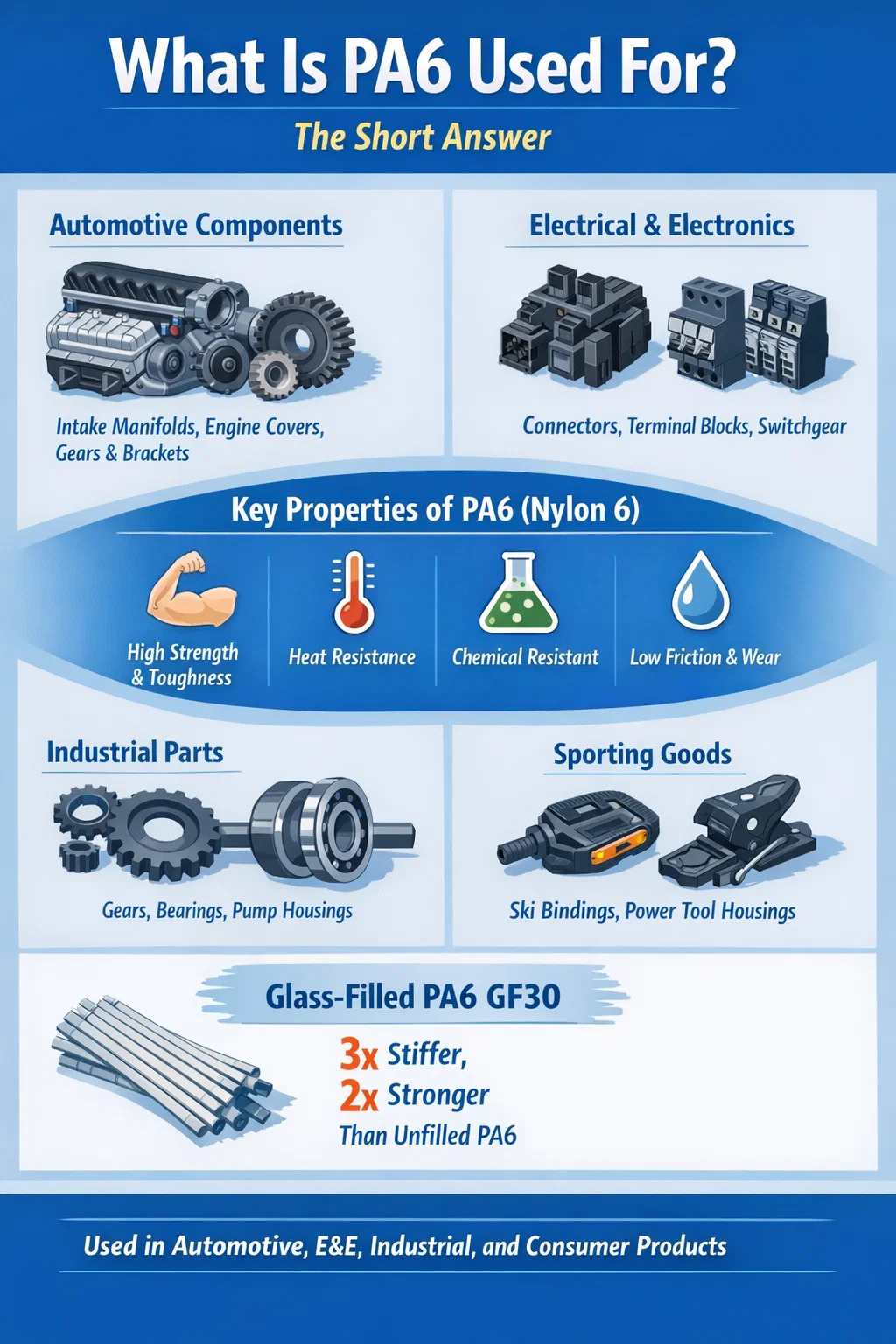
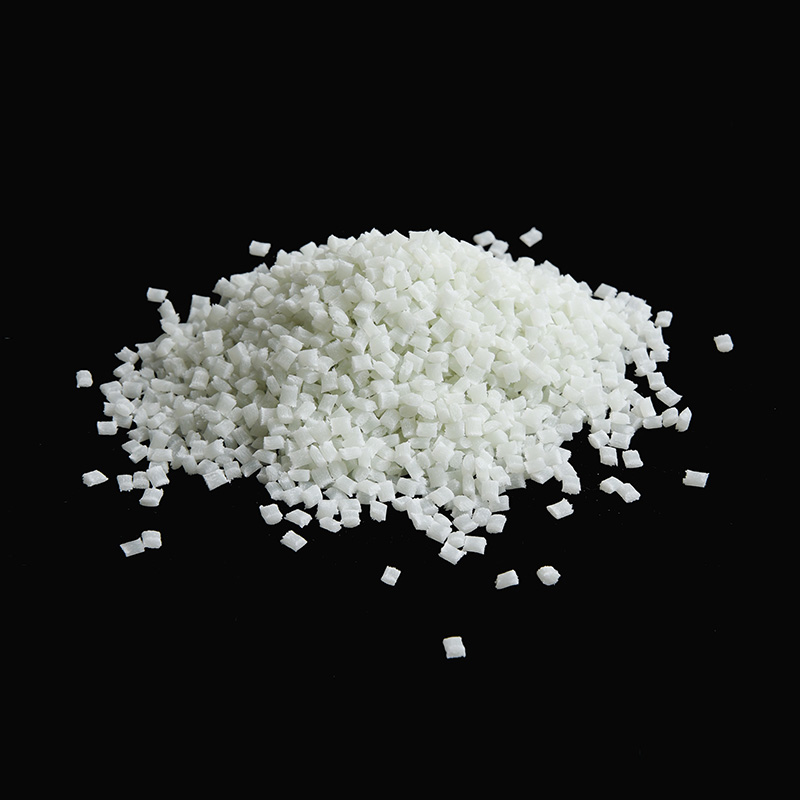
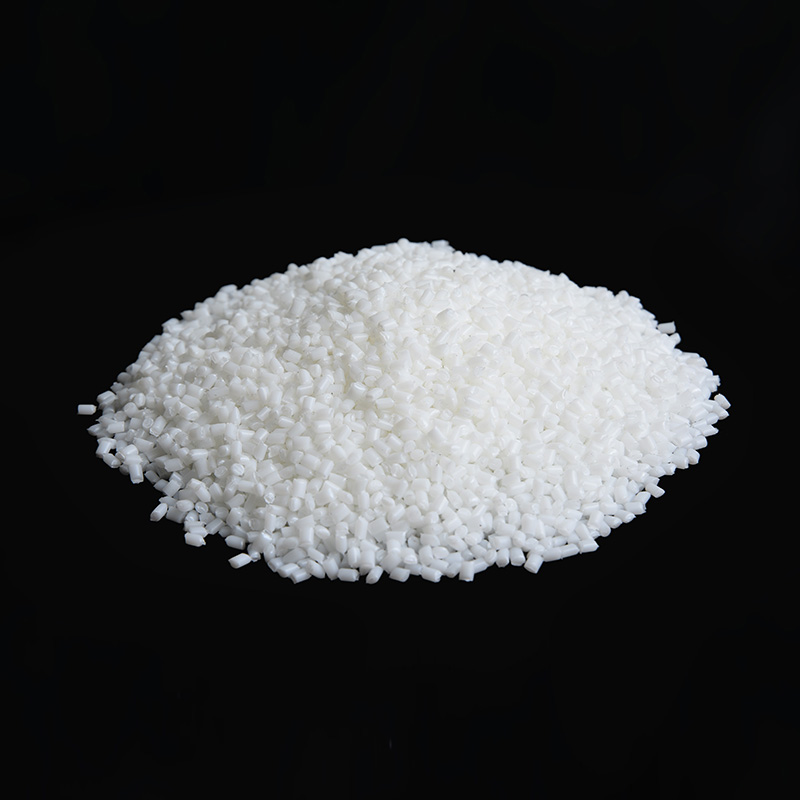
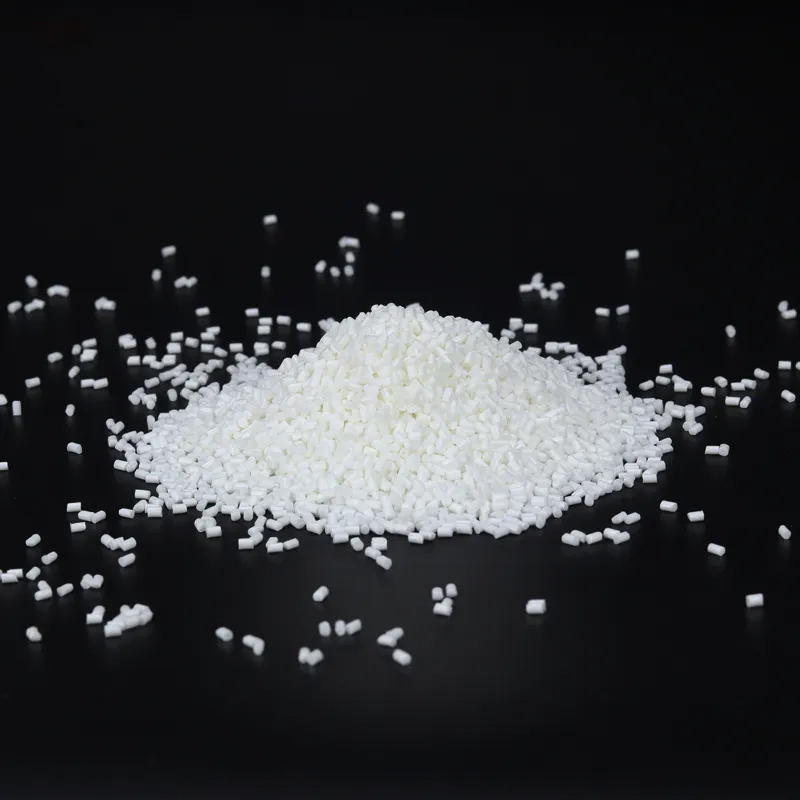
PA6 — also known as Polyamide 6 or Nylon 6 — is one of the most widely used engineering thermoplastics in the world. It is used primarily for structural and mechanical components that require a combination of strength, toughness, chemical resistance, and the ability to be molded into complex geometries. From automotive engine parts to industrial gears, electrical connectors to consumer sporting goods, PA6 shows up wherever engineers need a material that performs reliably under load, heat, and repeated stress cycles.
When reinforced with glass fibers — commonly referred to as PA6 GF materials (glass-filled polyamide 6) — its mechanical properties improve dramatically, making it a direct competitor to die-cast aluminum and zinc in many load-bearing applications. The global polyamide market exceeded USD 6.2 billion in 2023, with PA6 and its reinforced grades representing a substantial share of that demand.
This article walks through exactly where and why PA6 is used, how glass reinforcement changes the equation, what the real processing and performance numbers look like, and how to select the right grade for your application.
Core Properties That Make PA6 So Versatile
Before diving into specific applications, it helps to understand why PA6 gets chosen in the first place. Its property profile is genuinely balanced — it does not excel in one area at the expense of everything else, which is what makes it so broadly applicable.
Mechanical Strength and Toughness
Unfilled PA6 has a tensile strength of approximately 70–85 MPa and an elongation at break of 30–150% depending on moisture content. This combination means the material can absorb significant impact without fracturing — a key reason it is used in housings and covers exposed to drop or vibration loading. Its notched Izod impact strength typically falls in the range of 5–10 kJ/m² in the dry-as-molded state, rising considerably when conditioned to equilibrium moisture content.
Thermal Performance
Unfilled PA6 has a melting point of around 220°C and a heat deflection temperature (HDT) of roughly 65°C at 1.8 MPa load — modest for demanding underhood automotive environments. However, once glass fiber reinforcement is added, HDT climbs sharply. PA6 GF30 (30% glass fiber) achieves HDT values of 200–215°C at 1.8 MPa, which opens the door to under-hood and other elevated-temperature applications that unfilled grades simply cannot handle.
Chemical Resistance
PA6 resists a broad range of chemicals: hydrocarbons, oils, greases, many solvents, and dilute bases. It performs well against gasoline, motor oil, brake fluid, and cleaning agents — all common in automotive environments. It is, however, attacked by strong acids, phenols, and oxidizing agents, so chemical compatibility checks are mandatory for any wet chemical environment.
Tribological Properties
PA6 has inherently low friction and good wear resistance against steel and other hard counterfaces. This is why gears, bushings, and bearing surfaces made from PA6 often operate without external lubrication in light-duty applications. The material's self-lubricating character stems from its semi-crystalline structure and low surface energy relative to many metals.
Moisture Absorption — The Variable Everyone Must Account For
PA6 absorbs moisture from the atmosphere, equilibrating at roughly 2.5–3.5% water content at standard conditions (23°C, 50% RH) and up to 9–10% when fully immersed. Moisture acts as a plasticizer: it increases flexibility and impact strength while reducing tensile modulus and yield strength. This is not necessarily a flaw — equilibrium-conditioned PA6 often outperforms the dry-as-molded state in dynamic loading scenarios — but dimensional changes must be factored into any precision design.
PA6 GF Materials: How Glass Fiber Changes Everything
Glass-filled PA6 — typically designated PA6 GF15, PA6 GF30, or PA6 GF50 (indicating 15%, 30%, or 50% glass fiber loading by weight) — represents a fundamentally different material class from the unfilled base polymer. The short glass fibers that are compounded into the matrix create a composite microstructure that transfers load more efficiently, resists creep under sustained stress, and maintains dimensional stability across a wider temperature range.
| Property | PA6 Unfilled | PA6 GF15 | PA6 GF30 | PA6 GF50 |
|---|---|---|---|---|
| Tensile Strength (MPa) | 70–85 | 110–130 | 160–185 | 200–240 |
| Flexural Modulus (GPa) | 2.5–3.2 | 5.0–6.5 | 9.0–11.0 | 14.0–17.0 |
| HDT at 1.8 MPa (°C) | 60–70 | 185–200 | 200–215 | 210–220 |
| Density (g/cm³) | 1.12–1.14 | 1.22–1.26 | 1.36–1.42 | 1.60–1.68 |
| Water Absorption (23°C, saturation %) | 9–10 | 6–7 | 4–5 | 2.5–3.5 |
The jump from unfilled to GF30 roughly triples the stiffness and more than doubles the tensile strength. At the same time, the glass fiber content displaces polymer, reducing the volume fraction of material that can absorb moisture — so dimensional stability improves substantially. PA6 GF30 is the workhorse grade in most structural applications and is the benchmark against which other reinforced engineering thermoplastics are compared.
PA6 GF50, while impressive on paper, introduces trade-offs: higher density, reduced impact resistance relative to GF30, and greater anisotropy (flow-direction vs. cross-flow properties diverge significantly). It tends to be reserved for applications where maximum stiffness is non-negotiable and impact events are not a primary design load.
Automotive: The Largest Single Market for PA6
The automotive sector consumes more PA6 — particularly PA6 GF materials — than any other industry. A single modern passenger vehicle contains an estimated 10 to 18 kg of polyamide components, with PA6 and PA66 together accounting for the majority of that. The drive toward vehicle lightweighting to meet emissions targets has accelerated the substitution of metal parts with glass-filled nylon assemblies.
Engine and Underhood Components
PA6 GF30 and GF35 are the materials of choice for intake manifolds, engine covers, thermostat housings, air filter housings, and charge air cooler end caps. These parts operate in sustained temperatures of 120–150°C with peaks above 180°C, and they are exposed to coolant, oil mist, and fuel vapors. The replacement of aluminum intake manifolds with PA6 GF components starting in the 1990s demonstrated weight savings of 40–60% per component while maintaining structural integrity and enabling more complex internal geometries through injection molding that would be difficult or expensive to cast.
Cooling System Parts
Radiator end tanks, expansion tanks, water pump housings, and coolant pipe connectors are routinely molded from PA6 GF materials because the material withstands sustained exposure to ethylene glycol coolant at operating temperatures without hydrolytic degradation — provided the correct heat-stabilized grade is used. Hydrolysis-resistant PA6 GF grades are specifically formulated to extend service life beyond 200,000 km or 15 years.
Structural and Semi-Structural Parts
Front-end carriers (the structural module behind the bumper fascia), pedal brackets, door handle bases, mirror housings, and various bracket systems are commonly made from PA6 GF30 or PA6 GF35. These applications demand both stiffness and crash energy management — a balance that glass-reinforced nylon handles better than many competing materials at equivalent mass.
Fuel System Components
PA6 is used for fuel line connectors, fuel filter housings, and vapor management components. Its resistance to hydrocarbons and the ability to achieve tight dimensional tolerances through injection molding — critical for leak-free fuel fittings — make it a standard choice. Regulatory requirements for low permeation in fuel systems have driven the development of multi-layer PA6 fuel lines with barrier layers, but the structural outer layer remains nylon.
Electrical and Electronics Applications
PA6 is a dominant material in the electrical and electronics (E&E) sector, where its combination of dielectric properties, flame retardance (in modified grades), dimensional stability, and processability covers a wide range of components.
Connectors and Terminal Blocks
Electrical connectors — from automotive wire harness connectors to industrial terminal blocks — are among the highest-volume PA6 applications globally. The material's dimensional precision, resistance to creep under the insertion forces of metal contacts, and compatibility with soldering processes (particularly in heat-stabilized grades) make it well suited. PA6 GF materials are especially common in multi-pin connectors where pin registration accuracy is critical over service life.
Circuit Breakers and Switchgear
Flame-retardant PA6 grades (FR PA6, often halogen-free) are specified for circuit breaker housings, relay bases, and switchgear components. These grades achieve UL94 V-0 ratings at 0.8 mm or 1.6 mm wall thickness while maintaining the mechanical integrity needed to survive short-circuit arc events.
Cable Management and Conduit
PA6 corrugated conduit, cable ties, and cable glands are standard in industrial wiring installations. PA6 cable ties retain their clamping force across a temperature range of -40°C to +85°C and resist UV degradation in stabilized grades — properties that explain their ubiquity in automotive wiring harnesses and outdoor electrical installations.
Housings for Electronic Devices
Power tool housings, industrial sensor bodies, metering equipment enclosures, and motor housings are frequently made from PA6 or PA6 GF materials. The glass-filled grades resist warpage even in thin-wall sections and provide the rigidity needed for tight fit assembly of internal components like PCB mounting posts and snap-fit retention features.
Industrial Machinery and Engineering Components
PA6 has a long history in industrial machinery precisely because it can be machined from extruded rod and plate stock, cast in large sections, or injection molded at high volume. Each processing route suits different application scales.
Gears, Cams, and Drive Components
PA6 gears are found in office equipment, appliances, light industrial machines, and automotive auxiliary systems (window regulators, seat adjusters, HVAC blend doors). At PV (pressure-velocity) values below approximately 0.1 MPa·m/s, unfilled PA6 runs against steel without lubrication. Above that threshold, lubricated running-in is recommended. Glass-filled PA6 gears offer higher load capacity but sacrifice some of the self-lubricating character of the unfilled grade and exhibit higher counterface wear — a trade-off that must be evaluated per application.
Bearings, Bushings, and Wear Pads
Cast PA6 (monomer casting) is used for large-diameter bearing rings, conveyor belt guide rails, and wear plates in agricultural, mining, and material handling equipment. Cast nylon can be produced in sections up to several hundred kilograms and machined to precise tolerances. Its coefficient of friction against steel in dry running conditions is typically 0.15–0.35, which is acceptable for many low-speed bearing applications where bronze or bronze-backed PTFE liners would be cost-prohibitive at large scale.
Fluid Handling — Pumps and Valves
PA6 impellers, pump casings, valve bodies, and pipe fittings handle water, mild acids, hydrocarbons, and process chemicals across a broad range of industrial environments. PA6's corrosion resistance compared to metal alternatives eliminates galvanic corrosion risks and reduces maintenance cycles. For higher-pressure or higher-temperature fluid systems, PA6 GF materials replace unfilled grades to maintain dimensional stability under sustained pressure loading.
Structural Profiles and Machine Guards
Extruded PA6 profiles are used for structural framing in automated assembly equipment, robotic end-effectors, and machine guards. The material's specific stiffness (stiffness per unit weight) competes favorably with aluminum when moisture content is controlled. Many machine builders specify PA6 GF profiles for linear guide rail carriages and pneumatic cylinder guides because the material machines cleanly, dampens vibration, and does not require the corrosion protection coatings that steel demands.
Consumer Products and Sporting Goods
PA6's combination of toughness, surface quality, and dyeability — nylon accepts dyes readily — makes it a common choice in consumer products where both aesthetics and durability matter.
- Ski bindings and boot buckles: PA6 GF materials handle the high static and dynamic loads of ski bindings while surviving -30°C cold temperatures without brittle fracture.
- Bicycle components: derailleurs, brake levers, and handlebar clamps in mid-range bicycles use PA6 GF30 to reduce weight versus aluminum while maintaining stiffness.
- Luggage frames and zippers: YKK and other zipper manufacturers rely heavily on PA6 for zipper teeth and slider bodies — the material's toughness and low friction against itself are ideal properties for zipper mechanisms.
- Power tools: drill housings, circular saw bodies, and grinder guards made from PA6 GF absorb motor vibration, resist heat from motor housings, and provide the structural rigidity needed to maintain bearing alignment.
- Toothbrush and personal care housings: where food-contact grades of PA6 (compliant with FDA or EU food contact regulations) provide safe, durable housings with excellent surface finish.
Textile and Fiber Applications
PA6 fiber — sold under trade names like Perlon — represents a major use category that is entirely separate from the injection-molded and extruded engineering applications discussed above. PA6 filament yarn is melt-spun into fibers with tensile strength in the range of 4–6 cN/dtex, with elongation at break around 20–40% — properties that make it suitable for hosiery, lingerie, sportswear, and technical textiles.
In technical textile applications, PA6 fibers are found in tire cord (often combined with steel cord in bias-ply tires), conveyor belting, rope and netting for maritime applications, and filtration fabrics. Tire cord PA6 is processed at extremely high draw ratios to align the polymer chains and achieve tenacities above 8 cN/dtex, delivering the fatigue resistance needed for repeated flex cycling in tires.
Carpet yarn is another major fiber application — PA6 carpet fiber accounts for a significant share of the residential and commercial carpet market, competing with PA66 and polyester on cost-performance grounds. PA6 carpets can be re-melted and re-spun at end of life, which has driven the development of carpet take-back and recycling programs (notably the Aquafil ECONYL® process, which dissolves PA6 carpet and fishing nets back to caprolactam monomer).
Medical and Food Contact Applications
Certain grades of PA6 are certified for food contact compliance under EU Regulation 10/2011 or FDA 21 CFR regulations. These grades are used in food processing equipment components — conveyor chain links, guide rails, cutting board surfaces, and pump parts for food-grade fluid handling. The material is cleanable with steam and standard food-grade sanitizers.
In medical device manufacturing, PA6 is used for non-implantable components: catheter connectors, surgical instrument handles, sterilization trays, and equipment housings. Its ability to withstand repeated steam autoclave cycles (121°C, 134°C) — particularly in glass-reinforced grades — makes it more suitable for reprocessing than many other engineering thermoplastics. PA6 is not used for implantable devices due to its hydrolytic susceptibility at physiological conditions over long timescales.
How to Select the Right PA6 Grade
The PA6 material family covers dozens of commercial grades. Selecting the right one requires matching the grade's specific property profile to the application's requirements. The following framework covers the most common decision points.
| Application Requirement | Recommended Grade Type | Key Additive / Modifier |
|---|---|---|
| High stiffness, elevated temperature | PA6 GF30 or GF35 | Heat stabilizer package |
| Impact resistance, general molding | Unfilled PA6 or toughened PA6 | Elastomer impact modifier (e.g., EPDM) |
| Flame retardance required (V-0) | FR PA6 GF | Halogen-free FR system (e.g., aluminum diethylphosphinate) |
| Wear and friction (dry running gears) | Lubricated PA6 or cast PA6 | Internal PTFE or MoS₂ lubricant |
| Outdoor UV exposure | UV-stabilized PA6 | HALS + UV absorber package |
| Hydrolysis resistance (coolant, steam) | Hydrolysis-stabilized PA6 GF | Carbodiimide chain extender |
| Food contact compliance | FDA / EU 10/2011 compliant PA6 | Restricted additive list |
| Conductivity / ESD | Conductive PA6 | Carbon black, carbon fiber, or carbon nanotube |
A critical point often overlooked: datasheet values are always dry-as-molded unless stated otherwise. For any structural calculation involving PA6 in a real-world environment, use conditioned values (50% RH equilibrium or fully saturated, depending on service conditions). Designing on dry-as-molded tensile modulus and then deploying into a humid environment can result in deflections and creep rates substantially higher than predicted.
PA6 vs. PA66: Understanding the Practical Difference
PA6 and PA66 are frequently confused or used interchangeably in non-technical discussions. They are structurally similar (both are polyamides with similar repeat unit chemistry) but differ in key ways that affect material selection.
- Melting point: PA66 melts at approximately 260°C versus PA6's 220°C, giving PA66 a thermal edge in unfilled form. However, both reach similar HDT values when heavily glass-reinforced.
- Moisture absorption: PA6 absorbs slightly more moisture than PA66 at equivalent conditions, which translates to a marginally greater dimensional change.
- Processing: PA6 has a broader and lower processing window, making it easier to mold thin-wall and complex geometries. Its lower melt viscosity at processing temperatures also benefits glass fiber wet-out during compounding.
- Cost: PA6 is synthesized from caprolactam, while PA66 uses adipic acid and hexamethylenediamine. Market pricing fluctuates, but PA6 is typically 5–15% less expensive per kilogram, which matters at scale.
- Recyclability: PA6 can be depolymerized back to caprolactam monomer with high recovery yields, supporting closed-loop recycling. PA66 depolymerization is technically possible but less commercially developed at scale.
For most applications below 150°C service temperature, PA6 GF materials perform equivalently to PA66 GF at lower cost. Above 150°C or in applications where moisture swelling is critical, PA66 or higher-performance polyamides (PA46, PA6T/66) are worth evaluating.
Processing PA6 and PA6 GF Materials: Key Considerations
Getting the most from PA6 GF materials requires attention to processing conditions that differ somewhat from commodity thermoplastics like PP or ABS.
Drying
PA6 is hygroscopic and must be dried before processing. Standard drying conditions are 80°C for 4–6 hours in a dehumidifying dryer (dew point below -30°C) to reduce moisture content below 0.2% for injection molding. Insufficient drying causes hydrolytic degradation of the polymer chains during melt processing, resulting in lower viscosity, splay defects, and significantly reduced mechanical properties in the molded part.
Melt Temperature
Injection molding melt temperatures for PA6 typically range from 240–280°C, depending on wall thickness and part geometry. Mold temperatures of 60–90°C promote good crystallinity and surface finish. For PA6 GF materials, staying within this window also preserves fiber length — excessive melt temperature combined with aggressive screw speed degrades fibers and reduces mechanical performance.
Fiber Orientation and Weld Lines
Glass fibers in PA6 GF materials align preferentially along the flow direction during injection molding. This creates anisotropic properties: the part is significantly stiffer and stronger in the flow direction than transverse to it. Weld lines (where two flow fronts meet) in PA6 GF parts can have tensile strength as low as 30–50% of the bulk value because fibers align parallel to the weld line and bond only through the polymer matrix. Gate location and part design must minimize weld lines in high-stress regions.
Warpage and Shrinkage
PA6 GF materials shrink differentially: approximately 0.3–0.7% in the flow direction and 0.8–1.3% transverse to flow for GF30 grades. This differential shrinkage is the primary driver of warpage in flat or semi-flat parts. Simulation-driven gate placement and part design are essential for flat panels and covers made from PA6 GF materials.
Sustainability and Recycling of PA6
PA6 sits in a better position than many engineering polymers from a circular economy perspective because of its depolymerizability. The ECONYL® process (Aquafil) recovers caprolactam from post-consumer PA6 waste — including carpet, fishing nets, and industrial waste — and re-polymerizes it to virgin-equivalent quality PA6. This closed-loop chemistry has been validated at commercial scale, with over 100,000 tonnes of PA6 waste having been processed through the ECONYL® regeneration system as of recent reporting.
For PA6 GF materials, recycling is more complex because the glass fibers cannot be recovered in their original length through standard mechanical recycling — fiber attrition during re-processing reduces fiber length and thus mechanical performance. However, mechanically recycled PA6 GF25 or GF30 can be downcycled to lower-fiber-content applications. Chemical recycling back to monomer handles the glass as a residue that must be separated, but delivers uncontaminated caprolactam from the polymer fraction.
Bio-based PA6 routes are under commercial development. Caprolactam can theoretically be derived from bio-based lysine or cyclohexane from bio-based sources, though fully bio-based commercial PA6 is not yet produced at meaningful scale. Several producers have announced pilot programs targeting 30–100% bio-based caprolactam content within the coming decade, which would substantially reduce the carbon footprint of PA6 production versus the current petrochemical route.
Where PA6 Is Not the Right Choice
Understanding the limits of PA6 is as important as knowing its strengths. There are applications where PA6 — even in glass-filled form — is the wrong material regardless of cost:
- High continuous temperature above 180°C: Even PA6 GF materials begin losing mechanical properties at sustained temperatures above 180°C. Applications in this range require high-temperature polyamides (PA46, PA6T, PA9T) or non-polyamide engineering polymers (PPS, PEEK).
- Strong acid environments: Concentrated acids hydrolyze the amide bonds in PA6 rapidly. Applications in strong acid chemical environments require PTFE, PVDF, or polypropylene.
- Optical clarity: PA6 is semi-crystalline and translucent at best — it cannot achieve the optical clarity of amorphous materials like polycarbonate or PMMA.
- High precision in humid environments: For parts requiring dimensional tolerances below ±0.1 mm that will experience moisture cycling, PA6's hygroscopic swelling is usually disqualifying. POM (acetal) or PBT are common alternatives.
- Long-term implantable medical devices: PA6 is not biocompatible for implantable applications due to hydrolytic degradation and potential monomer leaching.
 Mob: +86-15867822829
 Tel: +86-0574-62538663
 Fax: +86-0574-62530664
 E-mail:
 Follow Us
 Home
Home
