


 English
 中文简体
中文简体 Español
 русский
 عربى
عربى
Content
- 1 What Is PET Material? A Direct Answer First
- 2 Chemical Composition and Molecular Structure of PET
- 3 Key Physical and Mechanical Properties of PET Material
- 4 What Is PET Material Used For? Major Applications
- 5 How Is PET Material Produced?
- 6 PET vs. Polyamide (Nylon): How Do They Compare?
- 7 Recycling and Sustainability of PET Material
- 8 How to Choose Between PET and Polyamide Materials
- 9 Frequently Asked Questions about PET Material
- 9.1 What does PET stand for?
- 9.2 Is PET material the same as polyester?
- 9.3 Is PET material recyclable?
- 9.4 Is PET material safe for food and beverage contact?
- 9.5 What is the maximum continuous service temperature of PET?
- 9.6 What is the difference between PET, PBT, and PPA?
- 9.7 How much does PET material cost?
- 9.8 How long has PET material been in commercial use?
- 9.9 Can PET be used in additive manufacturing or 3D printing?
What Is PET Material? A Direct Answer First
PET material is polyethylene terephthalate, the most widely used thermoplastic polymer in the polyester family. It is a clear, strong, and lightweight plastic that appears in almost every part of your daily life: clothing fibers, beverage bottles, food packaging, and even engineering components.
Chemically, PET is formed by the polymerization of purified terephthalic acid (PTA) and ethylene glycol. The resulting polymer chain gives the material an excellent balance of strength, transparency, chemical resistance, and dimensional stability. Because of this combination, PET has become a universal material for applications ranging from single-use packaging to precision engineering parts.
When you ask "what is PET material?" the practical answer comes down to this: it is the plastic that you most likely touch every day, whether in a water bottle, a polyester t-shirt, or the film on a food container. It is also one of the most recycled plastics on earth, recognized globally by the recycling code #1.
Chemical Composition and Molecular Structure of PET
PET belongs to the polyester family. Its molecular structure consists of repeating units of ethylene terephthalate, which are created when ethylene glycol reacts with terephthalic acid. The reaction removes water, and the polymer chain continues to grow during a polycondensation phase. The chemical formula is typically written as (C10H8O4)n, where "n" represents the degree of polymerization.
The degree of polymerization directly influences the intrinsic viscosity (IV) of the resin. This parameter is the single most important specification in PET manufacturing, because it determines how the material will process:
- Textile-grade PET: typically has an IV of 0.55-0.70 dL/g, used for fibers and filaments.
- Bottle-grade PET: typically has an IV of 0.72-0.85 dL/g, used for carbonated beverage bottles and food packaging.
- Film-grade PET: typically in the range of 0.65-0.80 dL/g, used in packaging films and industrial films.
PET exists in two main morphological states: amorphous and semi-crystalline. Amorphous PET is transparent and is mostly used for bottles and packaging. Semi-crystalline PET is more rigid, has higher heat resistance, and is commonly used in engineering applications. The transformation between these two states is controlled by the cooling rate during processing and by the addition of nucleating agents.
The semi-crystalline structure is what gives PET its remarkable mechanical strength. According to data from the PET Resin Association (PETRA), the crystallization behavior of PET is strongly influenced by the presence of comonomers. When isophthalic acid is used as a comonomer, it disrupts the perfect crystal lattice and lowers the melting point, making the material easier to process in certain applications.
Key Physical and Mechanical Properties of PET Material
Before selecting PET for a specific application, it is essential to understand its performance envelope. The table below summarizes the most important properties that engineers and designers rely on when comparing materials.
| Property | Typical Value | Notes |
|---|---|---|
| Density (amorphous) | 1.37-1.38 g/cm³ | Lower than glass, lighter than water |
| Density (semi-crystalline) | 1.44-1.46 g/cm³ | Increases with crystallinity |
| Melting temperature | 250-260 °C | Semi-crystalline grades only |
| Glass transition temperature | 67-81 °C | Determines upper service limit for amorphous grades |
| Tensile strength | 50-100 MPa | Orientation and reinforcing fillers increase values |
| Young's modulus | 2.0-4.0 GPa | Rigid and dimensionally stable |
| Water absorption (24 h) | 0.1-0.2% | One of the lowest among engineering thermoplastics |
| Light transmission | Up to 90% | For amorphous bottle-grade PET |
One of the standout features of PET is its very low moisture absorption. Where many engineering polymers absorb measurable amounts of water, PET increases in weight by only 0.1-0.2% after 24 hours. For the packaging industry, this means products are well-protected. For engineering users of PET, this also means dimensional stability in humid environments is generally better than that of nylon materials.
Another critical property is PET's barrier performance. According to the American Beverage Association, PET is an excellent barrier material for carbon dioxide, oxygen, and moisture in beverage packaging, which is why it is used in bottled carbonated drinks globally. In contrast, other plastics such as polypropylene show far weaker barrier properties against CO₂.
What Is PET Material Used For? Major Applications
PET has an unusually broad application range. The material is not limited to a single industry. According to the reference page from Wikipedia on polyethylene terephthalate, PET is employed in textiles, rigid packaging, flexible packaging, photovoltaic modules, and thermoplastic resins. Let me break down the most significant uses.
Textiles and Polyester Fibers
The largest single use of PET globally is in the production of polyester fibers. Roughly 60% of all PET produced worldwide is converted into fibers for clothing, upholstery, carpets, and industrial fabrics. Polyester fiber is valued for the way it resists wrinkling, stretches, and reliably holds dye. The fiber can be spun as a continuous filament or cut into staple fibers for spinning with natural fibers. Recycled PET bottles are sometimes reprocessed into staple fiber for use in non-woven fabrics and clothing, creating a clear second-life loop.
Food and Beverage Packaging
PET is the dominant material for rigid bottles used in the beverage industry. It is used by brands that package water, carbonated soft drinks, juices, and edible oils. Bottle-grade PET is favored for its combination of clarity, strength, and high carbonation retention. In fact, the majority of plastic beverage bottles sold globally today are made of PET. The material's ability to be oriented during stretch-blow molding improves its mechanical strength and barrier performance significantly.
Rigid and Flexible Food Packaging
Thermoformed PET trays and clamshells are common in the food retail sector. These containers are valued because they are transparent, strong, and can withstand temperatures encountered during microwave reheating, within limits. Flexible films made of PET are used for snack packaging, frozen food bags, and industrial wrapping. These films can be biaxially oriented to maximize strength while remaining extremely thin.
Engineering and Industrial Applications
Semi-crystalline PET is used in engineering components. Glass-fiber-reinforced PET offers high stiffness and creep resistance, making it suitable for housings, brackets, and structural components. Unreinforced PET has found use in bearings and wear pads where low friction is required. Its naturally low moisture absorption gives PET a positioning advantage in industrial environments where dimensional stability matters.
Other Growing Applications
PET is also finding newer applications in photovoltaic module backsheets, medical device packaging, and automotive underbody components. In each of these uses, the material is selected for its combination of electrical insulation, chemical resistance, and mechanical durability. The constant expansion of PET applications is a direct result of its property set and costing profile.
How Is PET Material Produced?
Understanding the production process of PET helps buyers appreciate the quality variables that distinguish different grades.
Stage 1: Esterification
Purified terephthalic acid (PTA) reacts with ethylene glycol in a pressure vessel at approximately 240-260°C. The reaction produces bis(2-hydroxyethyl) terephthalate (BHET), the intermediate monomer, and water as a by-product. This step is generally carried out under slight pressure to keep the reactants in the liquid phase.
Stage 2: Polycondensation
The BHET monomer enters a high-vacuum melt polycondensation reactor. Under vacuum conditions and temperatures of 270-285°C, the polymer chain propagates, and ethylene glycol is removed from the melt. The reaction is accelerated by catalysts. Antimony trioxide is still common, but titanium-based, magnesium-based, and antimony-free catalytic systems are gaining ground in response to market demand for lower metal residue.
Stage 3: Pelletizing and IV Control
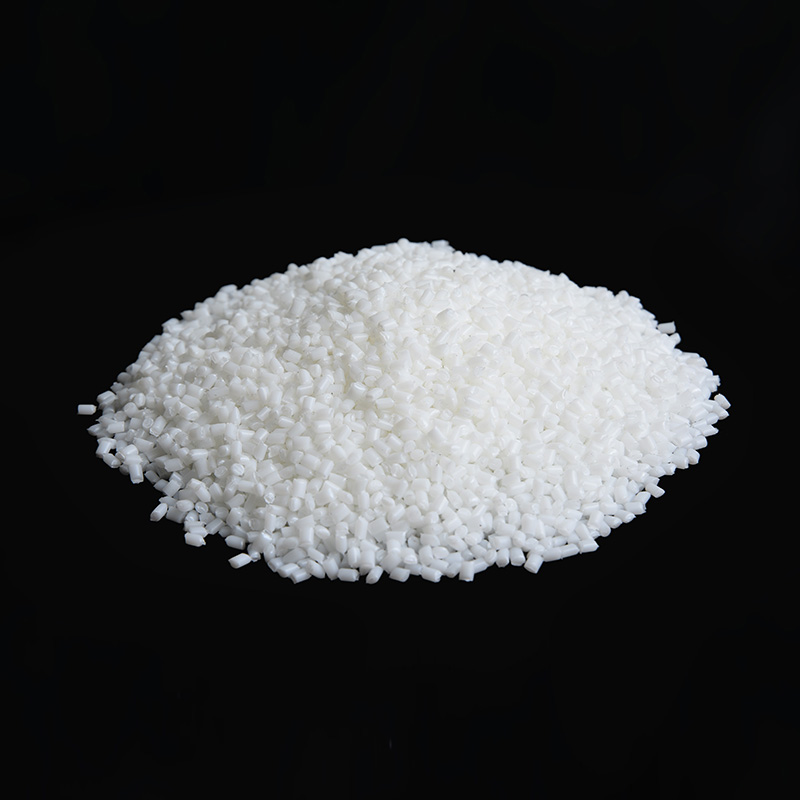
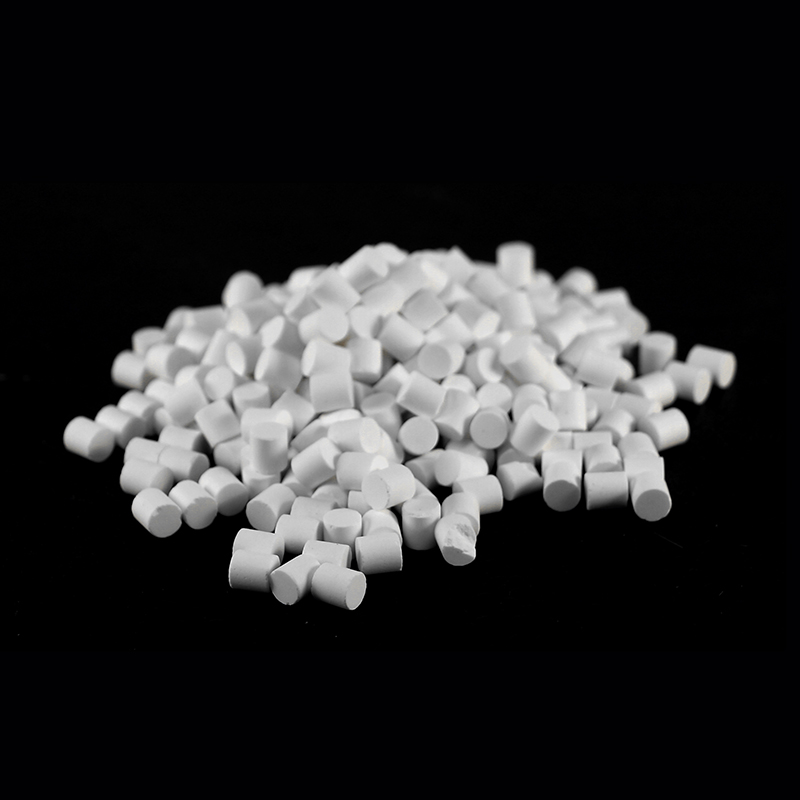
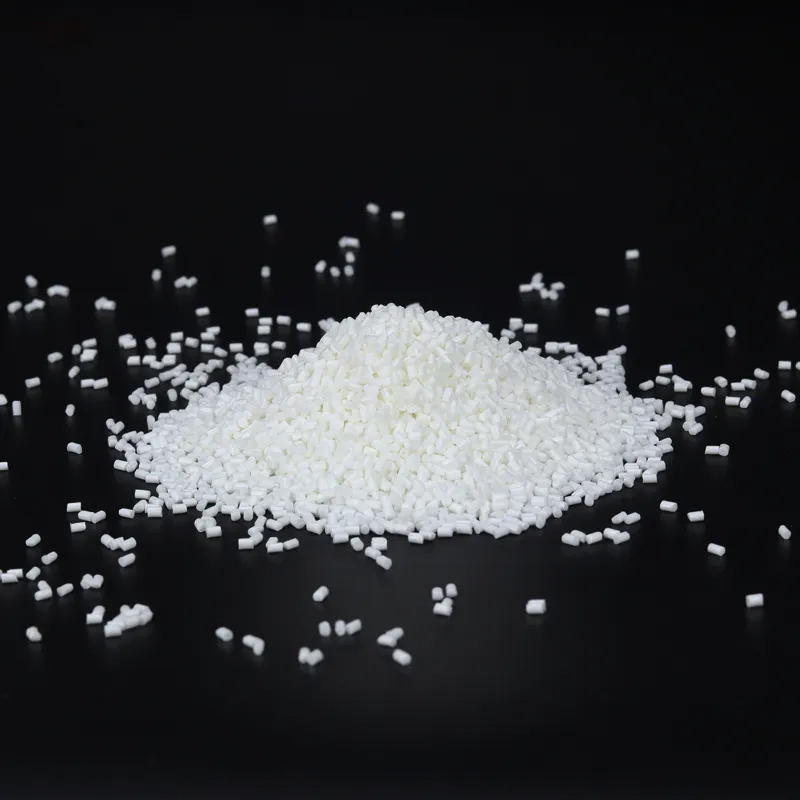
After the melt reaches the target intrinsic viscosity, it is extruded through a die, cooled in a water bath, and cut into chips or pellets. The IV at this stage is measured carefully by the manufacturer because it controls downstream processing. This is why PET manufacturers often advertise resin by IV grade: a resin sold for bottle production will have a higher IV than a resin sold for film extrusion. The Chinese nylon-6 chip industry, for comparison, also relies on the same control logic: the key is to stabilize molecular weight for consistent downstream processing.
Subsequent Processing
The pellets are then melted at the converter and formed into bottles, films, or fibers. In bottle manufacture, the pellets are dried to prevent hydrolysis, then injection-molded to make preforms. The preforms are re-heated to stretch-blow molded into the final bottle shape. This two-step process is essential for the biaxial orientation that gives PET bottles their high strength.
PET vs. Polyamide (Nylon): How Do They Compare?
For engineers, the question is rarely "what is PET material?" in isolation. The real question is: does PET outperform the alternative? The most common competing family is the polyamide group, which includes PA6 and PA66. Both PET and polyamides are engineering thermoplastics, but their performance envelopes differ in ways that matter.
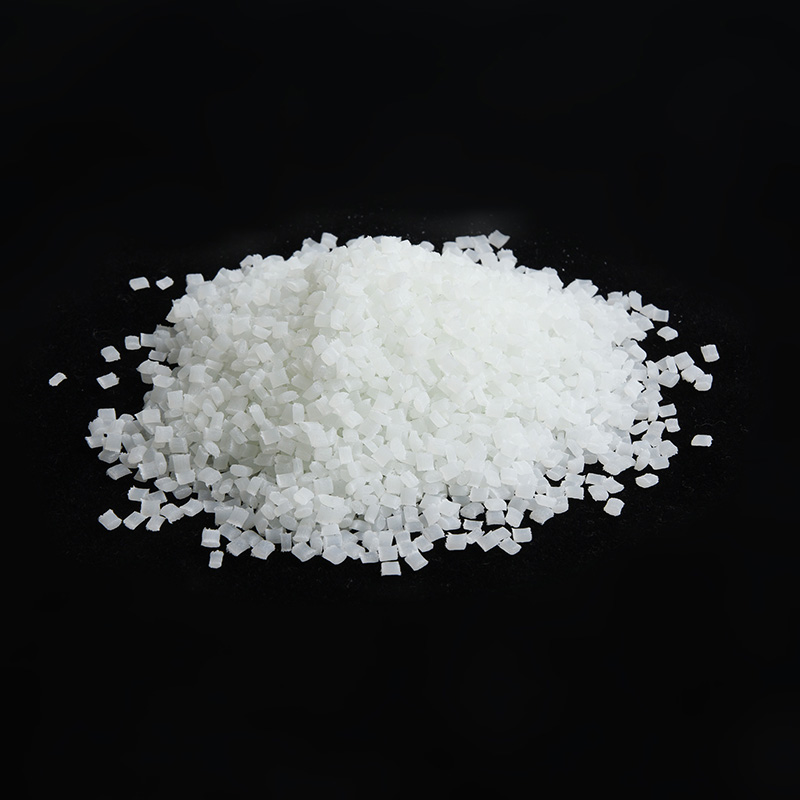 Reinforced PA6 Chips for High-Load ApplicationsExplore reinforced PA6 chips designed for enhanced strength, rigidity, and heat resistance. Suitable for automotive parts and industrial components in demanding environments.View Product →
Heat Resistance and Thermal Behavior
Semi-crystalline PET melts at 250-260°C. PA66 melts at 260-268°C, which is slightly higher. PA6 melts at approximately 220-230°C. However, what really matters for applications is the continuous service temperature. For unreinforced PET, the continuous service temperature is around 70-100°C, depending on the amorphous or semi-crystalline form. Glass-fiber-reinforced PET can reach up to 140°C. Polyamide grades with heat stabilizers can handle higher temperatures, which is why PA66 is a frequent choice for under-hood automotive parts. When your application is in a consistently hot environment, these differences become decisive.
Moisture Absorption: The Biggest Differentiator
The most significant practical gap between PET and nylon is water uptake. PET absorbs only 0.1-0.2% water over 24 hours. PA66 absorbs about 1.2% at 50% relative humidity and up to 2.5% at saturation. PA6 absorbs even more, around 1.8% at 50% RH and nearly 3% at saturation. This moisture absorption in nylon causes dimensional changes and can alter mechanical properties over time. For precision components operating in humid environments, PET is generally the safer choice. For parts that need to survive repeated flexing in a dry environment, polyamide often performs better.
Impact Strength and Flexural Fatigue
Nylon materials are known for superior impact strength and flexural fatigue resistance. This is why clips, hinges, fasteners, and snap-fit components are commonly made from PA66 or PA6 rather than PET. PET can be brittle in its amorphous state, especially at low temperatures or notches. When you need a material that can withstand millions of flex cycles without cracking, polyamide is the established answer.
Chemical and UV Resistance
PET offers better resistance to acid and is less susceptible to UV degradation than many polyamides. Nylons are generally more sensitive to strong acids and UV exposure. In outdoor applications without UV stabilizers, PET maintains its appearance and mechanical integrity longer than PA66. This makes PET an excellent candidate for external packaging and outdoor sporting goods components.
| Property | PET | PA66 | PA6 |
|---|---|---|---|
| Melting point (°C) | 250-260 | 260-268 | 220-230 |
| Water absorption (%) | 0.1-0.2 | 1.2-2.5 | 1.8-3.0 |
| Tensile strength (MPa) | 50-100 | 60-85 | 45-80 |
| Flexural fatigue resistance | Moderate | Excellent | Excellent |
| Acid resistance | Good | Limited | Limited |
| UV stability | Good | Fair | Fair |
If your application requires maximum resistance to moisture, or if the geometry of the part is sensitive to dimensional shifts, PET has a strong advantage. But if you need toughness, repeated flexing, or elevated-temperature strength, polyamide is usually the better path. This is exactly why the material selection decision cannot be reduced to a single property. You can read a full dedicated guide to nylon material to understand these properties further.
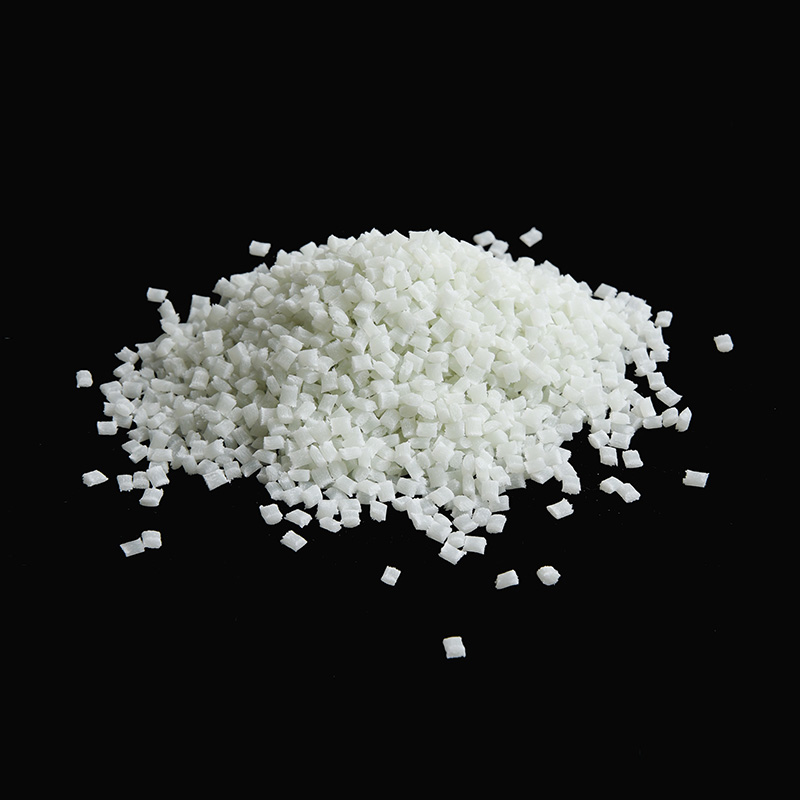 Enhanced PA66 Chips for High-Temperature StrengthConsider reinforced PA66 chips for applications requiring superior mechanical performance and thermal stability, particularly in automotive and electrical sectors.View Product →
Recycling and Sustainability of PET Material
PET is widely described as one of the most recyclable plastics. That statement is supported by the fact that PET has a dedicated recycling stream in most developed countries. In the United States, PET bottles are collected at curbside under the resin code #1. In many European countries, deposit-return systems push PET bottle collection rates well above 50%, and in some cases above 90%.
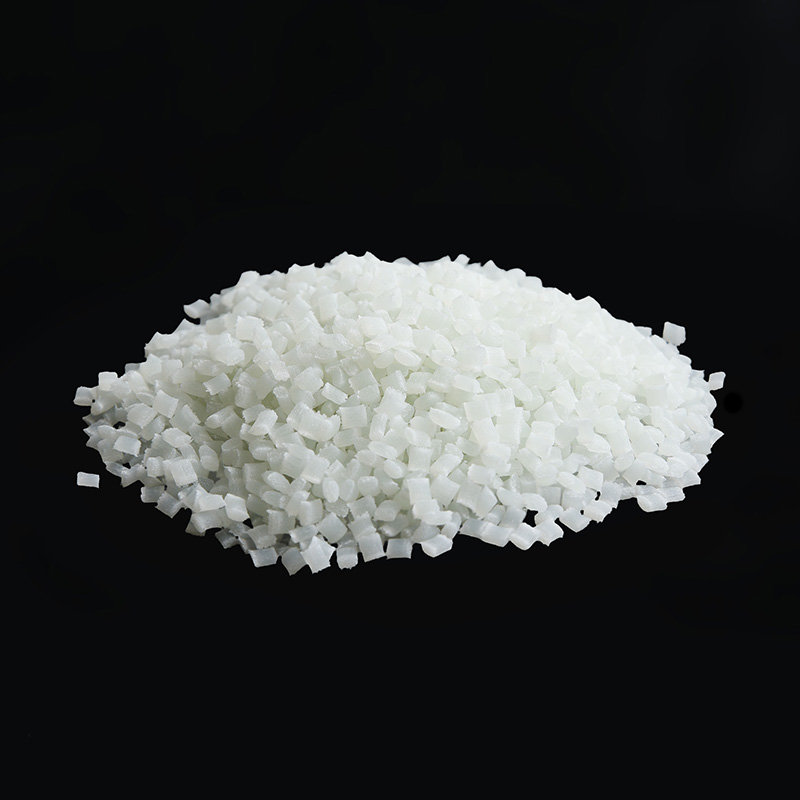 Recycled Polyamide Granules from a Reliable ManufacturerDiscover recycled polyamide granules that support sustainability goals. Produced by an experienced supplier, these materials serve diverse industries from automotive to electronics.View Product →
Mechanical Recycling Process
Mechanical recycling is the most established route. It involves collecting PET bottles, sorting them by resin type, removing labels and caps, washing, shredding, and then melt-extruding the material into recycled PET pellets, commonly known as rPET. The rPET is currently used in new bottles, polyester staple fiber used for apparel and carpets, and in non-woven applications.
However, each mechanical recycling cycle causes chain scission, which reduces the IV and shortens the polymer chains. This means the recycled material cannot be used for high-performance applications without blending with virgin resin or going through solid-state polymerization to rebuild molecular weight. This is a meaningful limitation in the circular economy loop.
Chemical Recycling: Closing the Loop
Chemical recycling breaks PET down into its original monomers, terephthalic acid and ethylene glycol, via hydrolysis, methanolysis, or glycolysis. The monomers can then be repolymerized to create PET with properties identical to virgin material. This process is viewed as the way to achieve true infinite recycling, and several commercial plants have recently come online in Asia and Europe.
The circular economy concept is also expanding to nylon materials. Recycled polyamide granules made from production waste and used engineering plastics are increasingly available. The role of recycled polyamide particles in the circular economy is an important sustainability topic that mirrors the progress being made with PET.
Current Recycling Rates and Market Reality
The global recycling rate for PET bottles is estimated at 20-30%, according to various industry reports. While this is higher than most other plastics, it still represents a significant loss of material. The European Union has implemented strict recycled-content mandates for PET bottles, requiring 25% rPET content by 2025 and 30% by 2030. In the US, several states have proposed minimum recycled-content laws. These regulatory trends are pushing brands to secure rPET supply.
The demand for recycled content is currently outpacing supply. The price of rPET is often higher than virgin PET, which is a surprising market inversion that reflects the challenge of collection and sorting. For businesses that rely on PET, this means that using recycled content can have a direct cost impact.
How to Choose Between PET and Polyamide Materials
Material selection is rarely a simple matter of looking up a datasheet. The practical process involves balancing performance, cost, manufacturing feasibility, and supply chain reliability. Here is a step-by-step framework that engineers and procurement teams can use.
Step 1: Define the Critical Performance Requirements
Write down the required values for tensile strength, stiffness, impact resistance, temperature rating, moisture sensitivity, chemical exposure, and tolerance. Be explicit. A vague "it needs to be strong" is not useful. Use values you can measure and verify.
Step 2: Evaluate the Operating Environment
Does the part operate in a humid or water-exposed environment? If so, PET's very low moisture absorption becomes an immediate advantage. If the part sees repeated contact with UV light, PET also tends to outperform polyamides. If the environment is dry and involves mechanical abuse, polyamide may be the more forgiving material.
Step 3: Consider the Manufacturing Process
PET requires careful drying before processing. If moisture levels are not controlled, hydrolysis can dramatically reduce the molecular weight and properties. The IV of the resin must match the conversion process. For blow molding, you need high-IV bottle-grade PET. For film, you need a lower-IV grade. For injection molding, semi-crystalline PET is used, and fast cycling is possible with the right mold design. For polyamides, drying is also required, but the window is a bit more forgiving in some cases.
Step 4: Analyze Total Cost, Not Just Resin Price
The resin price is only part of the equation. Consider tooling, cycle time, scrap rate, and the cost of dimensional rejects. A material that processes consistently and produces fewer defects can be cheaper overall even if its resin price is slightly higher. The current market price for PET is around $0.85-1.10 per kilogram, while PA6 and PA66 are typically more expensive in the $1.20-2.00 per kilogram range, depending on global supply.
Step 5: Engage a Qualified Material Supplier
This is where working with a supplier that has direct experience with modified engineering plastics is valuable. A supplier like Ningbo Frontechnic, which runs its own polyamide modification line and carries standard enhanced, flame-retardant, and toughened grades, can help you start from a proven formulation rather than starting from scratch. The goal is to avoid unnecessary custom compounding costs while still satisfying the performance requirements of the application. When standard grades cannot cover your requirement, a supplier with a custom special specifications capability can help you get exactly what you need.
For an engineering application, the question is not just "what is PET material?" but rather "which material fits this application best?" If you are uncertain about whether PET or PA6/PA66 is the right solution, reaching out to a material specialist early can save you weeks of trial and error.
Frequently Asked Questions about PET Material
What does PET stand for?
PET stands for polyethylene terephthalate. It is also sometimes abbreviated as PETE, which is the older acronym used in the plastics industry. These terms refer to the same material, the most common thermoplastic polymer of the polyester family.
Is PET material the same as polyester?
No, but the two are closely related. PET is the polymer, and polyester is the broader family of polymers that PET belongs to. Polyester fibers that you see in clothing are essentially PET fibers. When someone says "polyester fabric," they are using a term that describes the application of PET material in textile form.
Is PET material recyclable?
Yes. PET is identified by the resin code #1 and is one of the most recycled plastics. It can be mechanically recycled into rPET pellets or chemically depolymerized into its starting monomers. The recycled content can be used in new bottles, polyester fiber, films, and many other products.
Is PET material safe for food and beverage contact?
PET is one of the most studied food-contact plastics in the world. It does not contain bisphenol A (BPA), is chemically inert, and its very low moisture absorption means that it does not hydrolyze or react with the contents under normal use conditions. It has been used for beverage bottles for decades. When using PET for food packaging, always use food-grade resin and follow the manufacturer's recommended processing conditions, because poor processing can affect the quality of the final article.
What is the maximum continuous service temperature of PET?
For standard amorphous bottle-grade PET, the upper limit is around 70°C. For semi-crystalline PET reinforced with glass fibers, the maximum continuous service temperature rises to about 110-140°C. Short-term peak temperatures can approach 150°C without total deformation, depending on the exact grade and the shape of the part.
What is the difference between PET, PBT, and PPA?
PBT (polybutylene terephthalate) is chemically similar to PET but has better processing characteristics for injection molding. PPA (polyphthalamide) is a polyamide resin that combines high heat resistance and excellent mechanical properties, placing it in a higher performance class than PET for demanding engineering applications. PPA is often used in applications where continuous temperatures exceed 150°C. If you need a material suited for long-term high-temperature strength and moisture resistance, PPA plastic series performance in hot and humid conditions is an important reference.
How much does PET material cost?
The price of PET resin is closely linked to upstream petroleum costs and regional supply-demand conditions. As of early 2026, the market price for bottle-grade PET is roughly between $0.85 and $1.10 per kilogram in most global markets. Textile-grade PET is typically slightly cheaper, while high-IV specialty grades can command higher prices.
How long has PET material been in commercial use?
PET was first patented in the 1940s by British chemists John Whinfield and James Dickson. Commercial production of PET fiber began in the 1950s, and the first PET beverage bottles appeared in the late 1970s. Since then it has grown into one of the highest-volume plastics in the world.
Can PET be used in additive manufacturing or 3D printing?
Standard PET is not commonly used for fused deposition modeling because it has high crystallization tendencies and a narrow processing window. However, specially modified PET blends, such as PETG (glycol-modified PET), are widely used in 3D printing. PETG addresses the flexibility and printability issues while retaining many of the strength and chemical resistance benefits of base PET.

 Mob: +86-15867822829
 Tel: +86-0574-62538663
 Fax: +86-0574-62530664
 E-mail:
 Follow Us
 Home
Home
