


 English
 中文简体
中文简体 Español
 русский
 عربى
عربى
Content
- 1 The Short Answer: PBT Stands for Polybutylene Terephthalate
- 2 What Is PBT? A Closer Look at the Material
- 3 Key Properties of PBT That Matter in Real Applications
- 4 Where PBT Is Used Across Industries
- 5 PBT vs Nylon: Key Performance Differences
- 6 When Nylon Makes More Sense Than PBT
- 7 Frequently Asked Questions About PBT
- 7.1 What does PBT stand for in plastics?
- 7.2 Is PBT stronger than nylon?
- 7.3 Is PBT the same as PET?
- 7.4 Can PBT be recycled?
- 7.5 What are the chemical limitations of PBT?
- 7.6 How do I choose between PBT and nylon for my part?
- 7.7 Does nylon absorb moisture enough to cause dimensional changes?
- 7.8 What is the difference between PA6 and PA66?
The Short Answer: PBT Stands for Polybutylene Terephthalate
PBT stands for Polybutylene Terephthalate. It is a semi-crystalline engineering thermoplastic that belongs to the polyester family. The material is produced through the polycondensation of terephthalic acid and 1,4-butanediol. For design engineers and procurement teams, the practical significance of PBT is that it delivers excellent dimensional stability, very low moisture absorption, and strong electrical insulation.
If you have seen the abbreviation PBT on a material datasheet, you are likely at the point of making a purchasing decision. The question is not only what the letters mean, but whether PBT is the right material for your part, or whether an alternative such as nylon (PA6 or PA66) would give you better performance at a lower overall cost.
The key takeaway is straightforward. If you are designing electrical connectors, coil bobbins, or precision housings that must stay dimensionally accurate in a humid environment, PBT is an excellent option. If your part carries a mechanical load, faces repeated impact, or needs wear resistance, nylon is usually the better route. The sections below give you a practical comparison that you can use directly in your material selection process.
What Is PBT? A Closer Look at the Material
PBT is the product of a condensation reaction between terephthalic acid and 1,4-butanediol. The resulting polymer has an aromatic ring in its backbone, which contributes stiffness and thermal stability, while the ester linkage provides good solvent resistance and processability. This combination makes PBT one of the easier engineering plastics to injection mould, with fast cycle times and a smooth surface finish.
Forms of PBT Available in the Market
- Unfilled or neat PBT: chosen when electrical insulation and dimensional accuracy are the primary needs.
- Glass-fibre reinforced PBT (15% to 45% glass): used where higher stiffness and heat resistance are required.
- Flame-retardant PBT: designed for electronic housings and components that must meet strict fire-safety requirements.
A typical 30% glass-fibre reinforced PBT grade delivers a tensile strength of approximately 140 to 150 MPa and a heat deflection temperature near 210°C at 1.8 MPa. These figures are drawn from standard published material datasheets and widely used as industry reference points.
One material that is frequently compared with PBT is polyethylene terephthalate (PET). PBT is not the same as PET. PET uses ethylene glycol in its production, while PBT uses 1,4-butanediol. The longer diol chain in PBT gives it a lower melting point and better crystalisation behaviour, which makes injection moulding easier. If you want to understand nylon's performance as a comparison, the article on nylon material gives a useful overview of its molecular structure and grades.
Key Properties of PBT That Matter in Real Applications
When evaluating PBT for a specific application, four property clusters tend to dominate the decision-making process. Understanding these clusters through actual numbers helps you avoid the risk of material failure later in production.
Dimensional Stability and Moisture Resistance
PBT absorbs very little water. After a 24-hour immersion test, the typical moisture uptake for unfilled PBT is in the range of 0.08 to 0.15%. By comparison, nylon 6 absorbs much more moisture at 1.2 to 1.8% under the same test conditions. This means a nylon part can swell by 0.2 to 0.5% in a high-humidity environment, while an equivalent PBT part would change by less than 0.1%. Precision fits and interference assemblies benefit significantly from this property.
Electrical Insulation Performance
PBT has excellent dielectric properties. Standard grades offer a comparative tracking index (CTI) in the range of 400 to 600 volts, depending on the additive system. This makes PBT one of the preferred materials for electrical connectors, relay bases, plug housings, and switch covers. The combination of low moisture uptake and high dielectric strength means the electrical performance is maintained in humid service conditions.
Thermal and Chemical Resistance
PBT resists oils, greases, and many common solvents, which is why it appears in automotive fuel system components and consumer appliance parts that see periodic contact with lubricants. However, PBT should not be used for long-term exposure to hot water above 60°C, strong bases, or certain amine-containing chemicals. These conditions can cause chemical degradation and a loss of mechanical properties.
| Property | Unfilled PBT | 30% Glass PBT | PA6 30% Glass | PA66 30% Glass |
|---|---|---|---|---|
| Tensile strength (MPa) | 50-60 | 140-150 | 160-175 | 185-200 |
| Elongation at break (%) | 5-8 | 2-3 | 3-4 | 3-5 |
| HDT at 1.8 MPa (°C) | 55-65 | 205-215 | 195-205 | 245-255 |
| Water absorption 24h (%) | 0.08-0.15 | 0.10-0.20 | 1.2-1.8 | 0.9-1.5 |
| Melting point (°C) | 222-227 | 222-227 | 220-225 | 255-265 |
Where PBT Is Used Across Industries
The dominant consumer of PBT worldwide is the electrical and electronics industry. The material is a standard choice for a wide range of components where insulation, fire resistance, and dimensional accuracy are non-negotiable.
Electrical and Electronics
- Electrical connectors and terminals
- Coil bobbins and transformer frames
- Relay components and switch housings
- LED housings and battery pack components
- Circuit breaker housings and wiring harness parts
Automotive and Industrial
The automotive industry is the second-largest end market for PBT. Glass-filled grades are used in headlamp bezels, fuel line connectors, throttle bodies, and various sensors. In electric vehicles, PBT appears in charging port components and battery management connectors. The material's flame-retardant grades are especially important in these high-voltage applications.
Industrial use extends to servo motor encoders, pump housings, and oven door handles. PBT's ability to hold tight dimensions through weathering and temperature cycles makes it a reliable choice for outdoor equipment components as well.
Yet there is a critical limitation that many buyers discover only after production has started. PBT is not a high-strength structural material. If your part carries a mechanical load, the comparison with nylon becomes the deciding factor.
PBT vs Nylon: Key Performance Differences
When a part specification calls for a semi-crystalline engineering plastic, PBT and nylon (PA6 and PA66) are the two materials most often placed side by side. They behave very differently in real service conditions, and the differences translate directly into part reliability and total cost.
Moisture Sensitivity: The Most Important Difference
PBT absorbs very little moisture, and as a result its dimensions remain essentially unchanged when exposed to high humidity. A precision part blocked to a fit of 0.1mm will stay within its tolerance in a PBT material. Nylon is different. A 30% glass-filled PA6 component can take up moisture over time and swell by 0.2 to 0.5%. In a connector housing, that swelling can produce an interference fit that ruins the assembly. If tight dimensional control matters more than absolute strength, PBT is the right choice.
Mechanical Strength: Nylon Is Stronger
In absolute terms, nylon consistently beats PBT. A 30% glass-filled PA66 grade delivers a tensile strength of 185 to 200 MPa, whereas the equivalent PBT grade only reaches 140 to 150 MPa. Nylon also has a significantly higher impact strength, particularly at low temperatures. This is why parts such as gear housings, brackets, and structural clips are normally specified in nylon rather than PBT.
Thermal Performance: PA66 Leads the Way
PA66 has the highest melting point among the three, reaching 255 to 265°C. Its heat deflection temperature at 1.8 MPa is 245 to 255°C. PBT sits at 222 to 227°C melting point and 55 to 65°C HDT in unfilled form. For continuous service temperatures above 150°C, PA66 is the safer material. PBT can handle short soldering exposure, but it is not positioned for sustained near-engine temperatures.
Wear and Friction: Nylon Is the Proven Choice
Nylon is inherently self-lubricating and has outstanding wear resistance. Gears, bushings, cams, and sliding bearings are traditionally manufactured from nylon. PBT does not perform well in dynamic contact applications because of higher friction and lower surface endurance. For moving parts where abrasive wear is a concern, nylon is the established material.
Given these strengths, PA66 in particular is a strong candidate for applications where the physical demands on the part exceed what PBT can provide. Enhanced PA66 chips are engineered to meet the precise requirements of structural and high-load components.
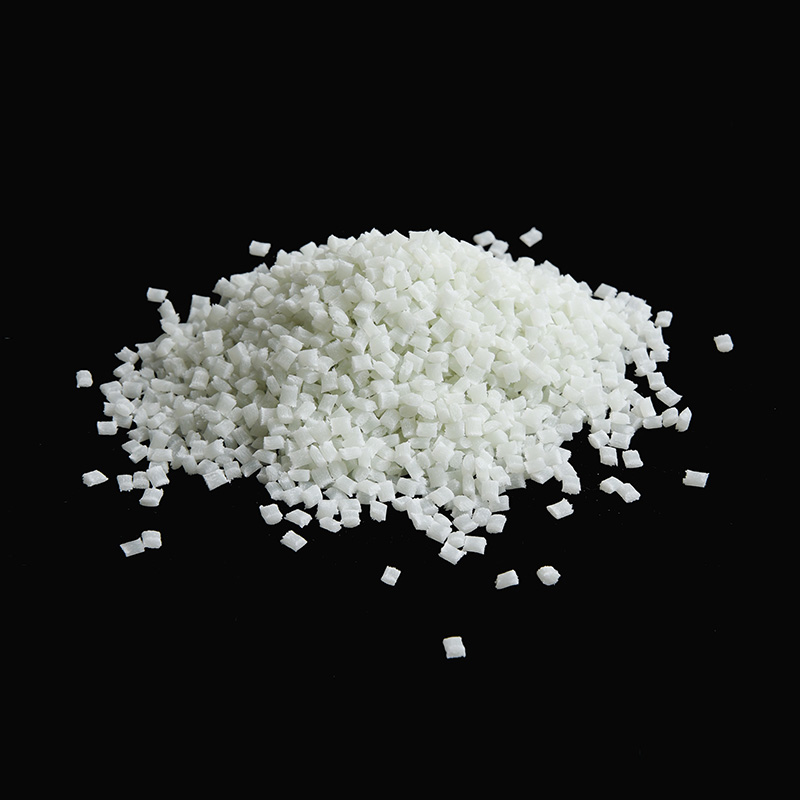
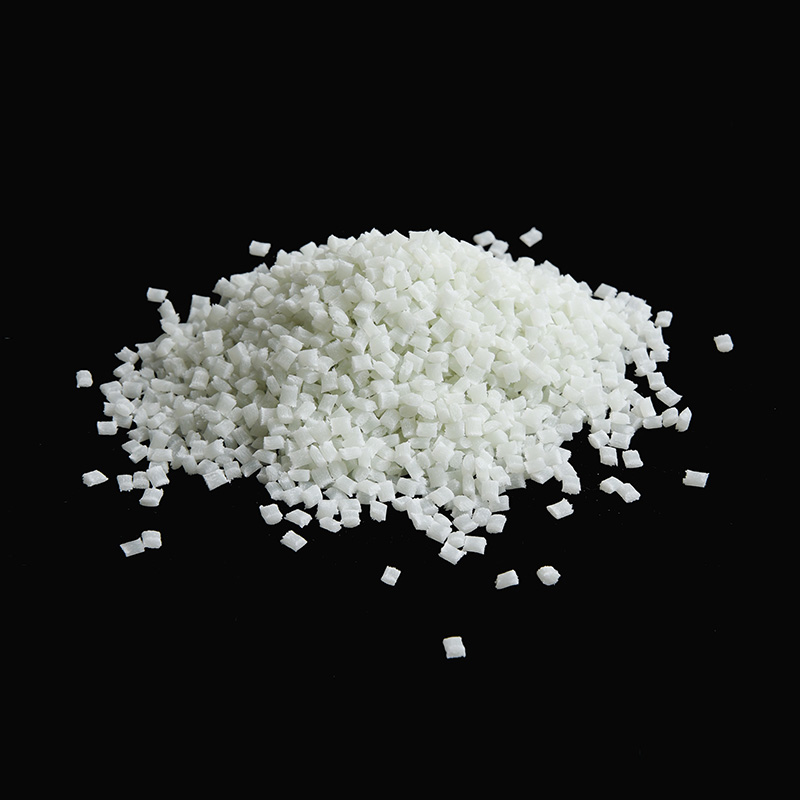 Enhanced Grade PA66 Chips for High-Load Structural ApplicationsExplore reinforced PA66 chips offering superior mechanical strength and heat resistance, ideal for automotive and industrial parts requiring high rigidity and durability.View Product →
When Nylon Makes More Sense Than PBT
If your part is not a precision electrical component, there is a high probability that nylon is a better fit than PBT. There are four clear scenarios where nylon outperforms PBT in real production conditions.
- Load-bearing structural parts. Nylon's higher tensile strength and modulus allow you to use thinner wall sections while still meeting the load requirement. This can reduce cycle time and material consumption.
- Parts subject to impact or vibration. Nylon's higher impact strength and energy absorption reduce the likelihood of cracking during handling, assembly, and in-service dynamic loading.
- Wear and sliding surfaces. Nylon's low coefficient of friction and self-lubricating character make it ideal for gears, bearings, and sliding blocks. PBT is rarely used in these moving contact applications.
- Cost and supply reliability. Nylon 6 chips are typically more cost-effective per kilogram than PBT. Nylon feedstock availability is wider and better established in many regions, which translates to shorter lead times and more stable sourcing.
If your application leans toward these scenarios, a compound developed from PA6 chips or PA66 chips can be formulated to match the exact mechanical and thermal requirements of your part. Even for applications where moisture-driven dimensional change is a concern, glass-filled and mineral-filled nylon grades can be specified to reduce moisture uptake to a manageable level.
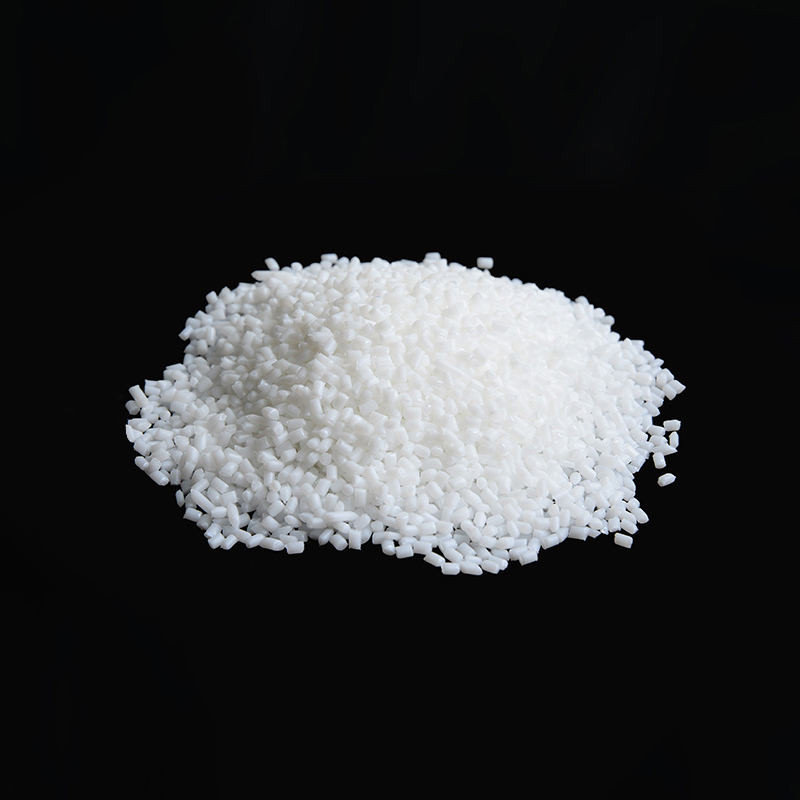
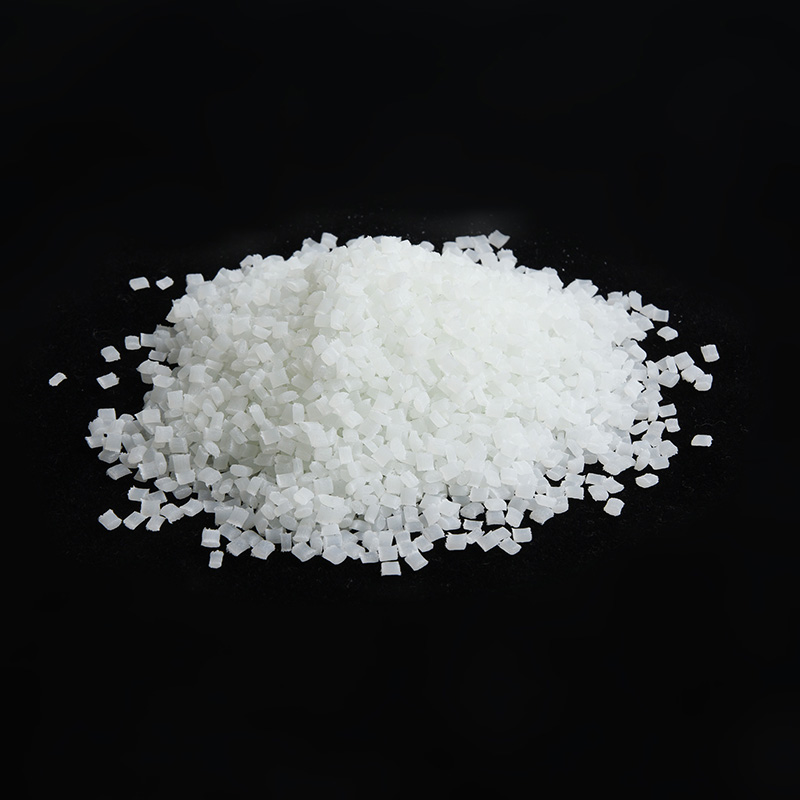 Reinforced PA6 Chips for High-Strength Engineering ComponentsConsider these glass or mineral-filled PA6 chips for applications needing improved dimensional stability and creep resistance, particularly in high-load and temperature environments.View Product →
For electrical and electronics applications where flame retardance is a mandatory requirement, flame-retardant PA6 chips offer a reliable alternative to PBT in certain housings and connector components, while providing the mechanical strength that PBT lacks.
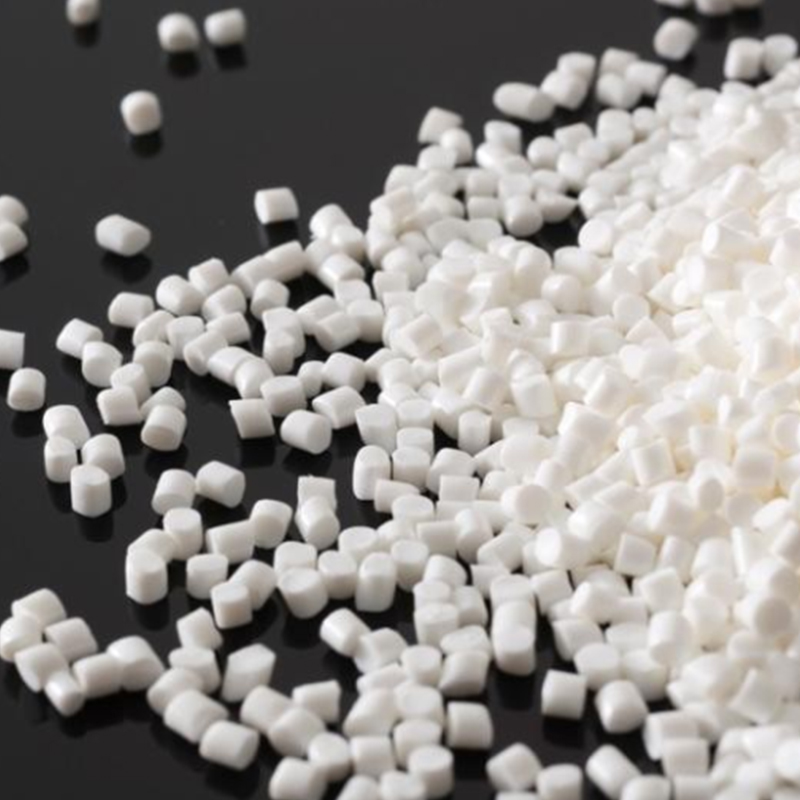
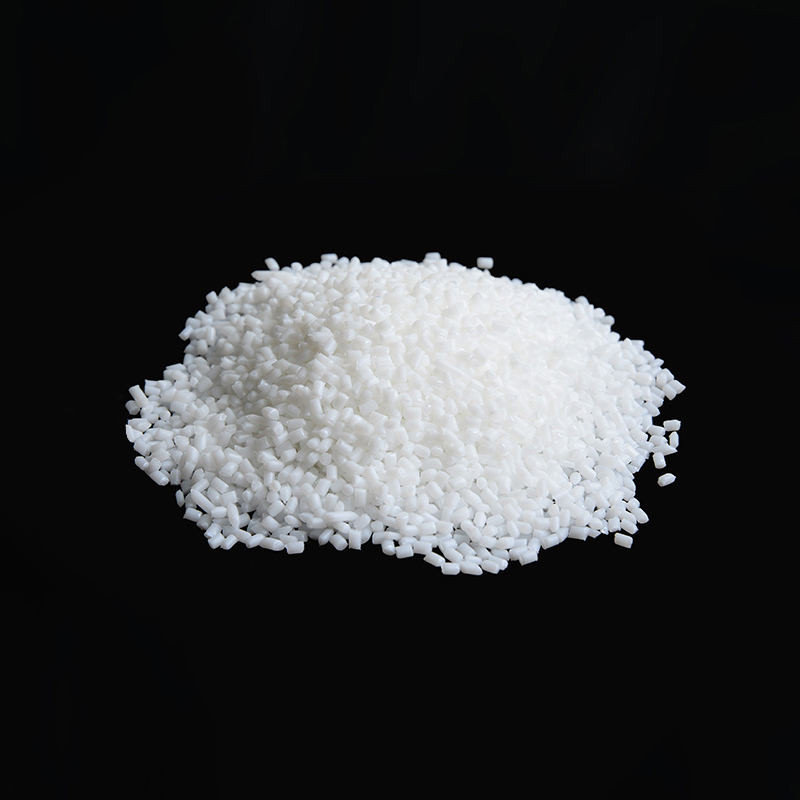 Flame Retardant PA6 Chips for Electrical and Electronic SafetyThese flame-retardant PA6 chips are a reliable choice for housings and connectors where fire safety is critical, combining mechanical strength with enhanced fire resistance.View Product →
Frequently Asked Questions About PBT
What does PBT stand for in plastics?
PBT stands for Polybutylene Terephthalate, a semi-crystalline engineering thermoplastic in the polyester family. It is made by the polycondensation of terephthalic acid and 1,4-butanediol and is commonly used in electrical and electronics components.
Is PBT stronger than nylon?
No. Nylon (PA66) has a higher tensile strength, higher impact resistance, and better wear performance than PBT. The main advantage of PBT is its superior dimensional stability and lower moisture absorption, which makes it preferable for precision electrical parts in humid environments.
Is PBT the same as PET?
No. PET stands for Polyethylene Terephthalate, which is the material in beverage bottles and packaging films. Both PBT and PET are polyesters, but they differ in the diol used. PET uses ethylene glycol, while PBT uses 1,4-butanediol. PBT has a lower melting point and better moulding properties for engineering components.
Can PBT be recycled?
Yes, PBT is a thermoplastic and can be reground plus reprocessed. However, the recycled PBT market is smaller than recycled polyamide. If environmental impact is a priority, recycled polyamide granules provide a more established closed-loop recycling pathway with excellent mechanical resale value.
What are the chemical limitations of PBT?
PBT is attacked by hot water above 60°C, strong bases, and certain amine-containing fluids. It should not be used for long-term contact with hot caustic solutions. For wet heat applications, nylon or high-performance polyamides may need to be evaluated instead.
How do I choose between PBT and nylon for my part?
Evaluate five factors in this order: dimensional stability, mechanical strength, thermal resistance, wear resistance, and total cost. If your part is an electrical component that must hold tight tolerances in humidity, PBT is a safe choice. If your part carries load, faces impact, or involves sliding, nylon is the stronger performer. The current state of the nylon 6 chip industry also affects raw material availability and pricing, which can influence your material choice.
Does nylon absorb moisture enough to cause dimensional changes?
Yes. A 30% glass-filled PA6 part can absorb up to 1.8% water in a 24-hour immersion test. After moisture equilibration, dimensional changes of 0.2 to 0.5% are possible. This is why PBT remains the default in precision connectors, while nylon is used where its strength and toughness outweigh dimensional sensitivity.
What is the difference between PA6 and PA66?
PA66 has a higher melting point (255 to 265°C) and higher mechanical strength than PA6 (220 to 225°C). PA6 has better surface finish and slightly easier processing in thin walls. Both are supplied in glass-reinforced, flame-retardant, and toughened grades. For nylon suppliers, a balanced product range of PA6 and PA66 chips makes it possible to meet different application priorities without changing supplier.
 Mob: +86-15867822829
 Tel: +86-0574-62538663
 Fax: +86-0574-62530664
 E-mail:
 Follow Us
 Home
Home
