


 English
 中文简体
 Español
 русский
 عربى

Content
- 1 Defining Carbon Fibre Composites: Fibre, Matrix and Interface
- 2 Why Carbon Fibre Delivers Such a Large Performance Jump
- 3 Thermoset versus Thermoplastic Carbon Fibre Composites
- 4 Short Fibre, Long Fibre and Continuous Fibre: The Variable That Decides the Outcome
- 5 How Carbon Fibre Composite Parts Are Actually Made
- 6 Quick Comparison: Carbon Fibre Against Glass Fibre, Aluminium and Steel
- 7 Thermoplastic Matrices and the Role of Engineering Nylons
- 8 Questions Worth Asking Before You Specify a Carbon Fibre Composite
- 9 Cost and Procurement: Where the Weight Really Starts to Cost Money
- 10 Where Carbon Fibre Composites Are Used Today
- 11 Recycling: Can Carbon Fibre Composites Be Circular?
- 12 Four Assumptions About Carbon Fibre Composites That Cause Trouble
- 13 Frequently Asked Questions About Carbon Fibre Composites
- 13.1 Is a carbon fibre composite just carbon fibre plus resin?
- 13.2 Is carbon fibre composite stronger than steel?
- 13.3 Can carbon fibre composites be recycled?
- 13.4 What is the difference between carbon fibre and glass fibre composites?
- 13.5 Do carbon fibre composites degrade over time?
- 13.6 Why does fibre orientation matter so much?
- 13.7 Which fibre length should a new project start with?
Carbon fibre composites are materials made from two components that behave completely differently on their own: very thin carbon fibres, and a polymer that holds them in place. The fibres carry the load. The polymer transfers stress between the fibres and protects them from the environment. Put those two together correctly and you get a material that is roughly one quarter the density of steel while matching or beating it on stiffness-to-weight.
The single most useful thing to understand early is that a carbon fibre composite is not one material. It is a system. Fibre type, fibre length, fibre volume fraction, surface sizing and the choice of polymer matrix all shift the final properties. Change one of them and you effectively have a different material with a different datasheet.
The practical takeaway: choose carbon fibre composites when stiffness and mass are the constraints you cannot move on, and accept that fibre orientation and fibre volume fraction drive the result far more than the brand of resin. Everything that follows explains why that is true and what it means for a real project.
Defining Carbon Fibre Composites: Fibre, Matrix and Interface
A carbon fibre composite is built from three things that all matter: the fibre, the matrix, and the interface between them.
The fibres are produced by spinning a precursor, most commonly polyacrylonitrile, and then heating it through a series of stages that ends somewhere between 1,000 and 3,000 degrees Celsius. A single filament ends up 5 to 10 micrometres across, which is roughly one fifteenth the thickness of a human hair. Inside that filament, carbon atoms are aligned along the fibre axis. That alignment is where the tensile strength comes from.
The matrix is the polymer that locks the fibres in position. It can be thermosetting, such as epoxy, vinyl ester, polyester, phenolic or bismaleimide, or thermoplastic, such as PA6, PA66, PPA, PPS, PEEK, PEI or PC. The matrix does not carry much load itself. Its job is to pass load from fibre to fibre. Without it, the fibres would simply slide past each other and each one would carry only its own share.
The third element, the interface, rarely appears on a product page but causes most project failures. Carbon fibre surfaces are chemically inert, so producers apply a thin sizing or coupling layer. That sizing is chemically selective for a specific resin family. Pair a sizing designed for epoxy with a polyamide matrix and the datasheet can look excellent while the moulded part measures far below expectation. When a supplier cannot tell you which sizing is on the fibre, that is a genuine procurement risk, not a minor detail.
Why Carbon Fibre Delivers Such a Large Performance Jump
Carbon fibre tensile strength typically falls between 3,000 and 7,000 MPa, and tensile modulus between 200 and 600 GPa depending on the grade. Standard modulus fibre sits near the lower end of that modulus range at roughly 230 GPa, while high modulus grades push past 500 GPa. Density lands between 1.5 and 2.0 g/cm3. Aluminium sits near 2.7 g/cm3 and steel near 7.8 g/cm3.
That combination is why aerospace and motorsport structures have leaned on composites for decades. But three secondary properties often decide whether a project succeeds:
- Fatigue behaviour. Metals such as steel and aluminium have a defined fatigue limit. Composite laminates do not behave the same way, and their strength loss under cycling loads is generally far more gradual.
- Corrosion resistance. Carbon fibre composites do not rust, and in most environments they resist the galvanic corrosion that eats into aluminium joints.
- Thermal dimensional stability. Continuous carbon fibre has a near-zero coefficient of thermal expansion along the fibre direction, and laminates can be designed so expansion nearly cancels out in specific directions.
There is a catch worth stating plainly. Carbon fibre composites are electrically conductive, unlike glass fibre composites. That is sometimes the reason they are chosen and sometimes the reason they cause problems with fasteners, electronics and lightning protection.
Thermoset versus Thermoplastic Carbon Fibre Composites
Knowing what carbon fibre composites are does not answer the question that actually matters: which matrix belongs in your part. That is the first real decision, and it changes processing, cost and end-of-life options.
Thermosetting matrices
Epoxy, vinyl ester, polyester and phenolic resins cure by crosslinking into an irreversible network. They offer low viscosity, excellent fibre wet-out, high strength and a mature supply chain. They also cannot be melted again, which limits reshaping and complicates recycling.
Thermoplastic matrices
PA6, PA66, PPA, PPS, PEEK and PEI can be melted, shaped and melted again. They generally deliver better room-temperature toughness and impact resistance, faster cycle times in injection and compression moulding, and a genuine recycling route through re-melting and re-pelletising.
The trade is straightforward. Thermosets give you a wider processing window at lower temperatures and a deeply established supplier base. Thermoplastics give you faster cycles, better damage tolerance and a material that can be re-processed, which increasingly matters to buyers with end-of-life targets.
Short Fibre, Long Fibre and Continuous Fibre: The Variable That Decides the Outcome
Fibre length influences final properties more than almost any other single variable, and it also determines which manufacturing processes are even possible.
Short fibre, roughly 0.2 to 1 mm
Compounded into pellets and injection moulded. Complex geometry at high volume is easy, cost is the lowest of the three, and stiffness gain is limited because fibres break down further during processing.
Long fibre, roughly 10 to 25 mm
Supplied as long-fibre pellets or processed by direct compounding. Impact strength, creep resistance and stiffness all improve noticeably, which is why structural brackets and underbody components frequently use this class.
Continuous fibre
Unidirectional tape, woven fabric and multiaxial laminates. This is where the headline numbers live, and also where design, lay-up and quality control effort concentrate. Continuous fibre parts are designed, not just moulded.
How Carbon Fibre Composite Parts Are Actually Made
Process selection follows directly from fibre length and part volume. The main routes in commercial use are:
- Injection moulding of short or long fibre compounds. Highest volume, lowest unit cost, most geometric freedom.
- Compression moulding of long fibre or sheet material. Good balance of fibre length and cycle time for structural parts.
- Resin transfer moulding, where dry fibre preform is placed in a closed tool and resin is injected. Suitable for medium volumes and large panels.
- Pultrusion, which pulls continuous fibre through a resin bath and heated die to produce constant cross-section profiles.
- Autoclave and out-of-autoclave curing of prepreg laminates, used where void content must be minimised.
- Automated fibre placement and tape laying, which build laminates ply by ply under machine control.
For a buyer choosing a supplier, the useful question is not which process is best in the abstract. It is which process your geometry and annual volume can actually justify, and whether the supplier has run it before.
Quick Comparison: Carbon Fibre Against Glass Fibre, Aluminium and Steel
| Property | Carbon Fibre Composite | Glass Fibre Composite | Aluminium 6061 | Mild Steel |
|---|---|---|---|---|
| Density (g/cm3) | 1.5 to 1.6 | 1.8 to 2.0 | 2.7 | 7.8 |
| Tensile strength (MPa) | 1,200 to 2,000 | 400 to 1,000 | 310 | 400 |
| Tensile modulus (GPa) | 70 to 150 | 20 to 40 | 69 | 200 |
| Corrosion resistance | Very good | Good | Moderate | Poor without coating |
| Electrical conductivity | Conductive | Insulating | Conductive | Conductive |
Read that table carefully and the commercial logic becomes clear. Against steel, composites win decisively on weight. Against aluminium they win on stiffness-to-weight and fatigue. Against glass fibre they win on stiffness and mass but lose badly on price.
Thermoplastic Matrices and the Role of Engineering Nylons
Among thermoplastic matrices, polyamides are the most widely used family for carbon fibre and glass fibre reinforced compounds. The reason is balance: good mechanical performance, useful chemical resistance, manageable cost, and a relatively low melt viscosity that lets fibre bundles wet out properly during compounding.
PA6 is the general-purpose workhorse. Its melting point sits near 220 degrees Celsius, it keeps useful toughness after moisture uptake, and it retains a wide processing window once reinforced. For a closer look at the base polymer itself, there is a clear explanation of what nylon material actually is that covers the chemistry and the property trade-offs.
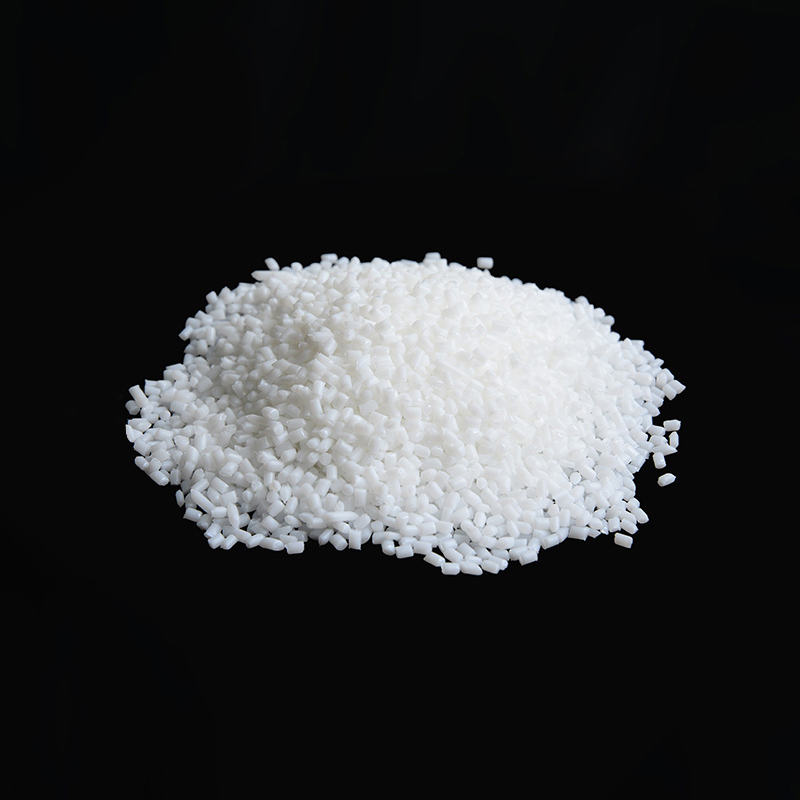
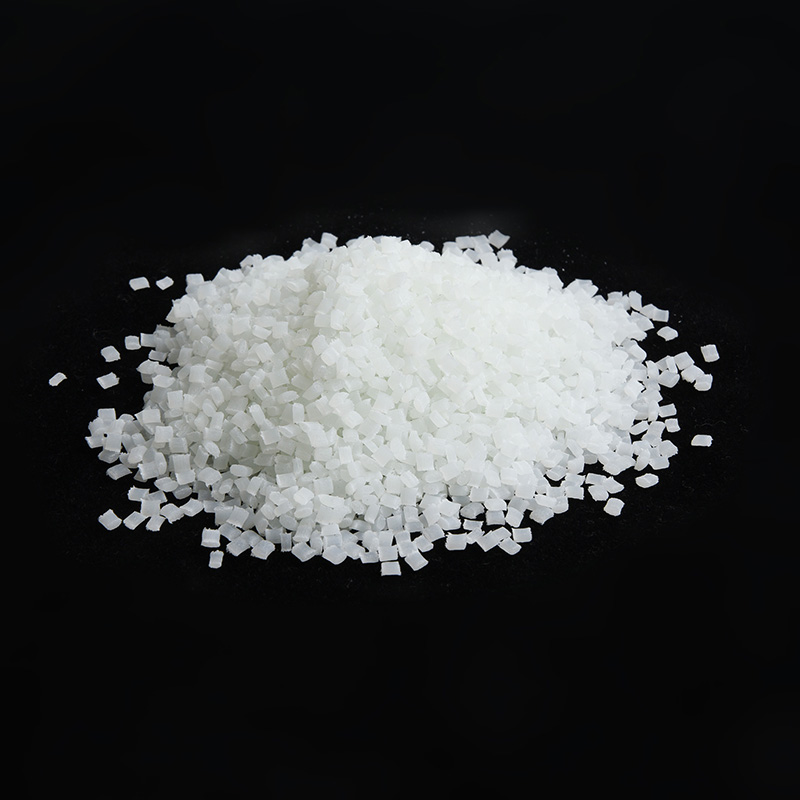 Enhanced PA6 ChipsReinforced PA6 is a polyamide 6 (nylon 6) modified by adding reinforcing materials such as glass fiber, carbon fiber, or mineral fillers. It has higher strength, rigid...View Product →
PA66 offers higher stiffness and better heat resistance, with a melting point around 260 degrees Celsius. The cost is a narrower processing window and greater dimensional sensitivity to moisture absorption, which matters in precision parts.
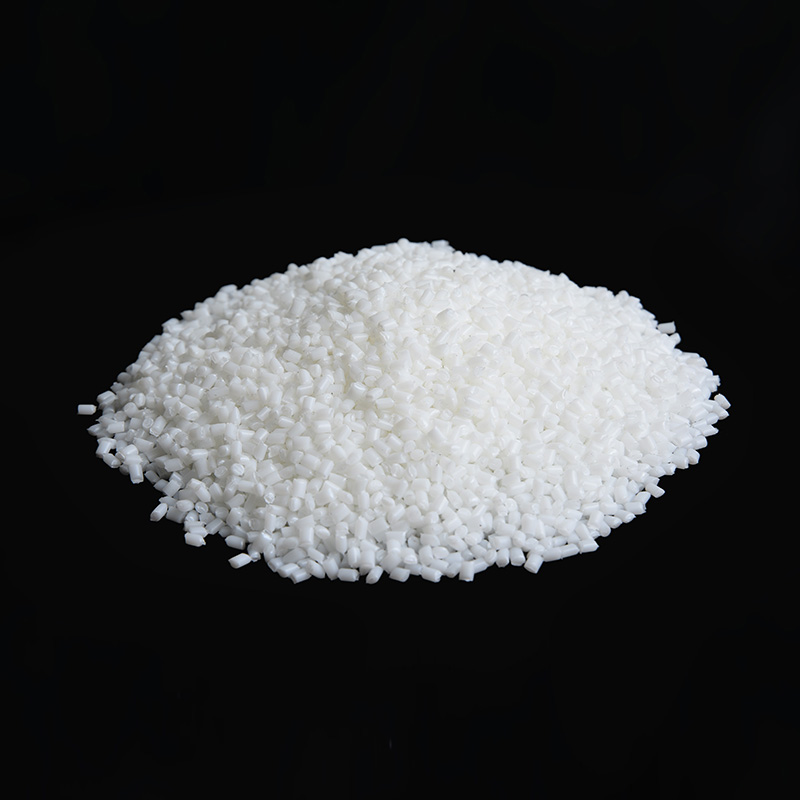
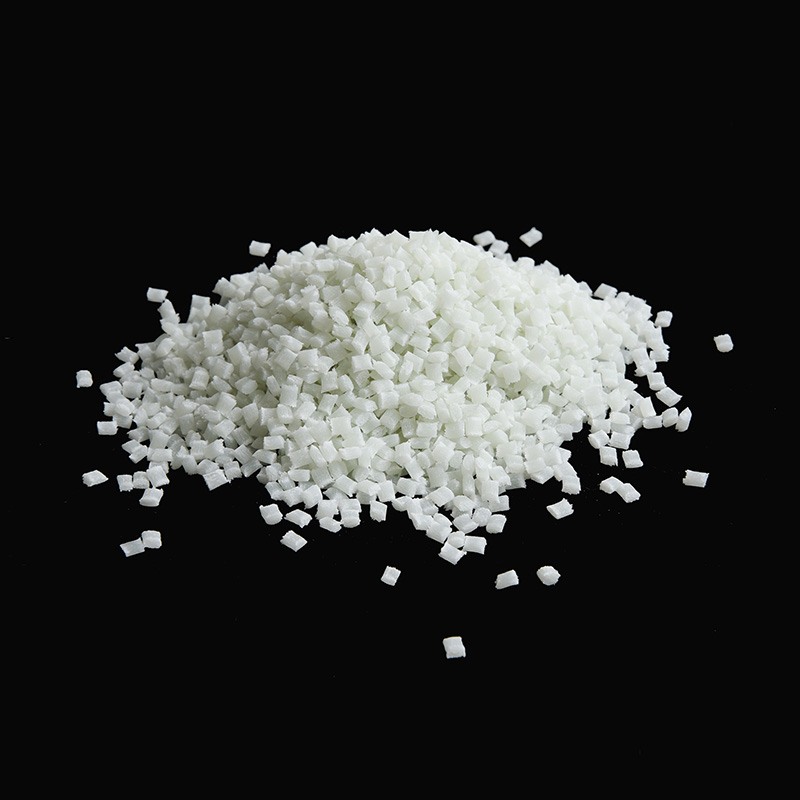 Enhanced grade PA66 chipsReinforced PA66 is an engineering plastic that enhances the performance of polyamide 66 (PA66) by adding glass fibers or other reinforcing materials. It has excellent ...View Product →
PPA, or polyphthalamide, addresses the high-temperature gap. Melting points can exceed 300 degrees Celsius, which allows parts to survive lead-free reflow soldering and to hold strength in environments where PA66 would soften unacceptably.
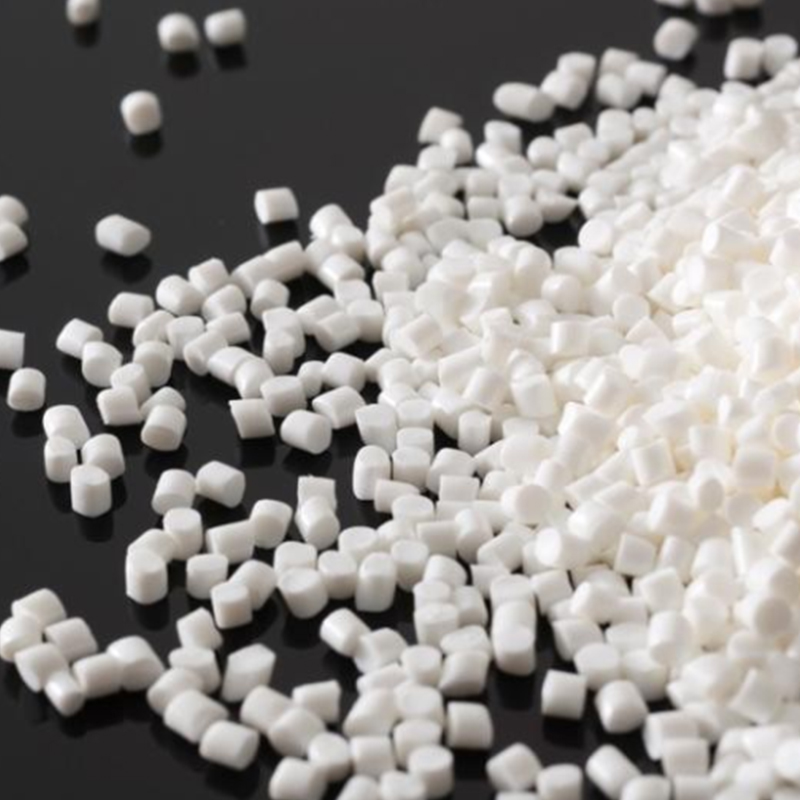
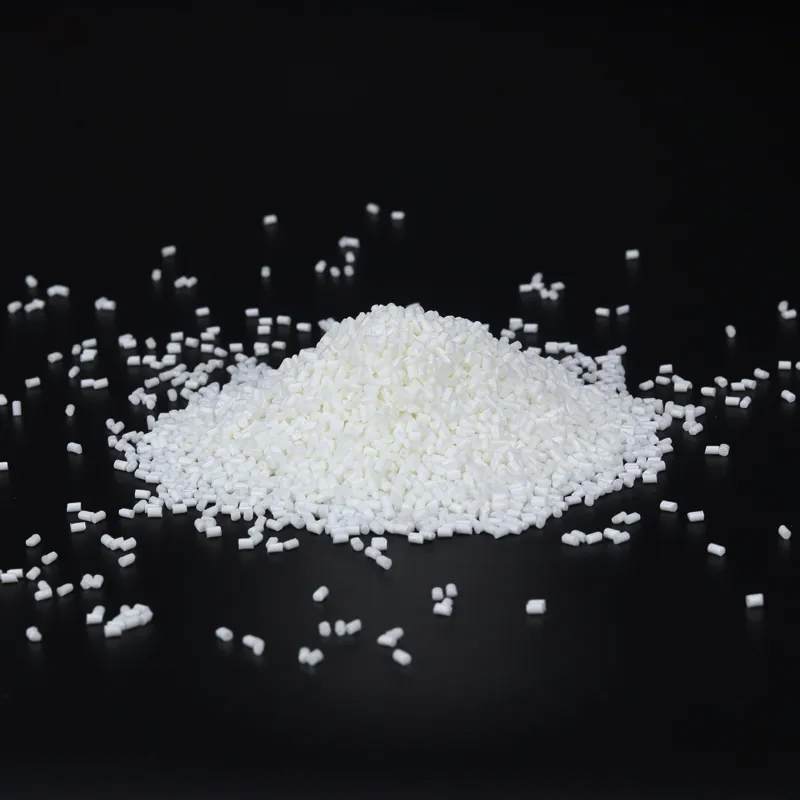 Enhanced PPA chipsReinforced PPA (reinforced polyphthalamide) is a high-performance engineering plastic that improves its mechanical strength, heat resistance, and dimensional stability...View Product →
When carbon fibre is compounded into these resins, the fibre loading is normally quoted by weight and commonly lands between 20 and 40 percent. Above that range, stiffness keeps rising but impact resistance and flow behaviour degrade quickly, and tool wear becomes a real maintenance cost.
Questions Worth Asking Before You Specify a Carbon Fibre Composite
Most specification errors trace back to a handful of unasked questions. These are the ones that change outcomes:
- Is the quoted fibre volume fraction measured or assumed? Suppliers often quote weight fraction, and the conversion is not one to one.
- Which sizing is on the fibre? A mismatch with the matrix can cost you a double-digit percentage of strength.
- What happens to the property data after moisture conditioning? Polyamide matrices absorb water, and dry-as-moulded figures flatter the material.
- Is the fibre length quoted before or after processing? The number in the pellet and the number in the finished part are different numbers.
- What is the specified fibre orientation, and does the tooling actually achieve it? Weld lines are the classic failure location in injection moulded composites.
A supplier who can answer all five without hesitation is usually the one who has already seen the failure mode you are about to create.
Cost and Procurement: Where the Weight Really Starts to Cost Money
Raw fibre pricing gets the attention, but it is rarely the largest line item in a composite part. For most programmes, the cost structure looks more like this:
- Fibre and resin, typically a meaningful but not dominant share.
- Conversion and lay-up labour, which dominates continuous fibre work.
- Tooling amortised across the programme.
- Scrap and rework, which is where composites quietly get expensive.
- Inspection and qualification testing.
Scrap deserves a second look. A composite part that fails at final inspection has already consumed fibre, resin, labour and machine time. Every percentage point of yield improvement therefore removes several times its value in cost. That is the practical reason material consistency and batch-to-batch repeatability matter so much: unstable incoming material shows up as unpredictable yield, not as a failed datasheet.
It is also why stock availability and sample-to-production continuity carry real commercial weight. A change in resin batch that forces re-validation of a moulding process can cost more than the material price difference that prompted it.
Where Carbon Fibre Composites Are Used Today
Applications cluster around a few recurring drivers: mass reduction, stiffness in a specific direction, fatigue life, and thermal stability.
- Aerospace structures, where continuous fibre laminates dominate primary and secondary airframe parts.
- Automotive, from short fibre injection moulded brackets and interior structures to continuous fibre driveshafts and body panels.
- Sports equipment, including bicycle frames, golf shafts, tennis rackets, rowing shells and protective gear.
- Industrial machinery, where low inertia and high stiffness improve positioning accuracy in moving axes.
- Consumer electronics, where thin-wall housings need stiffness without thickness.
- Wind energy, where blade spar caps use continuous fibre for stiffness at length.
- Medical and imaging equipment, where dimensional stability and non-magnetic behaviour are useful.
Notice that most of these are not "high technology" for its own sake. They are cases where a specific physical requirement could not be met with metal at an acceptable mass.
Recycling: Can Carbon Fibre Composites Be Circular?
The answer depends entirely on the matrix. Thermoplastic composites can be re-melted, re-compounded and re-pelletised, which keeps the fibre intact to a useful degree and produces a material that can go back into moulding. Fibre length shortens with each cycle, so properties decline gradually rather than collapsing.
Thermoset composites cannot be re-melted. Recovery routes include mechanical grinding into filler, pyrolysis that burns off the resin and leaves the fibre, and solvolysis using chemical agents. All of them reduce fibre value to some degree, and all of them carry a cost that has to be justified against virgin fibre.
The practical conclusion for a specifier is simple. If end-of-life re-processing is a requirement, the matrix decision is made before the fibre decision, because a thermoplastic matrix is what makes genuine re-melting possible.
Four Assumptions About Carbon Fibre Composites That Cause Trouble
- "More fibre means a stronger part." Not automatically. Above roughly 40 percent by weight, impact resistance and flow both suffer, and weld lines weaken further.
- "Carbon fibre is carbon fibre." Standard, intermediate and high modulus grades differ substantially in stiffness, price and availability, and sizing differs by resin family.
- "Composites do not fatigue." They do, but the mechanism differs from metals and the design approach has to differ too.
- "Composite always means lighter." A poorly oriented laminate can end up heavier than the aluminium part it replaced while also costing more.
Each of these shows up as a rework or a redesign rather than a material failure, which is why they are easy to repeat.
Frequently Asked Questions About Carbon Fibre Composites
Is a carbon fibre composite just carbon fibre plus resin?
At the simplest level yes, but the interface between them is what determines measured performance. Surface treatment and sizing control how effectively stress transfers from the polymer to the fibre, and a poorly matched pair can lose a substantial fraction of the theoretical strength.
Is carbon fibre composite stronger than steel?
On a weight-for-weight basis, generally yes, often by a wide margin. On a volume-for-volume basis, not necessarily. A composite laminate usually has a lower modulus than steel, so a part of identical dimensions may deflect more even though it weighs a fraction as much.
Can carbon fibre composites be recycled?
Yes, but the route depends on the matrix. Thermoplastic composites such as carbon fibre reinforced PA6 or PPA can be re-melted and re-compounded into usable pellets. Thermoset composites require mechanical grinding, pyrolysis or chemical processes, all of which reduce fibre value to some extent.
What is the difference between carbon fibre and glass fibre composites?
Carbon fibre is stiffer, stronger and lighter, and it conducts electricity. Glass fibre is considerably cheaper, electrically insulating, and offers much higher elongation before breaking, which can be an advantage in impact-dominated applications.
Do carbon fibre composites degrade over time?
The fibre itself is highly stable. The matrix is the vulnerable part. Ultraviolet exposure attacks many resins, and polyamide matrices absorb moisture, which changes dimensions and softens the material slightly. Both effects are manageable with the right coating, stabiliser package or design allowance.
Why does fibre orientation matter so much?
Because a composite is only strong along the fibre direction. A laminate loaded perpendicular to its fibres performs far worse than one loaded along them. Injection moulded parts develop flow-induced orientation, so the same material can behave differently in two regions of the same component.
Which fibre length should a new project start with?
Start with the manufacturing process the part can justify economically, then choose fibre length from there. Injection moulding points to short or long fibre compounds, while compression moulding and continuous fibre laminates suit structural parts where stiffness targets cannot be reached any other way.
 Mob: +86-15867822829
 Tel: +86-0574-62538663
 Fax: +86-0574-62530664
 E-mail:

 Follow Us
 Home

