


 English
 中文简体
 Español
 русский
 عربى

Content
- 1 What Is Polypropylene Material?
- 2 How Is Polypropylene Made?
- 3 Key Properties of Polypropylene
- 4 What Is Polypropylene Used For?
- 5 Polypropylene vs Polyamide: Key Engineering Trade-offs
- 6 Advantages and Disadvantages of Polypropylene
- 7 Modified Polypropylene Grades and When PP Reaches Its Limit
- 8 Recyclability and Environmental Considerations
- 9 Frequently Asked Questions
- 10 Final Recommendations and Sourcing Checklist
What Is Polypropylene Material?
Polypropylene (PP) is a semi-crystalline thermoplastic polymer made from propylene monomers (C3H6). As a member of the polyolefin family, it sits next to polyethylene and ranks as the world's second most-produced synthetic plastic. The practical summary is simple: PP is a lightweight, chemically resistant, fatigue-resistant material that keeps its dimensions in humid environments and performs reliably up to about 100°C in continuous service.
You will meet PP in packaging caps, automotive battery housings, carpets, medical syringes and industrial pipe systems. It is the default choice when part cost, low weight, moisture stability and chemical resistance are the priority. When continuous heat, sustained load or abrasive wear exceed the operating window of PP, designers step up to engineering thermoplastics such as polyamide (PA6 and PA66).
The table below collects the key numbers that appear most often in engineering discussion.
| Property | Typical value |
|---|---|
| Polymer family | Polyolefin |
| Monomer | Propylene (C3H6) |
| Density | 0.90 to 0.91 g/cm3 |
| Melting point | 160 to 170 °C |
| Continuous service temperature | 80 to 100 °C |
| Tensile strength (unreinforced) | 30 to 40 MPa |
| Water absorption | Below 0.01% |
| Recycling code | 5 (PP) |
How Is Polypropylene Made?
Polypropylene starts with propylene gas, most of which is recovered as a by-product of petroleum refineries and steam crackers. The gas is polymerised in a reactor using Ziegler-Natta or metallocene catalysts at moderate temperature and pressure. Hydrogen is added as a chain-transfer agent to control molecular weight, and the finished polymer powder is melt-compounded with stabilisers, fillers and pigments before being pelletised for delivery.
Three main commercial types dominate the market:
- Homopolymer PP offers the highest stiffness and heat resistance; it is used for caps, furniture, industrial fibres and standard containers.
- Random copolymer PP is polymerised with 1 to 7% ethylene; it gives better clarity and low-temperature toughness, with slightly lower heat resistance, and is common in bottles, films and heat-sealable packaging.
- Impact (block) copolymer PP contains an ethylene-propylene rubber phase; it delivers high impact strength at low temperatures and is used in automotive bumper cores, crates and heavy-duty boxes.
According to industry statistics from Plastics Europe and Wikipedia, global polypropylene production is above 80 million tonnes per year. That volume reflects how cheap, processable and versatile the material is across thousands of moulded, extruded and spun products.
Key Properties of Polypropylene
The performance of PP comes from a specific set of physical and chemical behaviours. These are the ones a designer or buyer should check before writing a specification:
- Mechanical: tensile strength of 30 to 40 MPa for unreinforced homopolymer, good stiffness, and outstanding fatigue resistance that allows living hinges to be moulded in one piece.
- Thermal: melting point around 160 to 170°C, but continuous service temperature is generally 80 to 100°C; creep becomes significant above 90°C under sustained load.
- Chemical: excellent resistance to aqueous acids, bases, salts and most solvents at room temperature; concentrated oxidising acids and hot aromatic or chlorinated solvents will attack it.
- Moisture: water absorption below 0.01%, which keeps dimensions stable in humid air and changes electrical behaviour very little.
- Electrical: low dissipation factor and high dielectric strength make it a dependable insulator.
- Weathering: unmodified PP degrades under ultraviolet light; UV stabilisers and carbon black are added for outdoor service.
| Property | Homopolymer | Impact copolymer | Random copolymer |
|---|---|---|---|
| Notched impact resistance | Moderate (about 2 to 4 kJ/m2) | High (more than 8 kJ/m2) | Moderate |
| Transparency | Translucent | Opaque | Clear |
| Heat deflection temperature (0.45 MPa) | 95 to 110 °C | 85 to 95 °C | 75 to 90 °C |
| Typical applications | Caps, furniture, industrial fibres | Automotive bumpers, crates, boxes | Bottles, films, food packaging |
What Is Polypropylene Used For?
The same polymer family appears in every sector of manufacturing because a combination of properties, not any single number, decides the right grade for each part.
| Industry | Typical polypropylene parts |
|---|---|
| Packaging | Caps and closures, yoghurt pots, BOPP films, woven bags |
| Automotive | Battery housings, bumper cores, door trim, air ducts, washer bottles |
| Textiles and nonwovens | Carpets, ropes, geotextiles, filter media, face mask layers |
| Consumer goods | Laundry baskets, luggage shells, food storage boxes, chair shells |
| Medical | Syringe barrels, specimen cups, laboratory trays |
| Industrial | Pressure pipe systems, chemical tanks, valves, pump components |
In textiles, PP dominates because fibres are non-absorbent, quick-drying and moth-resistant. In packaging, it is chosen for its moisture barrier, hinge-fatigue resistance and recyclability. In automotive, glass-reinforced PP replaces some ABS and PC/ABS parts in non-visible interior components because it is cheaper and lighter, although surface appearance needs careful moulding control.
Polypropylene vs Polyamide: Key Engineering Trade-offs
Polypropylene is the reference commodity plastic; polyamide (nylon) is the reference engineering plastic. The practical difference: a polyamide part can carry a sustained mechanical load, hold its shape at higher temperatures and resist abrasive wear, but it absorbs moisture and usually costs more. A polypropylene part is lighter, cheaper, more inert to many reagents, and immune to the dimensional changes caused by humidity.
| Metric | Polypropylene (PP) | PA6 (unreinforced) | PA66 (unreinforced) |
|---|---|---|---|
| Density (g/cm3) | 0.90 to 0.91 | 1.12 to 1.14 | 1.13 to 1.15 |
| Melting point (°C) | 160 to 170 | 220 to 225 | 255 to 265 |
| Water absorption (24 h, 23 °C) | Below 0.01% | About 1.3 to 1.8% | About 1.0 to 1.5% |
| Tensile strength (MPa) | 30 to 40 | 60 to 80 | 80 to 90 |
| Continuous service temperature (°C) | 80 to 100 | 100 to 130 | 110 to 150 |
| Relative material cost | Low | Medium | Medium to high |
Use PP when the part operates below 100°C, needs chemical resistance to acids or solvents, must not change dimensions in humid environments, and when cost per part is decisive. Use PA6 or PA66 when the part must resist creep under load, survive higher ambient temperatures, or face repeated friction and wear. For the full background on nylon chemistry, read our guide to what nylon material is.
For parts exposed to continuous temperatures above 100°C, or structural loads that a polypropylene part cannot sustain, a glass-fibre-reinforced PA66 grade is one of the most common upgrades in automotive and industrial design.
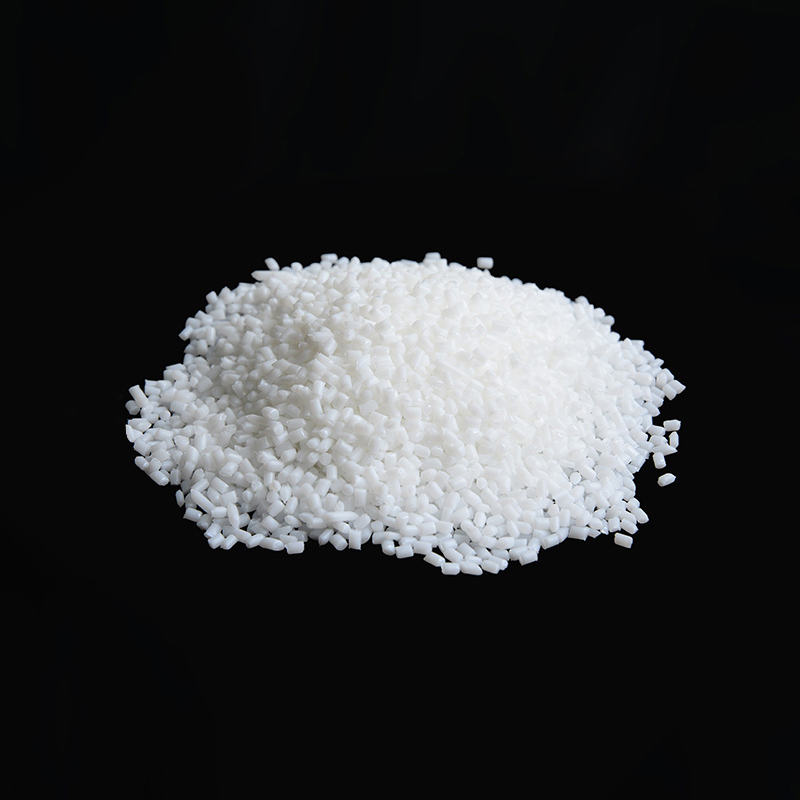
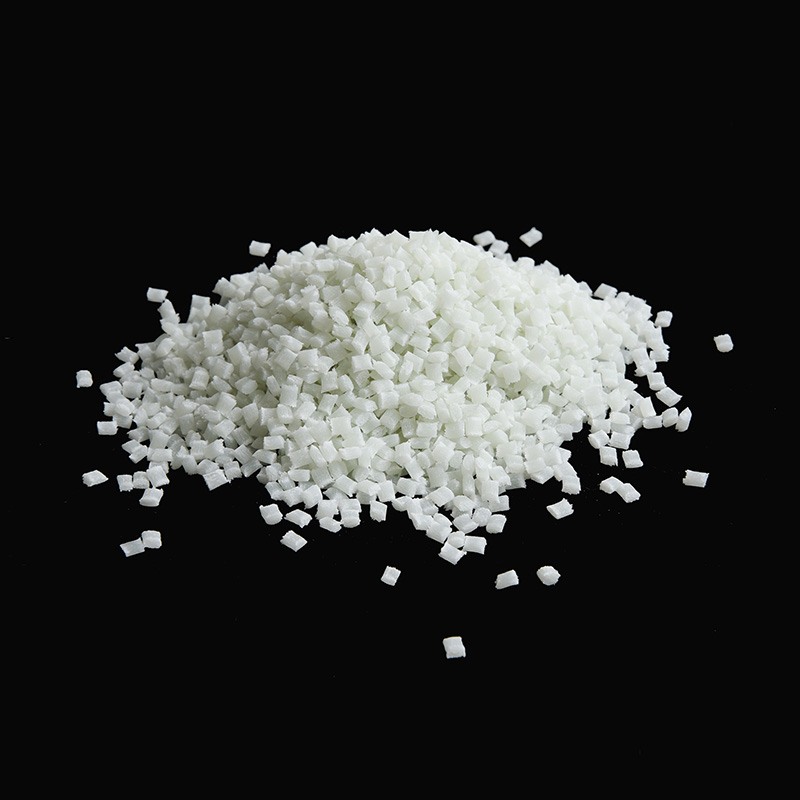 Glass-Fibre-Reinforced PA66 Chips for High-Stiffness ComponentsThis engineering plastic adds glass fibres to polyamide 66, boosting mechanical strength, heat resistance, and chemical resistance. It suits automotive and industrial parts needing rigidity and high-temperature performance, as referenced in the preceding discussion.View Product →
Advantages and Disadvantages of Polypropylene
Like every plastic, PP delivers a specific balance of positives and negatives. Which side matters depends on your application.
Advantages:
- Lightweight: density near 0.90 g/cm3 is lower than most other thermoplastics.
- Chemical resistance: superior to many amorphous plastics when exposed to acids, bases and common solvents at room temperature.
- Fatigue life: a properly designed PP living hinge survives millions of flex cycles.
- Moisture stability: almost zero water uptake keeps moulded dimensions repeatable.
- Electrical insulation: reliable insulating properties in housings, connectors and enclosures.
- Recyclability: resin identification code 5; rigid PP is reprocessed in closed industrial loops.
- Cost: one of the least expensive thermoplastics that can still carry engineering duties.
Disadvantages:
- UV sensitivity: without stabilisers, PP embrittles and chalks in sunlight.
- Flammability: PP burns and drips; flame-retardant compounds reduce this but increase cost.
- Moderate heat: continuous service above 100°C causes creep and oxidation.
- Low-temperature impact: homopolymer becomes brittle below about 0°C; impact copolymers solve this but lose some stiffness.
- Bonding and painting: low surface energy makes adhesive bonding and printing difficult without corona or plasma treatment.
Modified Polypropylene Grades and When PP Reaches Its Limit
If standard PP cannot meet a specification, modified compounds often extend its reach before you need to change polymer family.
- Glass-fibre-reinforced PP (10 to 40% glass): increases tensile modulus and heat-deflection temperature; popular in washing machine parts, fan blades and automotive air intake components.
- Impact-modified PP: rubber particles absorb energy at low temperatures; used for crates, bumper support brackets and cold-storage products.
- Flame-retardant PP: halogenated or halogen-free additives reduce flammability for electrical housings and battery casings; these compounds typically sacrifice some mechanical strength and recyclability.
- UV-stabilised PP: stabiliser packages with carbon black or hindered amine light stabilisers protect outdoor parts such as garden furniture and automotive trim.
Modification shifts the performance window, but it does not remove the ceiling set by the polymer itself. When the application needs flame retardancy at higher heat-deflection temperatures, or stiffness under continuous load together with wear resistance, a nylon-based grade is usually the next step. Flame-retardant PA6 compounds combine a higher continuous-use temperature with a flame-retardant additive package.
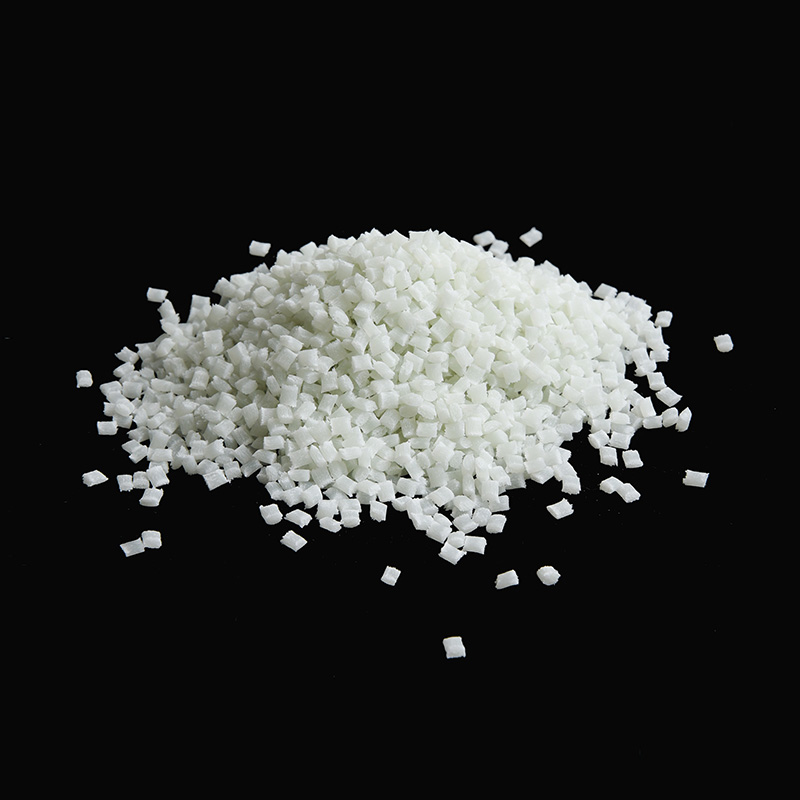
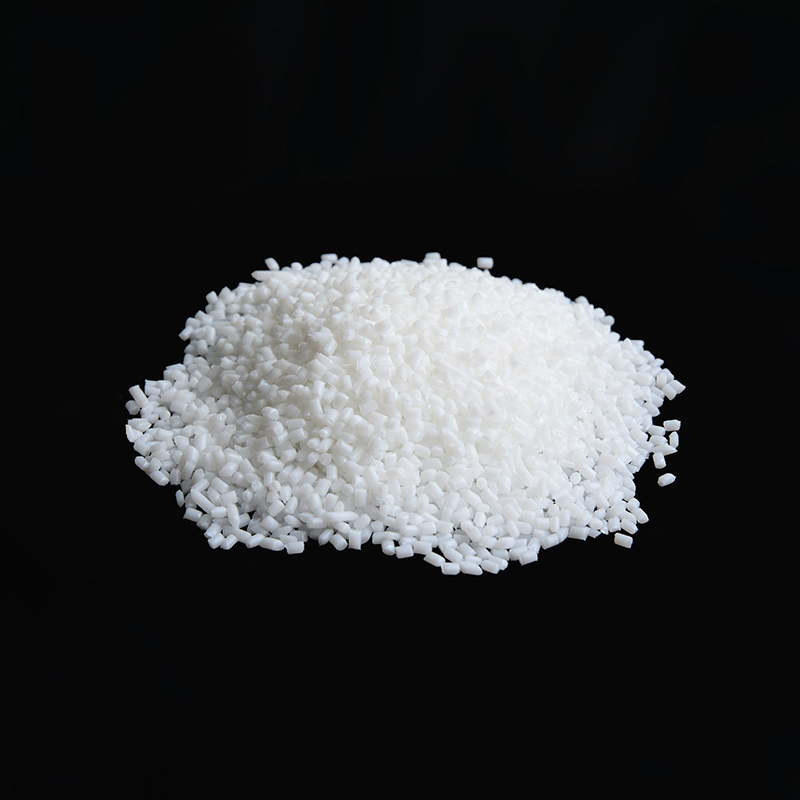 Flame-Retardant PA6 Chips with Enhanced Heat ResistanceModified with flame retardants, this PA6 grade maintains mechanical stability while slowing burning and reducing smoke. It fits electronics, automotive, and construction applications requiring stricter fire safety, as highlighted by the surrounding text.View Product →
Recyclability and Environmental Considerations
Polypropylene carries resin code 5 and is technically recyclable. Rigid PP parts, such as crates, pallets, battery cases and containers, are recycled mechanically into clean rPP pellets with well-established sorting and washing lines. Flexible PP films and mixed household PP are collected and recycled at much lower rates because they are lightweight, sticky in sorting equipment and often contaminated with labels and food residue.
Chemical recycling processes, including pyrolysis, dissolution and enzyme-based methods, are now treating contaminated streams that mechanical plants reject. Several commercial pyrolysis plants convert mixed polyolefin waste back into naphtha, oil or monomers, which reduces reliance on incineration and landfilling. At the same time, recycled polyamide granules are entering the market for injection moulding, closing the loop for engineering components rather than only packaging. For a closer look at how recycled polyamide granules support a circular economy, read the related article.
Life-cycle comparisons between virgin and recycled material have to be calculated case by case. The energy saved depends on collection logistics, sorting yield, transport distance, and whether the final application can accept recycled-content resin without over-specifying property retention.
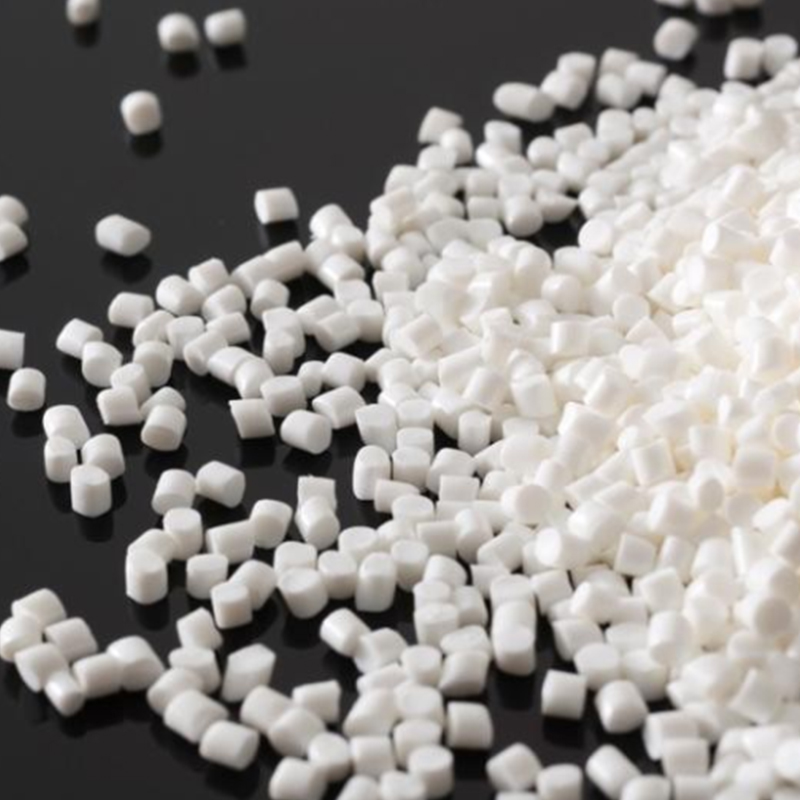
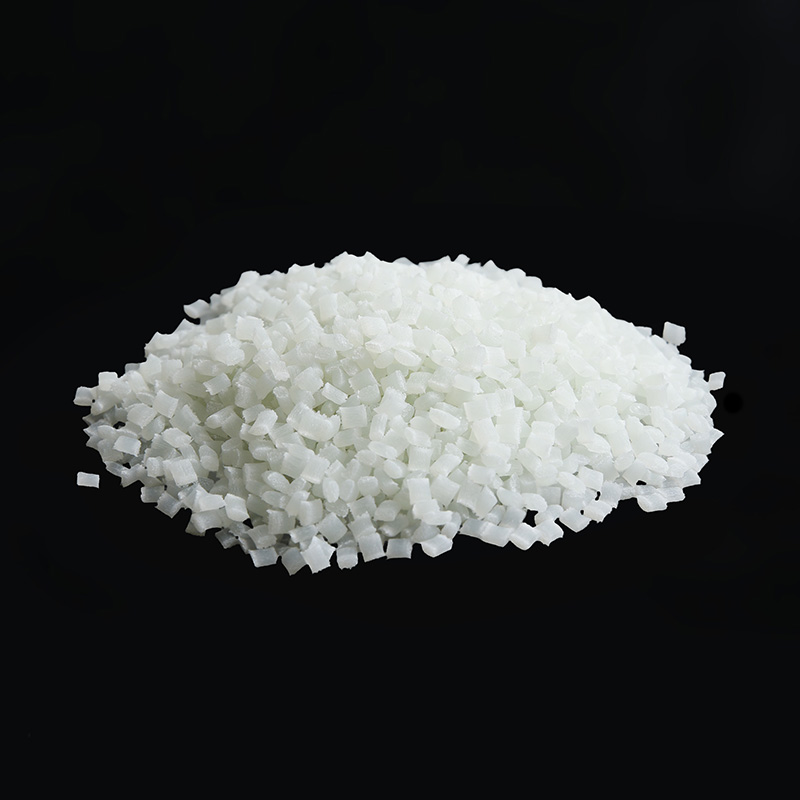 Recycled Nylon Granules from a Specialised PA SupplierOffered by a nylon materials supplier with modified production lines, these recycled granules target auto parts, sports equipment, and industrial goods. The context compares recycled versus virgin resin, making cost and property retention key considerations.View Product →
Frequently Asked Questions
What is polypropylene material used for?
PP is used in packaging (caps, containers, BOPP films), automotive parts (battery housings, trim), textiles (nonwovens, carpets, ropes), consumer goods (luggage, crates), medical devices (syringes, labware) and industrial piping. The common theme is a part that needs light weight, moisture resistance and chemical resistance at low cost.
Is polypropylene the same as polyethylene?
No. Polyethylene is polymerised from ethylene, while polypropylene is polymerised from propylene. PP has a higher melting point (160 to 170°C versus 120 to 135°C for HDPE), higher stiffness and better heat resistance, which makes it more suitable for hot-fill packaging and under-hood automotive parts.
Does polypropylene contain BPA or phthalates?
Virgin PP is a simple hydrocarbon polymer made only from propylene. BPA is used to make polycarbonate, and phthalates are plasticisers for flexible PVC; neither is structurally present in PP. Additives can be compounded into PP for colour, stabilisation or flame retardancy, so the additive system of a specific product should always be verified with the supplier.
Is polypropylene recyclable?
Yes. PP is identified by recycling code 5. Rigid PP fractions are mechanically recycled in dedicated plants, and flexible films are increasingly handled by advanced recycling. Final recycled material quality depends on sorting and contamination levels, so recycled PP content should be specified with the same care as virgin grades.
What temperature can polypropylene withstand?
The crystalline melting point is 160 to 170°C, but the continuous service temperature is much lower: typically 80 to 100°C for homopolymer and lower for random copolymers. For applications that must run continuously above 100°C, polyamide or PPA grades normally perform better.
Is polypropylene good for outdoor use?
Unstabilised PP degrades quickly in UV light. UV-stabilised grades filled with carbon black or UV additives are suitable for outdoor furniture, fencing and rainwater goods. For structural parts with long outdoor lifetimes, glass-reinforced or higher-performance plastics should be evaluated.
Final Recommendations and Sourcing Checklist
Start material selection from the worst-case service condition, not the average one. Check the highest temperature the part will see, whether the load is continuous or cyclic, which chemicals contact the surface, the humidity range and the required lifetime. If all of these stay inside the 80 to 100°C low-stress operating window, PP is the most economical choice. If the design must survive higher temperatures, heavier loads or abrasive contact, a polyamide-based material is the proven route.
- Define the property window: list maximum temperature, stress, chemical exposure and lifetime before choosing a resin.
- Compare full-compound data: use the datasheet of the exact compound, not the polymer family average, because additives shift properties significantly.
- Run a cavity trial: shrinkage differs between PP grades and even more between PP and PA, which changes the mould design and the achievable tolerance.
- Check supplier consistency: verify that pellet quality, lot-to-lot flow and physical properties stay stable; this is a real risk in recycled or heavily compounded grades.
- Evaluate total cost: a cheaper resin can become more expensive after longer cycle time, higher scrap rate and shorter part lifetime.
The choice between commodity PP and engineering polyamide is exactly where a materials supplier earns its value. Frontechnic's product range is focused on PA6, PA66 and PPA compounds, and the company works from the position that a part which leaves the PP design window should move up, not down, for safety and reliability reasons. That discipline keeps grade selection aligned with the real operating requirements of the finished part.

 Mob: +86-15867822829
 Tel: +86-0574-62538663
 Fax: +86-0574-62530664
 E-mail:

 Follow Us
 Home

