


 English
 中文简体
 Español
 русский
 عربى

Content
- 1 What Is PEEK? Definition, Chemical Structure, and History
- 2 How PEEK Is Manufactured
- 3 Key Properties of PEEK at a Glance
- 4 PEEK vs Other Engineering Thermoplastics
- 5 Industries That Rely on PEEK
- 6 PEEK vs Nylon: Where PA6, PA66, and PPA Still Make Sense
- 7 Limitations and Procurement Risks of PEEK
- 8 Selection Checklist: Is PEEK the Right Choice for Your Part?
- 9 Frequently Asked Questions About PEEK
- 10 Conclusion: Make the PEEK Decision Based on Conditions, Not Reputation
Engineers who search for what is PEEK usually have a concrete problem in front of them: a component that must keep its shape, strength, and dimensional accuracy while exposed to high heat, aggressive chemicals, or continuous mechanical stress. Polyether ether ketone, abbreviated as PEEK, is the semi-crystalline, beige-colored thermoplastic that most of those investigations end at. It belongs to the polyaryletherketone (PAEK) family, displays a melting point close to 343°C, supports a continuous service temperature of roughly 250-260°C depending on grade, and offers a combination of mechanical toughness, chemical resistance, and electrical insulation that few melt-processable polymers can match. (Source: Wikipedia - Polyether ether ketone, accessed 14 September 2026).
The short answer is straightforward: PEEK is specified when standard engineering thermoplastics such as PA6, PA66, or PPA cannot survive the service environment. The longer answer involves understanding where PEEK sits in the material selection map, how it is produced and processed, which industries depend on it, why it costs much more than nylon, and how a designer can sometimes step down to a lower-cost polyamide without sacrificing real performance.
What Is PEEK? Definition, Chemical Structure, and History
The name polyether ether ketone describes the chain chemistry of the polymer. Each repeating unit contains aromatic rings linked by ether (-O-) and ketone (C=O) functional groups, with two ether links between successive ketone groups, hence "ether ether ketone." This rigid aromatic backbone limits chain rotation, promotes orderly packing of the molecular chains, and produces a semi-crystalline material with a typical crystallinity of 30-35 percent in properly processed injection-molded parts. The crystalline regions give PEEK its dimensional stability, creep resistance, and resistance to solvents; the amorphous regions contribute toughness and ductility.
Repeating unit of PEEK: -[O-C6H4-O-C6H4-CO-C6H4]-. In this notation, C6H4 represents a 1,4-phenylene ring, O is an ether oxygen, and CO is a ketone carbonyl group.
PEEK was first developed and commercialized in the late 1970s and early 1980s by a British chemical company, and it has since grown into a standard material in high-performance engineering. The original commercial grades were introduced to serve wire insulation for demanding electrical applications, then expanded quickly into aerospace, machinery, and medical implants. Because of its long history in regulated industries, PEEK has accumulated decades of property data, which makes it one of the best-documented high-temperature thermoplastics available today. That is an advantage during the design phase because the data sheets, processing guides, and creep curves are far more complete than those of many newer competitors.
Two physical transitions define PEEK's operating range. The glass transition temperature (Tg) is approximately 143°C; below Tg the amorphous regions are glassy and stiff, while above Tg they become rubbery and some stiffness drops off quickly unless the material is reinforced. The crystalline melting temperature is approximately 343°C, which sets the upper processing and use temperature limit. A practical implication is that PEEK parts do not "melt away" below 340°C, but their load-bearing capacity above 250°C still depends heavily on the degree of crystallinity, wall thickness, and whether glass or carbon fiber reinforcement is present.
How PEEK Is Manufactured
PEEK is produced by a step-growth polymerization known as nucleophilic aromatic substitution. The two monomers are 4,4'-difluorobenzophenone and hydroquinone, which react in a high-boiling solvent, typically diphenyl sulfone, at temperatures around 300-340°C. The reaction proceeds in the presence of an alkali metal carbonate that neutralizes the hydrogen fluoride formed during polymerization. This is not a simple one-step mixing process; monomer purity, exact stoichiometric balance, reaction temperature profile, and residence time all control the final molecular weight and viscosity. A slight imbalance in the feed ratio permanently lowers molecular weight, which is why reliable PEEK suppliers guard their process controls closely.
The commercial production route, summarized below, is worth understanding because it explains why PEEK is expensive and why lead times for special grades can be long.
- Raw materials: 4,4'-difluorobenzophenone and hydroquinone are purified to very tight specifications; for medical or semiconductor grades the purity requirements are even stricter.
- Polymerization: the monomers are condensed in diphenyl sulfone at high temperature, producing a molten polymer melt at the end of the reaction.
- Purification: the crude polymer is solidified, ground, and washed repeatedly with hot solvents and water to remove residual diphenyl sulfone, salts, and by-products.
- Compounding: the purified polymer is melt-compounded with glass fiber, carbon fiber, micronized fillers, or lubricants such as PTFE or graphite to create reinforced and wear-resistant grades.
- Supply forms: the compound is extruded into strands, pelletized, and packaged as granules, or converted into film, sheet, rod, tube, and filament for machining and additive manufacturing.
Because the polymerization step demands such high temperatures and absolute batch-to-batch consistency, only a limited number of producers in the world make virgin PEEK resin. Most plastics processors buy ready-made granules and focus on the injection molding or extrusion step. This supply structure matters in procurement: a converter cannot simply "formulate" PEEK from cheaper raw ingredients, so the resin price itself remains the dominant cost component of any PEEK component. (Source: Wikipedia - Polyether ether ketone, accessed 14 September 2026).
Key Properties of PEEK at a Glance
A PEEK datasheet lists numbers that look ordinary until you consider them all at once. A single property is rarely the reason to choose PEEK; the real reason is the combination. The table below consolidates typical ranges for commercially available unreinforced PEEK grades.
| Property | Typical Value | Why It Matters |
|---|---|---|
| Density | 1.30 - 1.32 g/cm³ | Lighter than aluminum and most metal die castings, a real advantage in aerospace and automotive. |
| Melting point | ~343°C | Defines the upper limit for heat deflection and soldering exposure. |
| Glass transition temperature | ~143°C | Stiffness drops above this point, especially in unreinforced grades. |
| Continuous service temperature | 250 - 260°C | One of the highest among melt-processable thermoplastics. |
| Tensile strength at 23°C | 90 - 100 MPa | Comparable to cast nylon at room temperature, but PEEK retains this strength far beyond 150°C. |
| Tensile modulus | 3.5 - 4.0 GPa | Good stiffness for an unreinforced polymer; 30% glass fiber raises it to about 10-12 GPa. |
| Water absorption at saturation | 0.1 - 0.5% | Dimensions stay stable in humid environments, unlike PA6 and PA66. |
| Chemical resistance | Excellent against most solvents, dilute acids, alkalis, hot water, steam | Attacked mainly by concentrated sulfuric and nitric acid, situations that rule out PEEK. |
| Flame behavior | Low heat release and low smoke generation | Preferred for aircraft cabin interiors and electrical enclosures. |
| Wear behavior | Low coefficient of friction; improved with carbon fiber and graphite | Enables dry-running bearings, seals, and pump parts without external lubrication. |
What these numbers mean in practice is best summarized in three points. First, PEEK can be designed into continuous load-bearing metal-replacement applications between 150°C and 250°C, a range where PA6, PA66, and even some PPA grades begin to creep. Second, PEEK does not require moisture conditioning before service; a machined PEEK bushing will not change dimensions when moved from a dry factory floor to a humid production line. Third, PEEK survives repeated steam sterilization and hot-water exposure, which keeps it in medical instruments and beverage processing equipment. (Data compiled from Wikipedia, SpecialChem polymer guides, and manufacturer datasheets, accessed September 2026).
PEEK vs Other Engineering Thermoplastics
The most common question from designers is not whether PEEK is good, but whether a cheaper high-temperature polymer is good enough. Four polymers dominate that comparison: polyphenylene sulfide (PPS), polyetherimide (PEI), polyphthalamide (PPA), and polyamide 66 (PA66). The table below compares typical commercial grades rather than laboratory extremes.
| Metric | PEEK | PPA | PA66 | PPS | PEI |
|---|---|---|---|---|---|
| Continuous use temperature | 250-260°C | 120-230°C by grade | 80-160°C by grade | 200-240°C | 170-190°C |
| Water absorption | Very low | Moderate | High | Very low | Moderate |
| Chemical resistance | Excellent | Good | Moderate | Excellent | Good, but attacked by solvents |
| Wear resistance | Excellent | Good | Good | Good | Fair |
| Impact toughness | Good | Good | Excellent | Brittle | Fair |
| Relative cost per kg | Very high | Medium | Low | Medium | Medium-high |
| Typical process melt temperature | 350-400°C | 290-340°C | 260-300°C | 300-340°C | 340-400°C |
The key takeaway is that PEEK wins on combinations, not on a single headline number. PPS has excellent chemical resistance but is brittle and difficult to weld. PEI is stiff and transparent but degrades quickly in hot steam and in some cleaning solvents. PPA and PA66 deliver toughness and easy processing but cannot hold up above 200°C for long periods without losing modulus. PEEK is selected when at least three of the following conditions appear together: sustained service temperature above 200°C, exposure to hydrocarbons or water-based fluids, dimensional stability requirements, flame resistance with low smoke, and a need to survive cycling without catastrophic fatigue.
Industries That Rely on PEEK
PEEK appears in surprisingly small but critical parts across many industries. A single aircraft, for example, may contain several hundred PEEK components that are invisible from the outside: wire clamps, connector housings, cable sleeves, and bracket inserts. The application table below maps the main industries to typical components and gives the design reason behind each choice.
| Industry | Typical PEEK Components | Primary Reason for PEEK |
|---|---|---|
| Aerospace | Wire clamps, connector housings, brackets, interior panels, fuel system seals | Low heat release, low smoke, weight saving, high mechanical reliability |
| Automotive and e-mobility | Bearing cages, gear wheels, valve seals, e-motor insulation components, transmission parts | High temperature near e-motors, oil and grease resistance, low wear noise |
| Medical and dental | Spinal fusion cages, dental implant abutments, surgical instrument handles, sterilization trays | Repeated steam sterilization, tissue-compatible behavior, transparency to X-rays for post-operative imaging |
| Electrical and electronics | Connectors, sockets, relay housings, cable insulation, switch components, sensor bodies | Stable electrical insulation at soldering temperatures, flame resistance, dimensional precision |
| Oil and gas | Downhole seals, valve seats, compressor piston rings, backup rings | Aggressive fluid exposure, high pressures, temperature cycling, low gas absorption |
| Semiconductor manufacturing | Wafer transport carriers, CMP rings, clamp rings, wet-etch fixtures | Very low outgassing, high purity, resistance to cleaning chemistries and deionized water |
The medical sector deserves a closer look because it illustrates how a polymer can replace metal inside the human body. A review publication indexed by the United States National Library of Medicine, accessed in September 2026, describes PEEK as a widely studied biomaterial for dental and orthopedic applications, pointing out that its stiffness is closer to bone than titanium is, which helps avoid the stress-shielding effect that sometimes follows metal implants. In surgical tools, PEEK handles repeated autoclave cycles without the corrosion and surface pitting that plague some aluminum components.
Electrical and electronics applications, however, are where most high-volume PEEK consumption occurs. As electronic assemblies become smaller and more powerful, the components inside them see higher temperatures during soldering and during operation. PEEK covers the gap where standard high-temperature nylons lose dimensional stability. That said, not every connector housing needs a 260°C material. When the continuous service temperature stays below roughly 190-230°C and the part requires flame resistance, many manufacturers evaluate a flame-retardant PPA instead of PEEK because the cost difference can be substantial and the processing window is more forgiving.
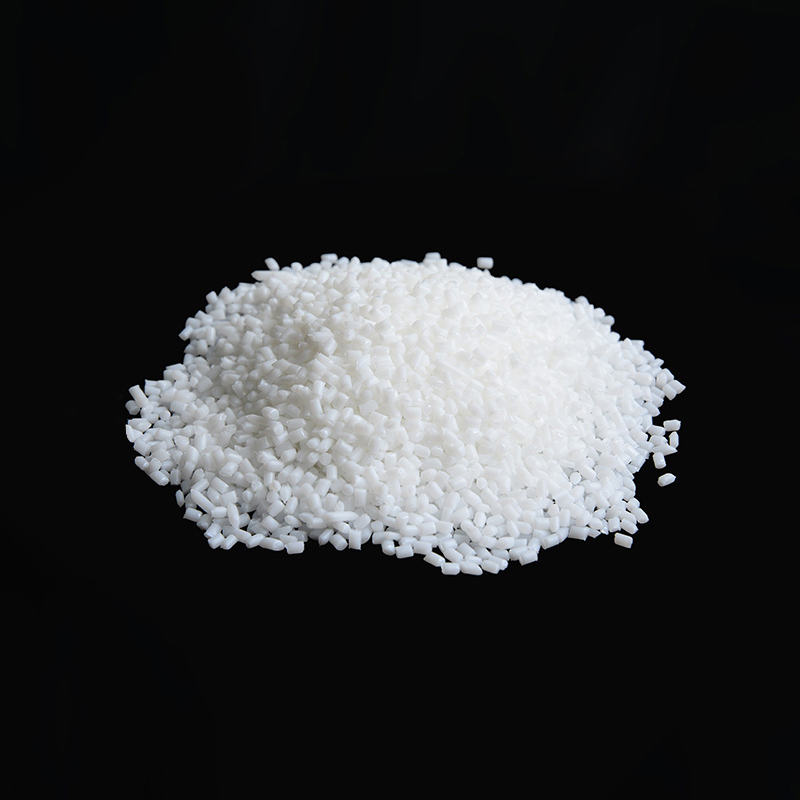
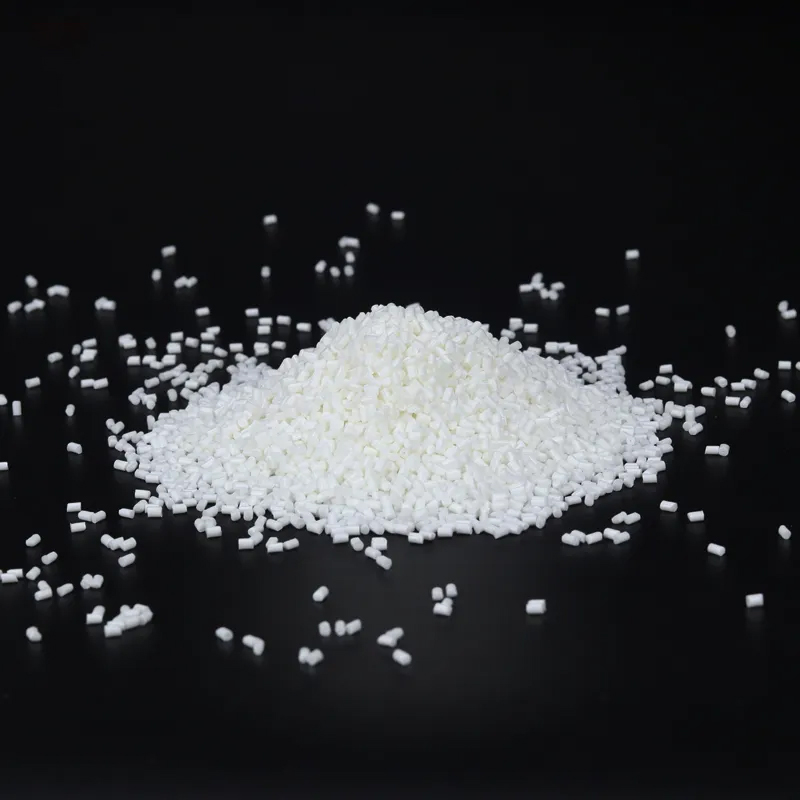
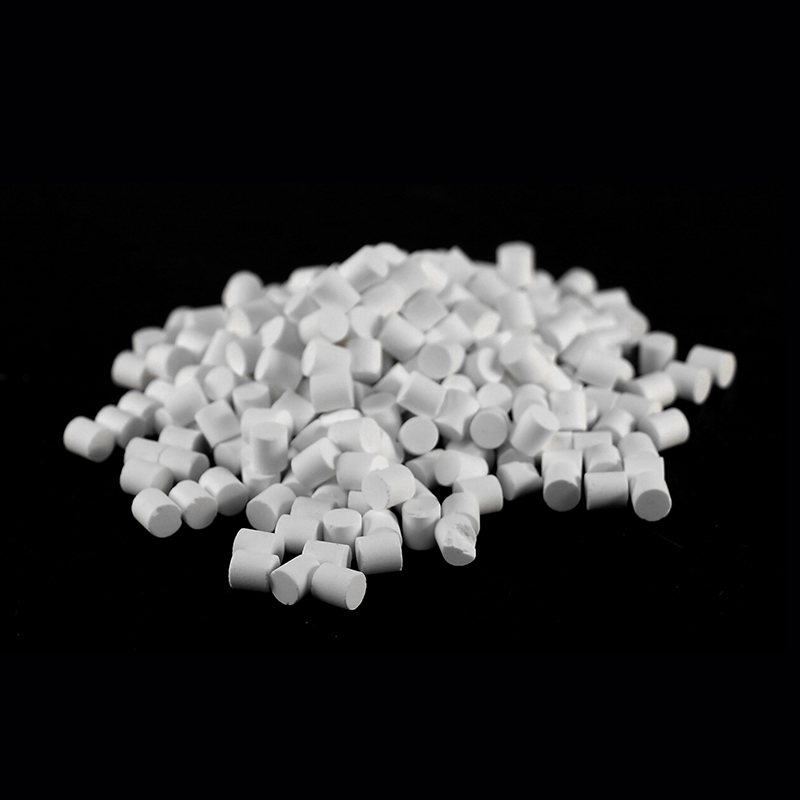 Flame-Retardant PPA Chips for High-Temperature ElectronicsThis flame-retardant polyphthalamide suits applications requiring continuous service up to around 190-230°C, offering a cost-effective alternative to PEEK when flame resistance and dimensional stability are needed.View Product →
PEEK vs Nylon: Where PA6, PA66, and PPA Still Make Sense
The biggest practical question in PEEK selection is almost always economic: do we really need PEEK, or would an engineering polyamide do the job? The answer depends on the service temperature, chemical exposure, dimensional demands, and failure consequences. Let us divide the polyamide family into two groups that frequently compete against PEEK.
PA66 (polyamide 66) is the closest everyday competitor to PEEK in mechanical terms. Unreinforced PA66 offers tensile strength around 80-90 MPa at room temperature, which looks close to PEEK on paper. However, PA66 absorbs moisture up to roughly 2-3 percent at normal indoor humidity and about 8 percent when fully immersed in water. That moisture lowers its modulus, alters part dimensions, and shifts mechanical properties over time. PA66 grades also struggle in continuous use above 120-160°C, depending on the heat-stabilization package. For an automotive connector under the hood that sees 140°C oil, an enhanced PA66 with glass reinforcement may still perform adequately at a fraction of PEEK's cost. The key is understanding exactly what conditions the part will face over its entire service life, something many first-time PEEK specifiers skip. For deeper background on the differences between polyamide families, it is worth reading an explanation of what is nylon material before locking in a specification.
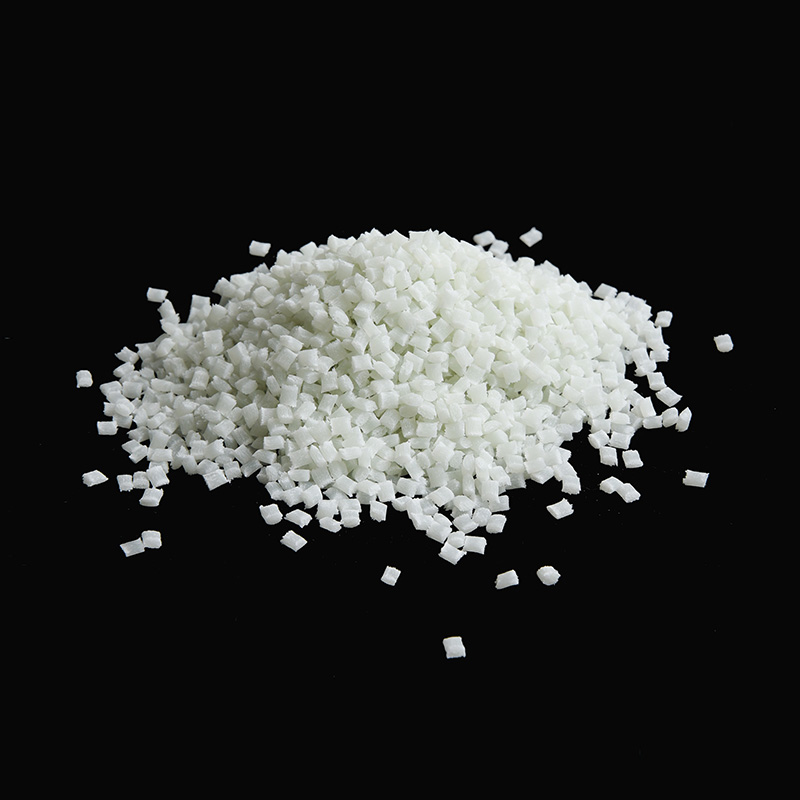
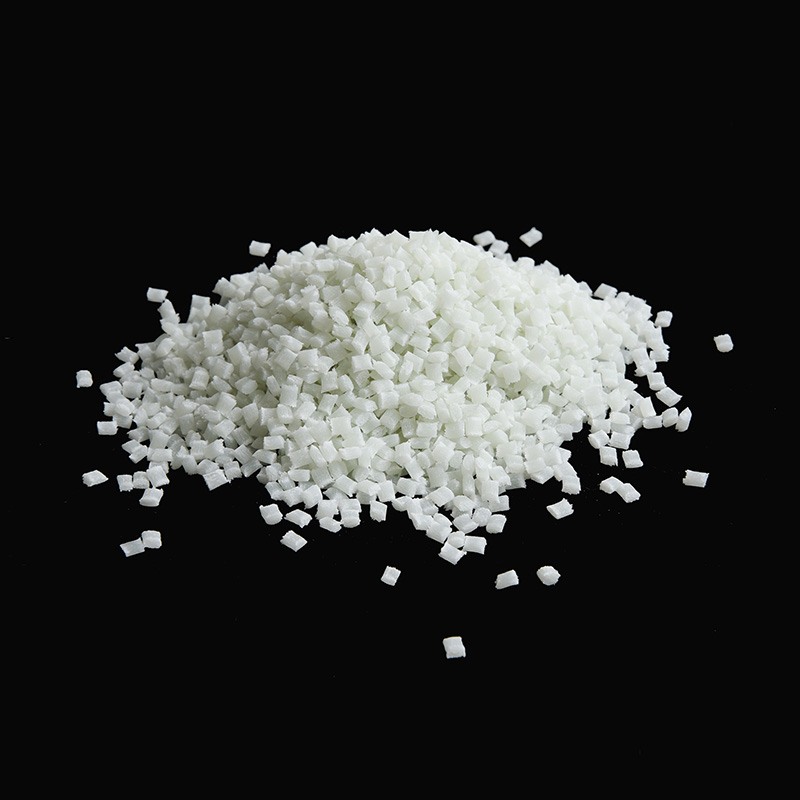 Glass-Reinforced PA66 Chips for Demanding Mechanical PartsEnhanced PA66 provides improved stiffness, heat resistance, and dimensional stability over standard nylon, making it a practical choice for under-hood components facing moderate temperatures and chemical exposure.View Product →
PA6 (polyamide 6) is easier to process than PA66, slightly cheaper, and widely used in structural plastic parts, but it is also more sensitive to moisture and heat. For a bearing cage in a food packaging machine that runs at 80-110°C, upgraded PA6 with glass reinforcement can deliver adequate stiffness and good sliding behavior without PEEK. For the same component running at 220°C in a bakery oven environment, PA6 would soften and creep; PEEK then becomes the rational choice. This temperature boundary is the most common divider between the two materials in real purchase decisions.
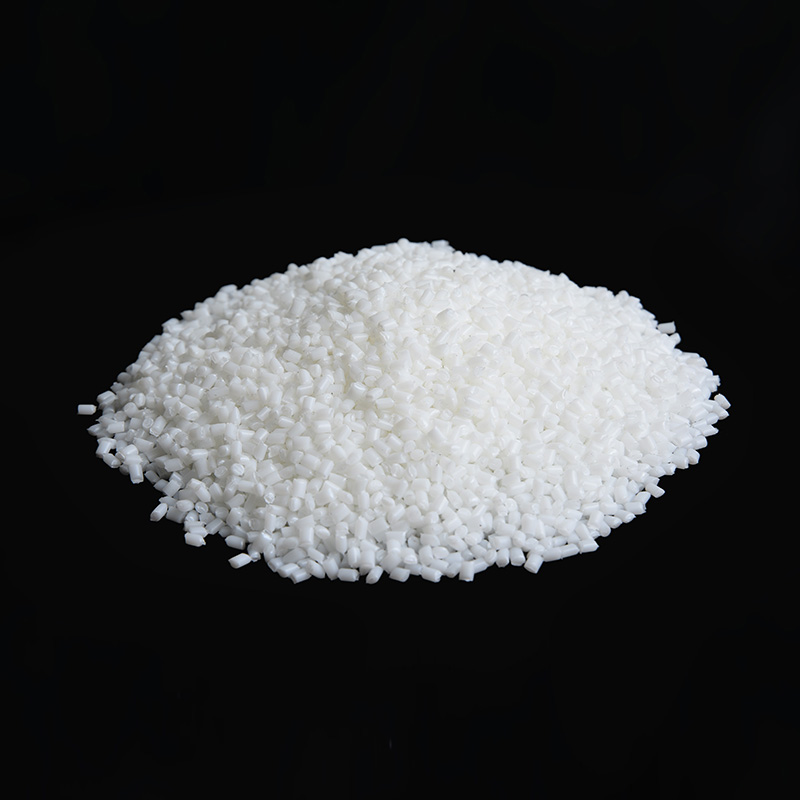
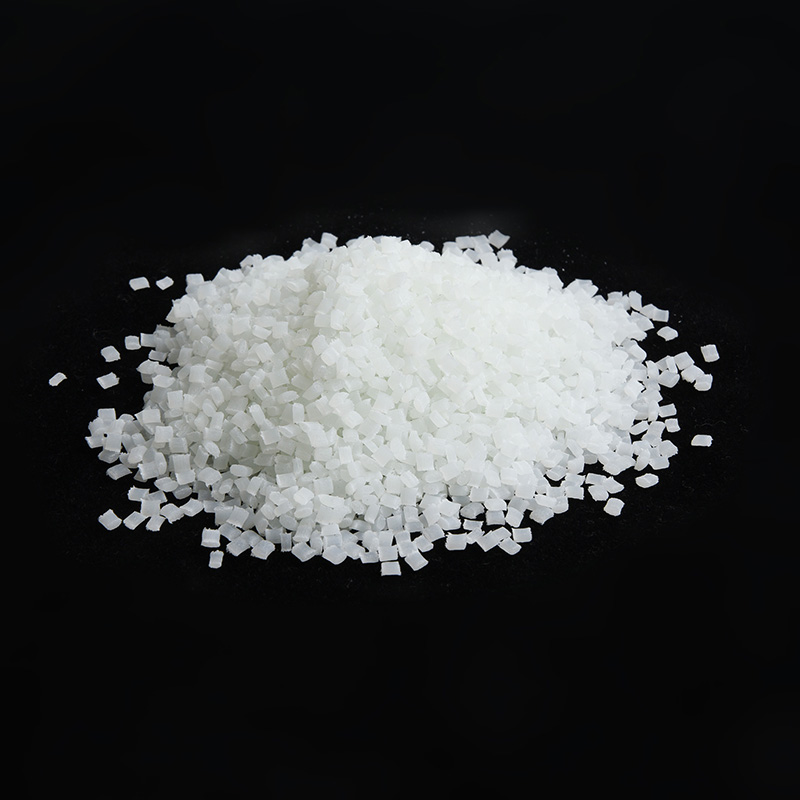 Reinforced PA6 Chips for Structural and Sliding ApplicationsThis glass-reinforced nylon 6 delivers adequate stiffness and wear resistance for parts operating at 80-110°C, offering a lower-cost alternative to PEEK while maintaining good mechanical performance.View Product →
PPA (polyphthalamide) is the intermediate option. PPA is a partially aromatic polyamide, meaning its backbone contains benzene rings that give it better heat resistance and lower moisture absorption than PA6 or PA66 while staying far more processable than PEEK. Some reinforced PPA grades perform reliably at 190-230°C in continuous service, depending on the application, and their cost is typically a small fraction of PEEK's. The selection process therefore often looks like this: try PPA for 200-230°C applications, specify PEEK only when the temperature, chemical attack, or creep requirements clearly exceed what commercially proven PPA grades can guarantee.
A supplier that offers both PEEK distribution and nylon/PPA research support is useful in this decision. A nylon raw-material specialist like Ningbo Frontechnic New Material Technology can generate comparison data, supply sample granules of reinforced PA6, PA66, or PPA grades for prototype trials, and help a manufacturer quantify whether PEEK delivers measurable advantages in the actual application or simply adds cost. That kind of material-engineering support is exactly what an OEM needs when the marketing datasheet and the real production environment do not fully align.
Limitations and Procurement Risks of PEEK
PEEK is not a miracle material. Understanding its limitations prevents expensive mistakes in part design and supplier selection. The points below are based on current commercial practice and published property data.
- Cost: virgin PEEK granules cost roughly one to two orders of magnitude more than PA66 and PPA compounds on a per-kilogram basis. Scrap is correspondingly expensive, so machining PEEK from solid rod generates high waste cost unless runners and chips are recycled through an approved channel.
- Processing difficulty: PEEK requires melt temperatures of 350-400°C and a mold temperature in the range of 160-200°C to achieve the crystallinity and dimensional stability the material is known for. Many standard injection molding machines are not equipped with the high-temperature barrel, hot-runner, and mold control needed.
- Chemical attack by strong acids: concentrated sulfuric acid and concentrated nitric acid dissolve or degrade PEEK. Applications that involve those chemistries must switch to fluoropolymers or other specialized materials.
- UV sensitivity: prolonged outdoor exposure without protection can cause surface discoloration and slight embrittlement; PEEK used in sunlight typically requires a UV-stabilized grade or opaque paint system.
- Aesthetic limits: PEEK is naturally beige and is commonly available in limited colors. If a visible part requires white, colored, or high-gloss finishes, PEEK imposes constraints that some designers overlook.
- Anisotropy and weld lines: glass and carbon fiber reinforcement create direction-dependent shrinkage and strength. A poorly designed gate position can leave a weak weld line in a critical area; the mold design phase for PEEK parts deserves extra attention.
Procurement risks are just as important as technical limits. Because PEEK resin comes from a small group of producers, prices can fluctuate with global supply and energy costs. Lead times for special grades, colored versions, or medical-traceability lots are longer than for standard nylon compounds. Buyers should also check whether a quotation includes annealing, testing, and traceability documentation. In a worst-case scenario, a manufacturer that sources PEEK from an unvalidated source can receive off-spec material that appears identical until the part fails in thermal cycling. Requesting a certificate of analysis for each lot and running a differential scanning calorimetry check on incoming material is a practical risk control measure.
Selection Checklist: Is PEEK the Right Choice for Your Part?
Instead of starting with a polymer name, start with the operating conditions. The checklists below reflect the typical logic used by application engineers when they evaluate PEEK versus a nylon-based alternative.
- Choose PEEK when the part must survive continuous temperatures above 220°C with mechanical load.
- Choose PEEK when the part is exposed to aggressive oils, hydraulic fluids, hydrocarbons, or steam while under stress.
- Choose PEEK when dimensional stability must be maintained across humidity changes and thermal cycling.
- Choose PEEK when failure is unacceptable and the expected life is measured in years of continuous operation.
- Step down to PA6, PA66, or PPA when continuous service temperature stays below roughly 120-200°C, depending on the specific nylon grade.
- Step down when the part is not submerged in water for long periods, or when a small amount of moisture uptake can be tolerated in the design.
- Step down when the component is indoor, low-load, or protected from direct heat and chemical attack.
- Step down when the volume justifies a few extra prototyping rounds with a lower-cost material before committing to an expensive mold and resin supply agreement.
One additional screening step is to look at the total system cost, not just the resin price. PEEK can allow a smaller wall thickness, eliminate a metal insert, or remove a secondary cooling process. In those cases, a gram of PEEK can replace several grams of metal, and the final assembled part may become cheaper despite the resin premium. Quantify that before dismissing PEEK as too expensive.
Frequently Asked Questions About PEEK
What does PEEK stand for?
PEEK stands for polyether ether ketone. The name describes the repeating unit: aromatic rings connected by two ether oxygen atoms and one ketone carbonyl group. It belongs to the polyaryletherketone (PAEK) family, which also includes PEK and PEKK, polymers that share a similar aromatic backbone but differ in the ratio of ether to ketone groups.
What temperature can PEEK withstand?
Continuously, most PEEK grades can operate at 250-260°C, which is the figure quoted on manufacturer data sheets. The melting point is approximately 343°C, and short excursions up to 300°C are possible, depending on the amount of mechanical stress. Above 260°C, the acceptable service life starts to shorten, so the exact maximum depends on the time spent at temperature and the load applied. Reinforced PEEK grades usually retain stiffness longer at elevated temperatures than unreinforced grades.
Is PEEK stronger than metal?
No, not in absolute terms. Unreinforced PEEK has a tensile strength of approximately 90-100 MPa at room temperature, while common structural steels are several times stronger. PEEK's advantage is specific strength, meaning strength per unit weight, plus its ability to keep strength and stiffness at temperatures where aluminum and some steels begin to soften. For a bracket on an aircraft wing that must save weight and avoid corrosion, PEEK can replace aluminum. For a heavily loaded gear shaft that sees high torque at high speed, steel remains necessary.
Does PEEK absorb water?
Very little compared with nylon. Saturated PEEK typically absorbs around 0.1-0.5 percent water, whereas PA6 and PA66 can absorb 2-3 percent at normal room humidity and up to roughly 8 percent in liquid water. Low moisture uptake is one of the main reasons PEEK maintains dimensional stability and consistent mechanical properties in humid production lines and outdoor equipment. It also means PEEK parts do not need moisture conditioning before service the way nylon parts often do.
How is PEEK different from nylon (PA6 and PA66)?
The simplest answer is performance and price. Nylon is a low-cost engineering plastic that provides good toughness, but it absorbs moisture, creeps above roughly 120-160°C, and has a lower melting point. PEEK resists moisture, keeps usable mechanical properties above 200°C, and resists a wider range of chemicals. In return, PEEK costs far more and requires more expensive tooling and process temperatures. When an application runs at 100-150°C with moderate humidity, PA66 is usually the smart economic answer; PEEK earns its place when the conditions push past nylon's limits.
Why is PEEK so expensive?
PEEK is difficult to synthesize. The polymerization requires high-purity monomers, a high-temperature solvent, and careful process control, followed by an energy-intensive washing and drying sequence. Global production volume is far smaller than that of commodity nylons, so fixed costs are spread over fewer tons. As a result, virgin PEEK resin can cost roughly 20-50 times as much as a standard PA66 compound on a per-kilogram basis, with the exact ratio changing with supply conditions and purchase volume. The final part cost is often lower after factoring in weight reduction, longer service life, and eliminated secondary operations.
Can PEEK be 3D printed?
Yes. PEEK is available as filament for fused filament fabrication and as powder for laser sintering machines. Printed PEEK parts do not automatically match the strength and crystallinity of injection-molded parts because each layer cools and crystallizes separately. To achieve good layer bonding, the machine must maintain a high chamber temperature, often above 100-150°C, and the part should be annealed after printing to relax internal stress. For high-volume production, injection molding still sets the benchmark for mechanical performance and cost per part.
Is PEEK recyclable?
As a thermoplastic, PEEK can be reground, reprocessed, and reused, and several recyclers handle post-industrial PEEK scrap from machining and molding. Recycled PEEK grades usually have slightly lower mechanical and thermal properties than virgin resin because the molecular weight can drop during processing, so they are best suited to non-critical parts. The same circular-economy logic applies to nylons; recycled polyamide granules are increasingly offered as a lower-cost, more sustainable starting point before a project commits to virgin PEEK resin.
Conclusion: Make the PEEK Decision Based on Conditions, Not Reputation
PEEK is best understood as a material for the intersection of extreme conditions. It is not the cheapest, not the easiest to process, and not the strongest polymer that exists, but it is the material that keeps performing when heat, chemicals, moisture, and mechanical stress all arrive at the same time. For any project that begins with the question "what is PEEK," the correct way forward is to write down the actual service temperature, fluid exposure, dimensional tolerance, and required lifetime of the part, then compare PEEK against PA6, PA66, and PPA on those specific numbers.
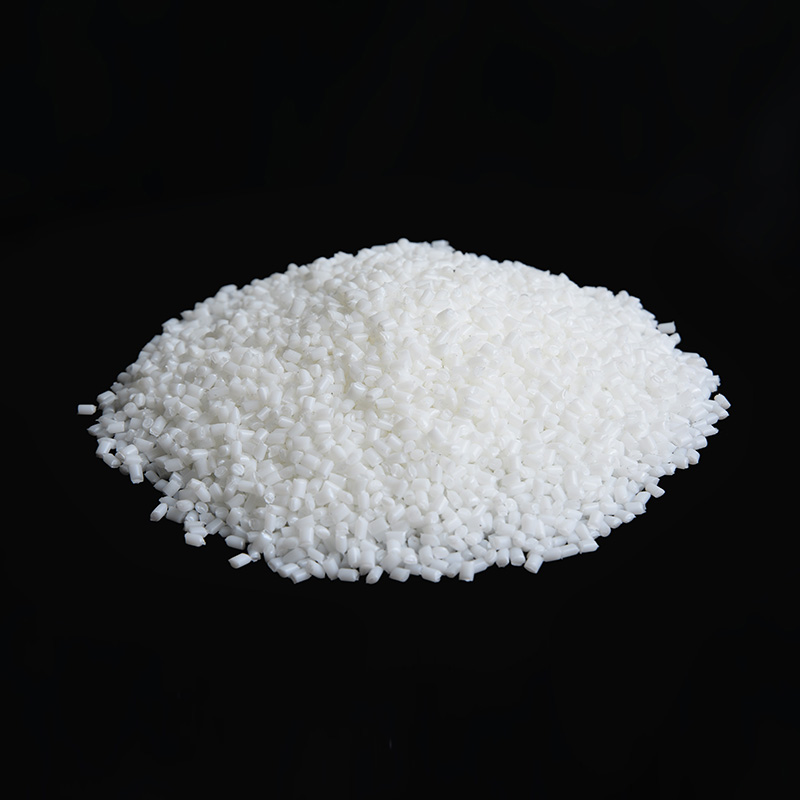
In many applications, a well-selected reinforced or flame-retardant nylon or PPA grade can deliver 80 percent of PEEK's performance at 5-10 percent of the material cost. In the remaining applications, where temperature exceeds 220°C, chemicals attack the polymer, or dimensional stability is non-negotiable, PEEK is the engineering answer. The best strategy is to work with a material supplier that understands both sides of that boundary. A company like Ningbo Frontechnic New Material Technology, which supplies PA6, PA66, and PPA chips and also builds modified grades, can help a designer evaluate the entire polyamide family before making an expensive jump to PEEK. Start with the operating data, then let the tests decide.
 Mob: +86-15867822829
 Tel: +86-0574-62538663
 Fax: +86-0574-62530664
 E-mail:

 Follow Us
 Home

