


 English
 中文简体
中文简体 Español
 русский
 عربى
عربى
Content
- 1 What Is Tensile Strength? Definition and Core Meaning
- 2 How Is Tensile Strength Measured?
- 3 Key Types of Tensile Strength: Yield, Ultimate, and Fracture
- 4 Tensile Strength vs. Yield Strength vs. Elongation at Break
- 5 Tensile Strength Units and Typical Material Values
- 6 Factors That Affect Tensile Strength in Nylon Materials
- 7 Why Tensile Strength Matters When Selecting PA6, PA66, and PPA
- 8 Common Misconceptions About Tensile Strength
- 9 Frequently Asked Questions About Tensile Strength
- 9.1 What is the difference between tensile strength and yield strength?
- 9.2 What units is tensile strength measured in?
- 9.3 How do you calculate tensile strength from a tensile test?
- 9.4 Does moisture reduce the tensile strength of nylon?
- 9.5 What is the tensile strength of glass-fiber-reinforced PA66?
- 9.6 Can tensile strength be improved without adding glass fiber?
- 10 Practical Tips for Evaluating Tensile Strength Data
What Is Tensile Strength? Definition and Core Meaning
Tensile strength is the maximum tensile (pulling) stress a material can withstand while being stretched before it fractures. It is one of the most widely quoted mechanical properties in engineering because it answers a simple but critical question: how much axial pulling force can a part survive before the material separates? Tensile strength is expressed in megapascals (MPa) or pounds per square inch (psi), and it is measured by pulling a standardized specimen until it breaks.
For a plastics processor, tensile strength is not an abstract laboratory number. If you are molding a glass-fiber-reinforced PA66 bracket that anchors a seat belt to a vehicle frame, tensile strength tells you the maximum axial pulling load that bracket can carry before the material yields and eventually ruptures. Design engineers and procurement teams use this value to compare candidate polymers, to calculate minimum wall thickness, and to decide whether a standard grade or an enhanced grade is necessary for a given application.
Tensile strength also has a clear place on the stress-strain curve. When a pulling load is applied, the material first deforms elastically, then plastically in ductile polymers such as nylon, and finally fractures. The stress at which rupture occurs is the tensile strength, often called ultimate tensile strength. It is distinct from yield strength, which is the stress at which permanent deformation begins, and it is also distinct from fracture strength, which is the stress recorded at the exact moment the specimen breaks. Understanding these three values together prevents costly mistakes in material selection.
How Is Tensile Strength Measured?
Tensile strength is determined with a universal testing machine. A dumbbell-shaped specimen, commonly called a dog-bone specimen, is clamped between two grips. The machine pulls the specimen at a constant speed while a load cell records the force and an extensometer records the elongation. The test continues until the specimen fractures. The maximum force recorded during the test is divided by the original cross-sectional area of the gauge section to obtain the tensile strength in the selected unit system.
The result depends heavily on the test standard, specimen geometry, crosshead speed, temperature, and humidity. Plastics and metals use different standards, and the values cannot be compared directly if the test conditions differ. The table below lists the mainstream tensile test methods used for engineering materials.
| Standard | Material | Specimen Type | Typical Test Speed |
|---|---|---|---|
| ASTM D638 | Plastics | Type I or Type IV dog-bone | 5 or 50 mm/min |
| ISO 527-1/-2 | Plastics | Type 1A or 1BA dog-bone | 5 mm/min (type 1A) |
| ASTM E8 / E8M | Metals | Round or flat specimen | Depends on gauge length |
| ISO 6892-1 | Metals | Round or flat specimen | Method A1 / A2 / B |
When you compare tensile strength data on a nylon datasheet, always verify which standard was used. Values generated with ASTM D638 and ISO 527 are not automatically interchangeable because the specimen dimensions and test speeds differ, and the failure mode can be affected by the state of moisture of the specimen.
Key Types of Tensile Strength: Yield, Ultimate, and Fracture
The term tensile strength is often used as if it referred to a single number. In practice, a tensile test produces at least three distinct values, and each one has a different engineering meaning.
Yield Strength
Yield strength is the stress at which a material begins to deform permanently. For polymers that do not show a clear yield point, engineers use the 0.2% offset method: a line parallel to the elastic region is shifted by 0.2% strain, and its intersection with the stress-strain curve defines the offset yield strength. This value is the basis for most structural design because it marks the limit of recoverable deformation.
Ultimate Tensile Strength
Ultimate tensile strength is the highest stress reached on the engineering stress-strain curve. For ductile nylon, this is the point at which necking begins to concentrate deformation in a localized region. Beyond this point, the specimen continues to elongate, but the load-bearing capacity of the necked cross-section decreases until fracture occurs. This value is the one most commonly reported as tensile strength on material datasheets.
Fracture Strength
Fracture strength is the stress recorded at the moment of breakage. In a ductile nylon specimen, the fracture stress is often lower than the ultimate tensile strength because the cross-section has thinned during necking. In a brittle material, such as a highly glass-filled PPA, the ultimate and fracture strengths are usually close to each other. Recognizing this difference helps explain why one material shows a long flat rupture zone and another breaks abruptly.
Tensile Strength vs. Yield Strength vs. Elongation at Break
For a molded nylon clip that must snap into place, elongation at break tells you how far the clip can flex without cracking. Yield strength tells you whether the clip will permanently lose its clamping force after repeated insertions. Tensile strength tells you the force at which the clip finally separates. All three values come from the same tensile test, but they answer different engineering questions.
| Property | What It Measures | Typical Use in Design |
|---|---|---|
| Yield strength | Onset of permanent deformation | Sets the safe working load limit |
| Ultimate tensile strength | Maximum stress before failure | Failure analysis and maximum load capacity |
| Elongation at break | Ductility before rupture | Predicts forming behavior and warns before failure |
A practical example: a snap-fit hook made of unreinforced PA6 may show 70 MPa tensile strength and 40% elongation at break, which allows an assembly worker to bend the hook without cracking. Replace it with a 45% glass-filled PPA grade at 250 MPa tensile strength and only 1.5% elongation, and the hook will snap off during assembly despite being much stronger in a straight pull. This is why strength values are always interpreted together with ductility.
Tensile Strength Units and Typical Material Values
Tensile strength is reported in pascals (Pa) in the SI system, but in engineering practice it appears as megapascals (MPa), where 1 MPa = 1 N/mm². The North American market frequently uses pounds per square inch (psi). A simple conversion is 1 MPa = 145.038 psi, and 1 ksi (1,000 psi) = 6.895 MPa. When a supplier quotes a value in a different unit, convert it before comparing grades.
| Material | Tensile Strength (MPa) | Notes |
|---|---|---|
| Structural steel (ASTM A36) | 400–550 | Measured per ASTM E8 |
| Aluminum 6061-T6 | ~310 | Yield strength ~276 MPa |
| PA6, unreinforced, dry-as-molded | 70–80 | Typical ISO 527 data |
| PA6, unreinforced, conditioned | 45–55 | 50% RH equilibrium state |
| PA6 + 30% glass fiber, dry | 160–185 | Depends on coupling agent |
| PA66 + 30% glass fiber, dry | 185–210 | Higher than PA6 GF30 |
| PPA + 30–45% glass fiber | 200–280 | Good heat and moisture retention |
The dry-as-molded (DAM) state refers to a freshly molded specimen stored under dry conditions. The conditioned state is reached after the material has absorbed moisture to equilibrium at 50% relative humidity. Nylon parts in service are usually closer to the conditioned state, so relying only on DAM data can overestimate the real strength of a molded component.
Factors That Affect Tensile Strength in Nylon Materials
For nylon-based polymers, tensile strength is not a fixed number. The same PA6 grade can show very different tensile values depending on moisture, reinforcement, temperature, and processing conditions. Understanding these variables is essential when comparing data sheets or planning a molded part.
Moisture Absorption
Nylon is hygroscopic, and absorbed water acts as a plasticizer. It lowers the glass-transition temperature, increases impact toughness, and reduces tensile strength and stiffness. A typical unreinforced PA6 resin drops from roughly 75 MPa dry-as-molded to about 50 MPa after reaching moisture equilibrium at 50% relative humidity. This is why nylon datasheets list both dry and conditioned values, and why parts used in humid environments must be designed against conditioned values rather than freshly molded values.
Glass-Fiber Reinforcement
Adding 30% glass fiber by weight raises the tensile strength of PA66 from approximately 85 MPa to roughly 190 MPa, depending on the coupling agent and the final fiber length distribution. Good fiber-matrix adhesion is critical: with poor coupling, the fibers pull out at low stress and the strength gain is small. For this reason, enhanced grades produced with controlled compounding usually show more consistent tensile results than generic in-house blends.
Temperature
Tensile strength decreases as temperature rises. At 80–100°C, a standard unreinforced PA6 retains only a fraction of its room-temperature tensile strength. In hot engine compartments, engineers choose heat-stabilized or PPA-based grades. The thermal stability advantages of PA6 chips series in high-temperature environments are covered in a separate analysis, but the general rule is simple: any tensile comparison must be performed at the application temperature, not only at 23°C.
Molecular Weight, Crystallinity, and Processing
Higher molecular weight improves chain entanglement and therefore increases elongation and toughness, but processing conditions determine the final crystallinity. Rapid cooling in the mold produces a less crystalline, softer material; proper mold temperature develops higher crystallinity, which raises tensile strength and stiffness. Every heat history also degrades the polymer to some degree, which is why recycled regrind with multiple heat cycles can show a measurable drop in tensile strength compared with virgin material.
Why Tensile Strength Matters When Selecting PA6, PA66, and PPA
When a processor or material engineer compares PA6, PA66, and PPA, tensile strength is usually the first property line on the datasheet. It is also the property that most clearly separates the three materials. If you need a broader introduction to the polymer families, our guide what is nylon material explains the molecular structure of PA6, PA66, and PPA in detail.
PA6: Balanced Strength, Flow, and Surface Quality
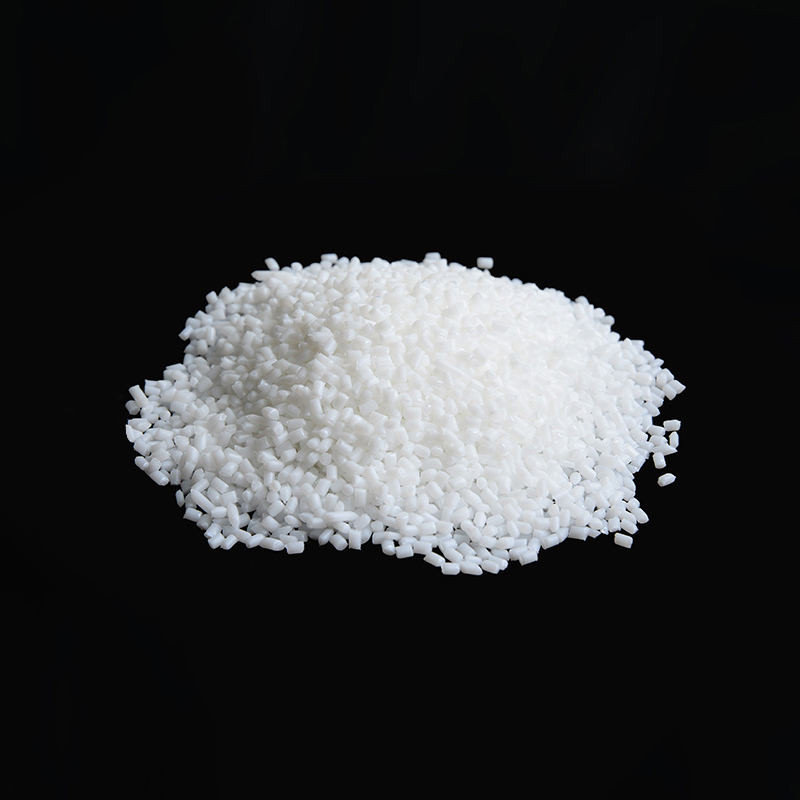
PA6 offers excellent surface appearance, good toughness, and easier processing. In unreinforced form its tensile strength is roughly 70–80 MPa dry-as-molded. For electrical connectors, consumer appliances, and sports equipment, manufacturers often choose enhanced-grade PA6 chips, which combine glass-fiber reinforcement with a narrow viscosity window for stable molding and typical tensile values in the 160–185 MPa range.
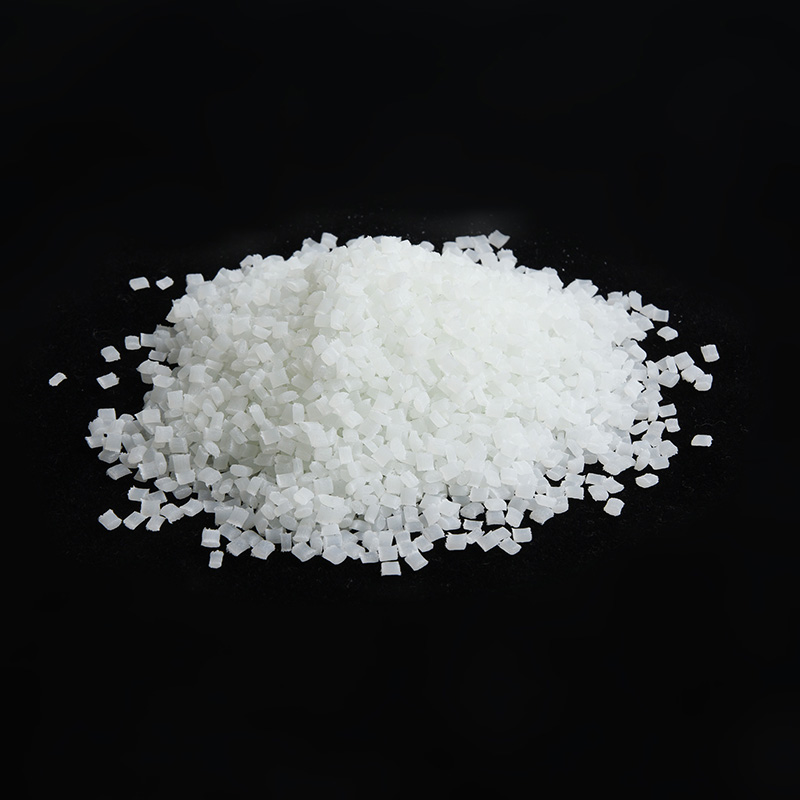 Custom PA6 GF Materials Suppliers, Enhanced PA6 Chip CompanyNingbo Frontechnic New Material Technology Co., Ltd is China PA6 GF materials suppliers and enhanced PA6 chips company, Professional cust...View Product →
PA66: Higher Strength and Stiffness for Structural Parts
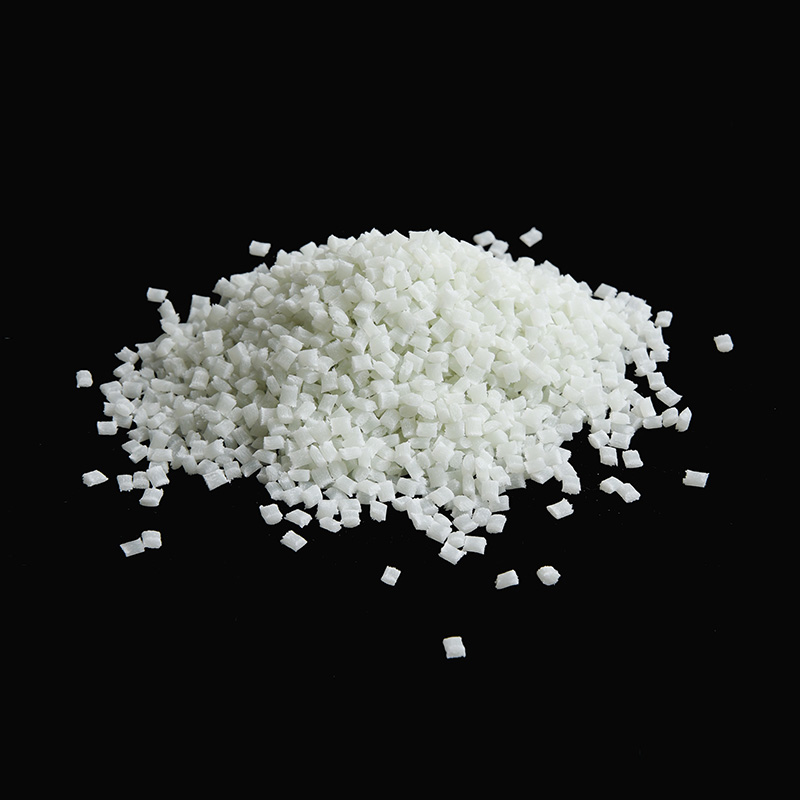
PA66 has a higher melting point and higher mechanical strength than PA6. Unreinforced PA66 typically reaches about 85 MPa dry-as-molded, and a 30% glass-fiber-reinforced grade reaches 185–210 MPa. When the design requires the highest tensile strength among standard nylons, enhanced-grade PA66 chips deliver the strength and dimensional stability needed for automotive brackets, gears, and structural housings.
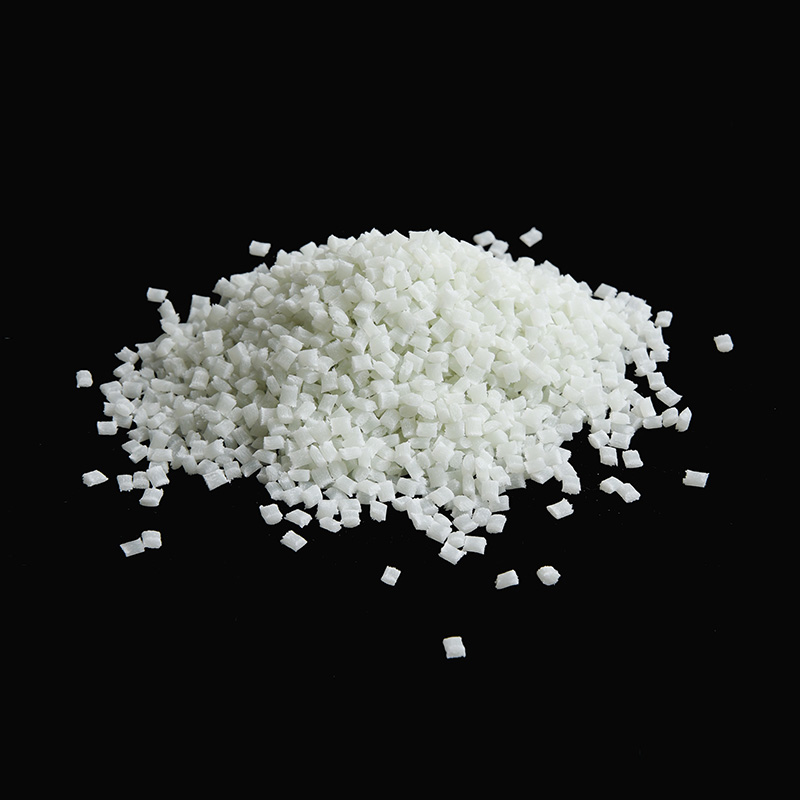 PA66 GF Chips Suppliers, Enhanced grade PA66 Chips CompanyNingbo Frontechnic New Material Technology Co., Ltd is China PA66 GF chips suppliers and enhanced grade PA66 chips company, Professional ...View Product →
PPA: Tensile Strength Retention Under Heat and Moisture
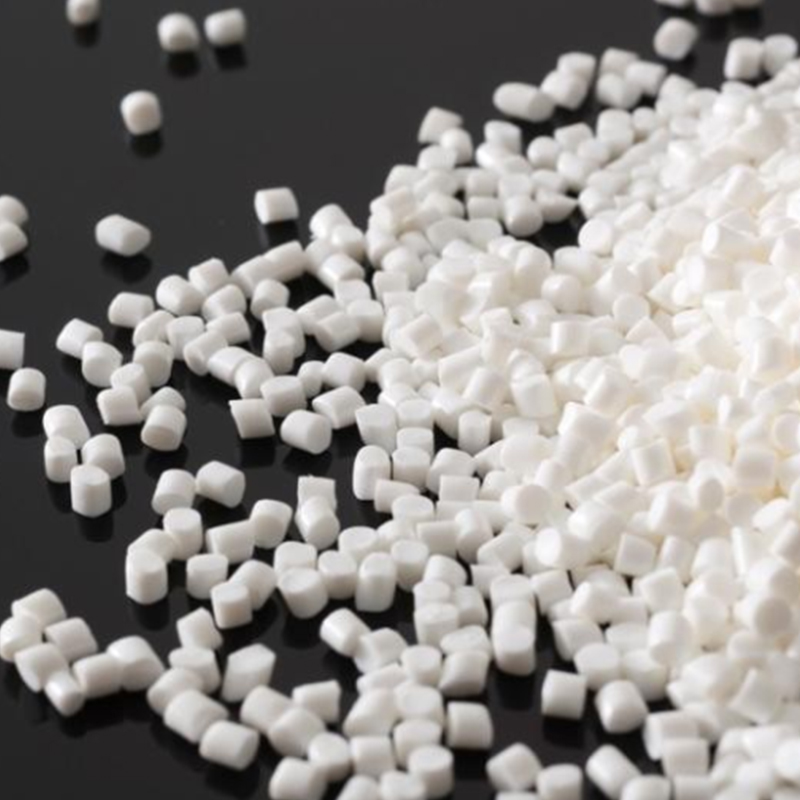
PPA, or polyphthalamide, is a semi-aromatic polyamide. With 30–45% glass fiber, PPA grades reach 200–280 MPa tensile strength and, more importantly, retain a higher percentage of that strength under hot, humid conditions than PA6 or PA66. This is why enhanced PPA chips are specified for turbocharger air ducts, cooling system parts, and connectors near heat sources. The mechanism behind this behavior is explained in our article on why enhanced PPA maintains long-term stability in harsh environments.
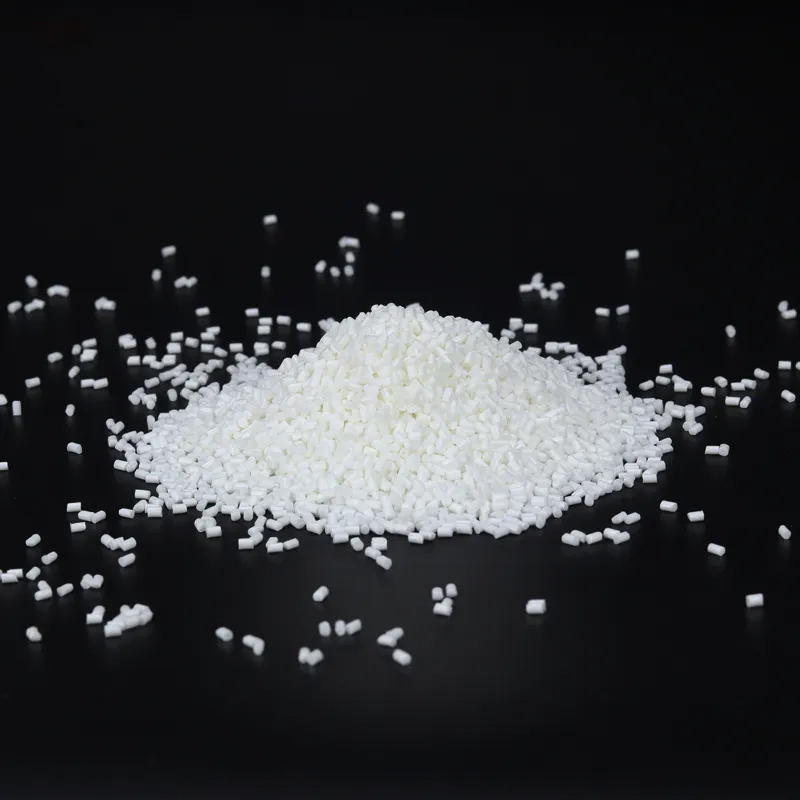 Enhanced PPA Polyphthalamide Plastic Chips Suppliers, CompanyNingbo Frontechnic New Material Technology Co., Ltd is China enhanced PPA polyphthalamide plastic chips suppliers and company, Profession...View Product →
| Application Example | Material Choice | Strength-Related Reason |
|---|---|---|
| Thick-wall electrical housing | PA6 GF20–30 | Flow plus balanced tensile strength |
| Structural automotive bracket | PA66 GF30 | High absolute tensile strength |
| Underhood part near heat source | PPA GF30–45 | Strength retention at elevated temperature |
Common Misconceptions About Tensile Strength
Higher Tensile Strength Always Means a Better Part
Strength usually comes at the cost of ductility. A highly filled grade with 280 MPa tensile strength may elongate only 1–2% before breaking, while a toughened nylon with 50 MPa tensile strength can stretch 40–60%. For snap-fit assemblies and impact-prone parts, ductility can be more important than raw tensile strength. The strongest grade is not automatically the best grade for a specific geometry.
Tensile Strength Alone Predicts Service Life
Real parts fail from fatigue, creep, stress cracking, and impact, not only from one static pull. Tensile strength describes a single slow-speed test at room temperature. A part can remain well below its tensile limit and still fail under cyclic loading after thousands of cycles, or fail within weeks under a constant sustained load. Design for the loading mode, not just the datasheet maximum.
Datasheet Values Will Match Your Molded Part
Tensile strength is measured on a standardized dumbbell specimen. In a real injection-molded part, glass fibers orient along the flow direction, weld lines create weak points, and residual stress reduces local strength. The actual local strength in critical zones can be 20–40% lower than the datasheet value. Prototype testing is still necessary for safety-critical parts.
Only Tensile Strength Matters for Material Selection
Stiffness (tensile modulus), impact strength, heat resistance, and elongation are equally important. A gear that holds under a tensile test may fail at the tooth root from bending fatigue, and a housing with excellent tensile strength may crack when dropped. Always read the full property set together with the tensile strength value.
Frequently Asked Questions About Tensile Strength
What is the difference between tensile strength and yield strength?
Yield strength is the stress at which a material starts to deform permanently. Tensile strength is the maximum stress the material can carry before fracture. For a ductile polymer like nylon, yield strength is usually lower than ultimate tensile strength; for brittle materials the two values may be nearly identical. Designers use yield strength to set the working load limit and tensile strength to evaluate the failure limit.
What units is tensile strength measured in?
Megapascals (MPa) are the standard unit on most technical datasheets, with 1 MPa = 1 N/mm². The North American market commonly uses pounds per square inch (psi) or kilopounds per square inch (ksi). To convert, multiply MPa by 145.038 to get psi, or divide psi by 145.038 to get MPa.
How do you calculate tensile strength from a tensile test?
Record the maximum force applied during the test and divide it by the original cross-sectional area of the gauge section. The formula is tensile strength = maximum force / original cross-sectional area. Because the area used is the original area, the result is an engineering stress value rather than a true stress value.
Does moisture reduce the tensile strength of nylon?
Yes. Nylon absorbs water, and the absorbed moisture acts as a plasticizer. A typical dry-as-molded PA6 specimen may show about 75 MPa, while the same grade conditioned to 50% relative humidity equilibrium can drop to roughly 45–55 MPa. That is why nylon datasheets always report both dry and conditioned values.
What is the tensile strength of glass-fiber-reinforced PA66?
A PA66 grade with 30% glass fiber typically shows 185–210 MPa measured dry-as-molded, depending on the coupling system and processing conditions. The conditioned value is lower, often in the range of 120–150 MPa, but still much higher than unreinforced PA66. This combination makes GF30 PA66 a common choice for structural automotive and industrial parts.
Can tensile strength be improved without adding glass fiber?
Yes, to a limited extent. Increasing crystallinity through mold temperature control, raising molecular weight, or blending with a semi-aromatic polyamide such as PPA can improve strength. However, glass-fiber reinforcement remains the most effective and economical way to achieve a large and reliable increase in tensile strength.
Practical Tips for Evaluating Tensile Strength Data
When a supplier sends you a datasheet or a material report, use the following checklist to avoid comparing values that are not comparable.
- Confirm the test standard. Values from ASTM D638 and ISO 527 are not automatically comparable because specimen geometry and test speeds differ.
- Read dry and conditioned values together. For nylon parts in normal air, the conditioned value is closer to the in-service performance.
- Check the test speed. A faster pull produces a higher measured tensile strength in ductile polymers.
- Look at elongation at break and tensile modulus in the same report. These two numbers tell you whether the material is ductile and stiff, not simply strong.
- Compare values at your application temperature. Tensile strength at 23°C does not represent performance at 80°C in an engine bay.
- Ask for a batch test report before mass production. Tensile strength can shift between batches when molecular weight or additive levels vary.
Tensile strength is a starting point, not the whole story. When you combine it with yield strength, elongation at break, tensile modulus, conditioned testing data, and the correct material grade, you get a realistic picture of how a part will behave under load. That combination, rather than any single number, is what separates a reliable nylon part from one that fails early in service.
 Mob: +86-15867822829
 Tel: +86-0574-62538663
 Fax: +86-0574-62530664
 E-mail:
 Follow Us
 Home
Home
