


 English
 中文简体
中文简体 Español
 русский
 عربى
عربى
Content
- 1 Direct Answer: What Temperature Does Nylon Melt?
- 2 Nylon 6 vs Nylon 66: Why the Melting Point Difference Matters
- 3 Four Thermal Properties That Are Just as Important as the Melting Point
- 4 What Temperature Does Nylon Soften or Deform?
- 5 What Happens When Nylon Goes above Its Melting Point?
- 6 Processing Temperatures in Practice
- 7 Choosing the Right Nylon When Heat Is the Main Risk
- 8 Frequently Asked Questions About Nylon Melting Temperature
Direct Answer: What Temperature Does Nylon Melt?
If you need a single number, here it is: PA6 melts at approximately 220°C, and PA66 melts at approximately 260°C. Those two figures cover most injection-molding conversations about nylon, and both are correct once you name the grade. Nylon is not one polymer; it is a family of semicrystalline polyamides whose melting temperature ranges from about 175°C to more than 300°C depending on the monomers used. Before choosing a grade for a heated environment, it helps to understand what nylon actually is and why each variant melts differently.
The table below gives the melting ranges you are most likely to encounter when comparing commercial nylon grades. Read these numbers as ranges rather than absolute constants: the measured value shifts slightly with the testing method, cooling rate, crystallinity level, and the presence of glass fibers or flame-retardant additives.
| Nylon Type | Melting Range (°C) | Melting Range (°F) | Typical Uses |
|---|---|---|---|
| PA6 | 215 – 225 | 419 – 437 | Housings, gears, brackets, films |
| PA66 | 255 – 265 | 491 – 509 | Engine parts, connectors, bushings |
| PA11 | 180 – 200 | 356 – 392 | Tubing, flexible hose, oil-and-gas parts |
| PA12 | 175 – 190 | 347 – 374 | Precision parts, fuel lines, cable sheathing |
| PPA (semi-aromatic polyamide) | 270 – 315 | 518 – 599 | High-temperature electrical parts, pumps, connectors |
Why does the melting point vary so much? The main driver is molecular packing. PA66 chains pack more tightly and crystallize more readily than PA6 chains, so the crystal phase demands more energy to break down. The PPA family replaces part of the aliphatic chain with aromatic rings, which stiffens the backbone and pushes the melting range up to 270–315°C. Glass fiber does not dramatically change the melting peak; what changes is the heat deflection temperature and the stiffness above the glass transition.
Nylon 6 vs Nylon 66: Why the Melting Point Difference Matters
PA6 Melts around 215–225°C
PA6 is polymerized from caprolactam. Its melting range of roughly 215–225°C makes it the easier of the two to process: it flows well into thin-wall cavities, tolerates slightly lower barrel temperatures, and usually delivers a smoother surface. PA6 also absorbs impact well, which is why it shows up in snap-fit housings, small gears, power-tool bodies, and sports equipment.
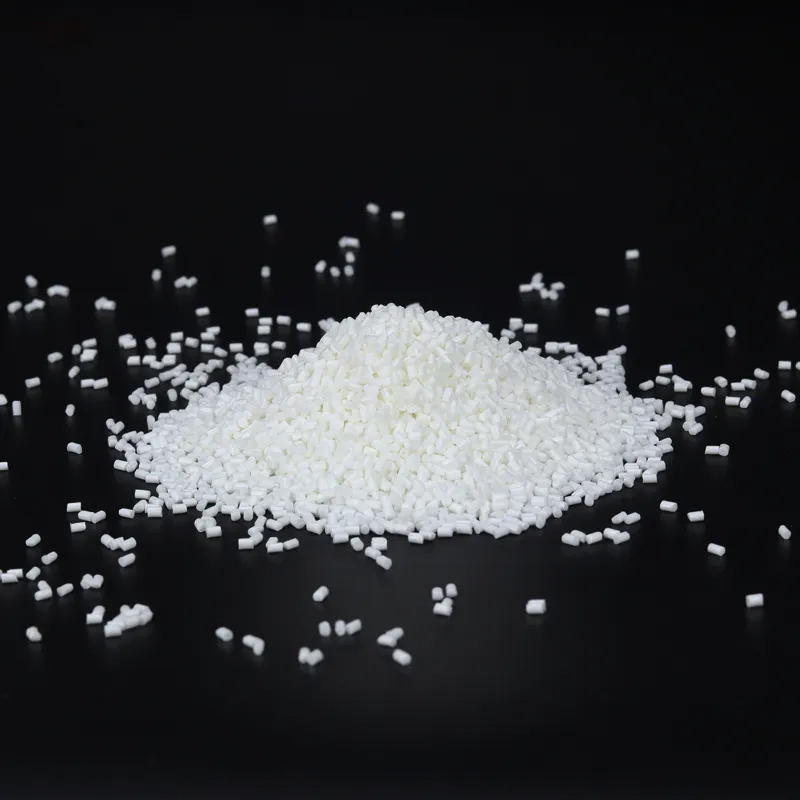
Looking at the current status of the nylon 6 chip industry makes the scale of PA6 use clear: it extends well beyond injection molding into film and textile applications. For engineering parts, the workhorse is a glass-reinforced grade because the reinforcement lifts the heat deflection temperature from roughly 60°C to about 190–200°C without changing the melting peak itself. If your project needs that extra stiffness, an enhanced PA6 chips grade is the standard way to get it while keeping the processing advantages of PA6.
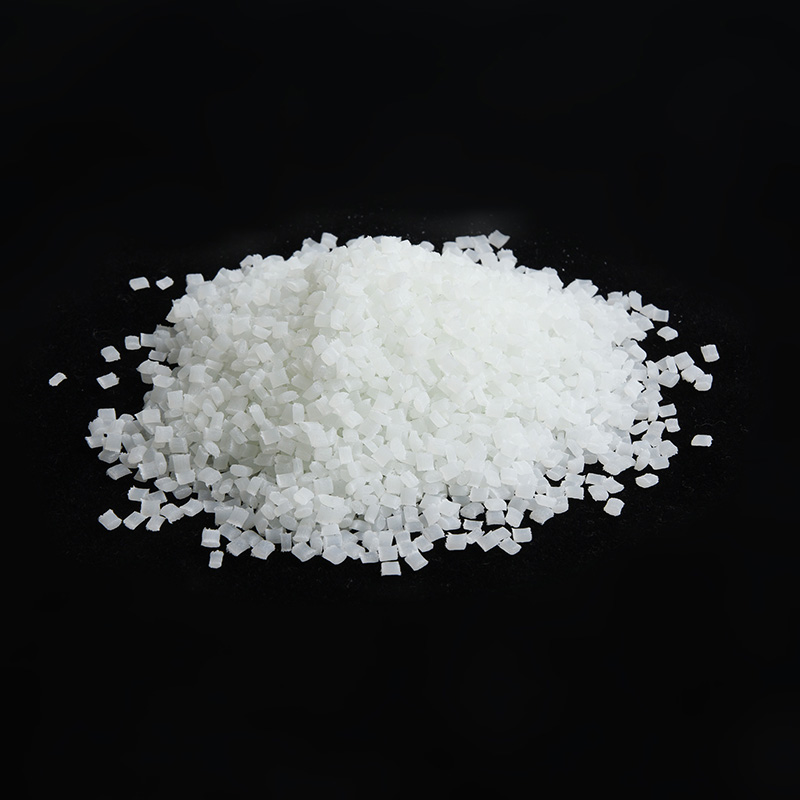 Custom PA6 GF Materials Suppliers, Enhanced PA6 Chip CompanyNingbo Frontechnic New Material Technology Co., Ltd is China PA6 GF materials suppliers and enhanced PA6 chips company, Professional cust...View Product →
PA66 Melts around 255–265°C
PA66 is polymerized from hexamethylenediamine and adipic acid. Its chains form a denser, more ordered crystal structure, so the melting temperature rises to roughly 255–265°C. The practical payoff is a higher continuous-use temperature, better creep resistance when hot, and stronger retention of stiffness for parts that sit near a motor winding or inside an engine bay. PA66 is a common choice for gears, bearing cages, and automotive connectors.
The trade-off is cost and processability. PA66 costs more than PA6 and requires hotter barrel and mold temperatures, which adds energy per shot. It also flows a little less freely and demands more attention to gating. In exchange, you get a material that stays dimensionally stable at temperatures where PA6 begins to creep. For engine-adjacent and industrial parts under sustained heat, an enhanced grade PA66 chips with glass reinforcement is a frequent first evaluation point.
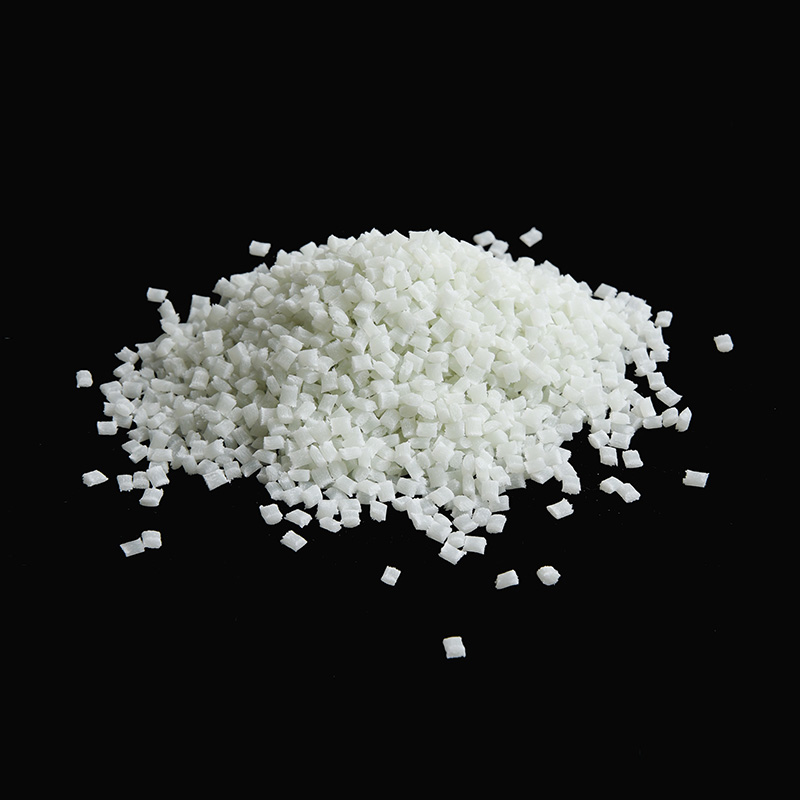 PA66 GF Chips Suppliers, Enhanced grade PA66 Chips CompanyNingbo Frontechnic New Material Technology Co., Ltd is China PA66 GF chips suppliers and enhanced grade PA66 chips company, Professional ...View Product →
Which One Should You Choose?
The answer is not simply that the higher melting point always wins. If a part runs continuously below 80–100°C, PA6 delivers faster cycling, better surface finish, and lower material cost. If the same part spends time above 120–140°C or carries a constant load, PA66 keeps its stiffness longer and resists creep better. The comparison below summarizes the key thermal figures for both base resins.
| Property | PA6 | PA66 |
|---|---|---|
| Melting point (°C) | 215 – 225 | 255 – 265 |
| Glass transition, dry (°C) | 47 – 60 | 50 – 80 |
| HDT at 1.8 MPa, unreinforced (°C) | 55 – 65 | 70 – 90 |
| HDT at 1.8 MPa, 30% glass (°C) | 190 – 200 | 235 – 250 |
| Typical mold temperature (°C) | 40 – 90 | 60 – 100 |
Four Thermal Properties That Are Just as Important as the Melting Point
The melting point answers one question: when does the polymer become a liquid? A plastic part stops working long before that. Designers should track four additional temperatures, all of which appear on a good material datasheet.
- Glass transition temperature (Tg): the temperature at which polymer chains in the amorphous regions begin to move freely. For dry nylon it is roughly 40–80°C. Absorbed moisture pulls Tg down by tens of degrees.
- Heat deflection temperature (HDT): the temperature at which a test bar deflects under a specified bending load. Unreinforced grades register 55–90°C at 1.8 MPa; glass-reinforced grades reach 190–250°C.
- Continuous service temperature: the temperature the resin can survive for long periods without significant mechanical degradation. Expect 80–120°C for standard grades, with heat-stabilized versions extending service into the 130–170°C range.
- Decomposition temperature: the point at which polymer chains start to break, roughly 300–350°C depending on residence time and atmosphere.
Each of these values is influenced by moisture because nylon is hygroscopic. A PA66 part conditioned in humid air can have a Tg 30–50°C lower than a bone-dry one. That is why drying before processing, and controlling humidity during testing, matters so much when you compare datasheet numbers.
What Temperature Does Nylon Soften or Deform?
Nylon does not melt at 60°C, but it can still deform there. Under a 1.8 MPa load, unreinforced PA6 typically deflects at 55–65°C and unreinforced PA66 at 70–90°C. Reduce the load to 0.45 MPa and both grades endure roughly 150–200°C before deflecting. This gap explains why the same nylon part behaves completely differently in a stress-free oven and under a tightened clamp.
Hot water is the scenario where this matters most. The melting point of PA66 is about 260°C, so a PA66 connector will not melt in boiling water at 100°C. But it can still warp, creep, or lose snap-fit retention if it is mechanically loaded, because 100°C sits above the HDT of most unreinforced grades and close to the wet Tg. Glass-reinforced grades are much safer: a 30% glass-filled PA66 part typically keeps its rigidity well above 100°C.
What Happens When Nylon Goes above Its Melting Point?
During processing, melt temperatures are deliberately run above the melting point: PA6 is barreled at 230–270°C and PA66 at 270–300°C. The polymer stays stable in the melt for a limited time. Push the temperature higher, or hold it too long, and thermal degradation starts. The melt turns brown, the viscosity shifts, and the finished part becomes brittle or shows surface defects.
Nylon in an open flame behaves differently. It is a combustible polymer: it melts, then ignites, and the burning melt can drip. This is why fire-safety specifications look at flame-retardant or reinforced grades rather than assuming nylon is inherently self-extinguishing. Melting is reversible after cooling; decomposition is not. Once the chains have broken, no amount of reheating will restore the original molecular weight.
Processing Temperatures in Practice
Nylon processing is always a compromise: melt the resin fully, keep it flowing, and stay out of the degradation zone. For a typical injection-molding run, processors use the windows below, expressed as melt temperature, mold temperature, and drying conditions.
| Grade | Drying | Melt Temperature | Mold Temperature | Typical Note |
|---|---|---|---|---|
| PA6 | 80–100°C, 3–4 h, moisture below 0.2% | 230–270°C | 40–90°C | Good flow, thin walls |
| PA66 | 80–90°C, 3–4 h, moisture below 0.2% | 270–300°C | 60–100°C | Needs a hotter barrel |
| PPA | 80–120°C, moisture below 0.1% | 300–330°C | 120–160°C | Keep residence time short |
Why dry the pellets first? Water absorbed into nylon hydrolyzes the polymer at melt temperatures, reducing chain length. The visible result is silver streaking on the part surface, a drop in toughness, and batch-to-batch variability. The standard sequence for a stable process looks like this:
- Dry the pellets to 0.1–0.2% moisture, depending on the grade.
- Set the melt temperature 20–40°C above the melting point.
- Set the mold temperature to control crystallization and surface finish.
- Limit barrel residence time to avoid thermal degradation in hot zones.
Choosing the Right Nylon When Heat Is the Main Risk
Standard PA6 and PA66 Reach Their Limits around 130–170°C
Continuous-use temperature for standard PA6 and PA66 sits between 80°C and 120°C, with heat-stabilized grades surviving short excursions into the 130–170°C range. If a part faces a sustained 150°C near a motor winding or a turbocharger, the margin of PA66 starts to feel thin. At that point, look beyond the standard polyamides.
PPA Pushes the Melt Range to 270–315°C
Semi-aromatic PPA resists heat much better because aromatic rings stiffen the polymer backbone. Its melting range lands at roughly 270–315°C, and its continuous-use ratings reach well above standard nylons. Small electrical housings, pump components, and connectors near heat sources are the usual candidates. An enhanced PPA chips grade illustrates the typical specification of a reinforced high-temperature polyamide: higher HDT, lower moisture uptake than standard PA66, and easier processing than some exotic high-temperature resins.
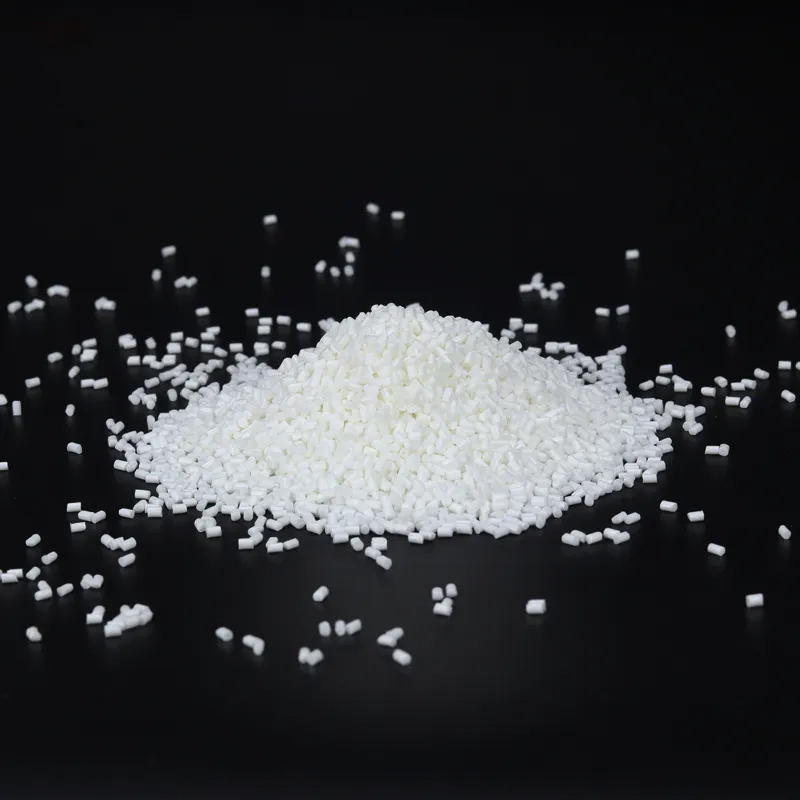 Enhanced PPA Polyphthalamide Plastic Chips Suppliers, CompanyNingbo Frontechnic New Material Technology Co., Ltd is China enhanced PPA polyphthalamide plastic chips suppliers and company, Profession...View Product →
Recycled and Custom Grades Follow the Same Thermal Rule
The melting point of recycled polyamide matches the virgin base polymer as long as the material is sorted and compounded properly. The role of recycled polyamide granules in the circular economy demonstrates that thermal properties remain predictable when the polymer chemistry stays consistent. Custom compounding, adding glass, mineral fillers, or impact modifiers, is the usual way to fine-tune heat performance without changing the base resin melting point. A supplier that runs its own modification line can adjust the formulation to your HDT target, which is often more valuable than chasing the highest possible melting temperature.
Frequently Asked Questions About Nylon Melting Temperature
Does nylon melt or burn?
Both are true at different stages. Nylon melts first because it is a thermoplastic: PA6 melts around 220°C and PA66 around 260°C. If the melted material reaches an open flame, nylon becomes combustible and burns with a dripping melt. In engineering use, processing happens in the molten state, while burning is a safety scenario that flame-retardant grades help control.
What temperature does nylon 66 melt?
PA66 melts in the range of 255–265°C, with 260°C used as the standard textbook value. In practice, check the specific grade datasheet because nucleated or reinforced versions may show a slightly shifted DSC peak.
Will nylon melt in boiling water?
No. Boiling water at 100°C is far below the melting point of PA6 and PA66, so the part will not turn into liquid. It can, however, deform: unreinforced grades have heat deflection temperatures of 55–90°C at 1.8 MPa, and absorbed water acts as a plasticizer that lowers the glass transition temperature. Expect warpage or creep if a loaded part sits in hot water for a long time.
Does glass-filled nylon have the same melting point?
The melting peak of the polymer stays essentially the same because it is governed by the crystal structure of the polyamide. What changes is the heat deflection temperature and the stiffness. A 30% glass-filled PA66 can hold its shape near 240°C under load, while the unfilled resin deflects at about 75–90°C under the same load.
What happens if nylon is overheated in the molding barrel?
The polymer degrades. The melt becomes discolored, the viscosity changes, and the final parts lose toughness and show surface streaking. Holding the melt above 300–330°C for too long, or running a barrel with a long residence time, accelerates this damage.
Can nylon withstand 150°C continuously?
Standard unreinforced PA6 and PA66 have continuous service temperatures around 80–120°C. Heat-stabilized PA66 can survive 130–170°C in many applications, but the margin depends on load, atmosphere, and part geometry. If the requirement is constant 150°C under mechanical load, PPA is usually the safer choice.
 Mob: +86-15867822829
 Tel: +86-0574-62538663
 Fax: +86-0574-62530664
 E-mail:
 Follow Us
 Home
Home
